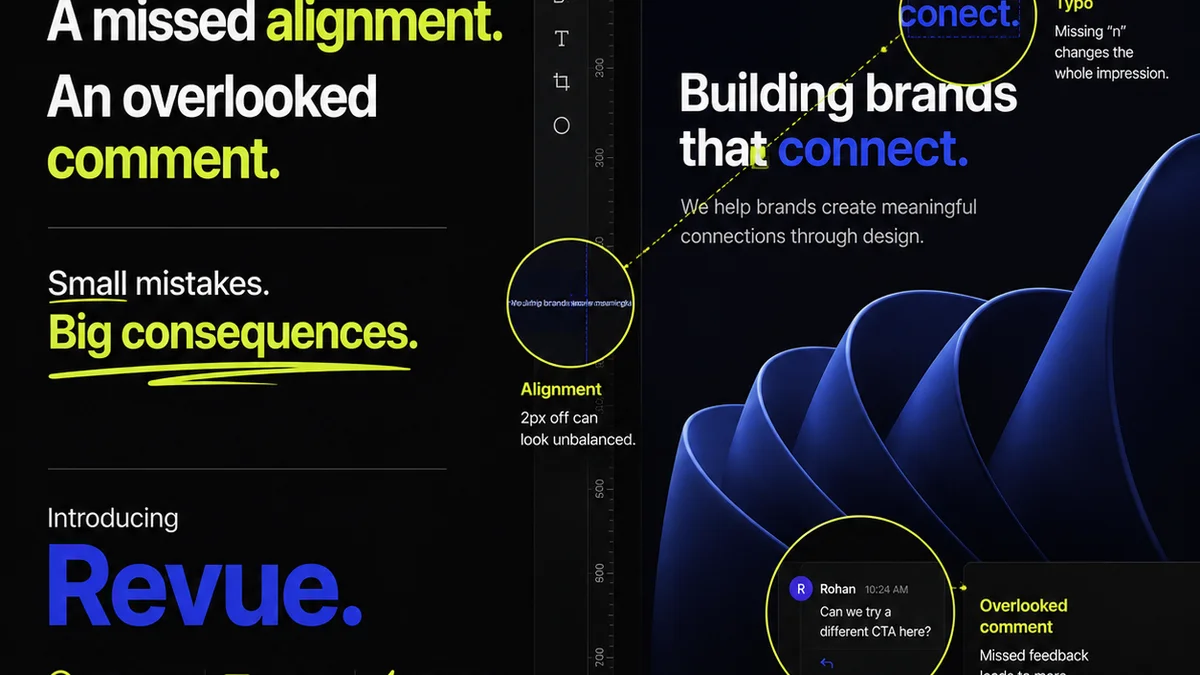
You’ve heard it before: Figma comments are the best way to manage client feedback on creative projects. They’re visual, directly on the design, and easily accessible. None of that is wrong.
But it’s incomplete. Especially for healthcare clients.
The hard truth? Relying solely on in-app comments, whether in Figma or any other design tool, creates silos. It fragments communication, obscures revision history, and makes quality control a nightmare. For healthcare, where accuracy and compliance are non-negotiable, this fragmentation isn’t just inefficient—it’s risky.
1. The Illusion of Centralized Feedback in Figma
Figma's commenting feature is powerful. You can pin comments to specific elements, tag collaborators, and even resolve threads. It feels like a complete solution.
But it’s not a single source of truth.
Clients often send feedback via email, Slack, or even Word docs. They might not use Figma’s commenting at all, or they’ll use it alongside other channels. This creates a mess of scattered feedback that designers have to manually consolidate.
Think about it:
- Email chains with dozens of replies.
- Slack messages that disappear into the ether.
- Verbal feedback that’s never documented.
- Figma comments that get lost or overlooked.
Trying to reconcile all these sources is a significant time sink. It’s prone to errors. And it’s a common bottleneck in agency workflows, particularly when dealing with the complexities of healthcare marketing.
The Healthcare Client's Unique Needs
Healthcare clients have specific demands:
- Regulatory Compliance: Every claim, statistic, and image needs to be vetted.
- Accuracy: Medical information must be precise. Misinformation can have serious consequences.
- Stakeholder Complexity: Legal, medical, marketing, and executive teams all have a say.
- Longer Review Cycles: Due to the above, approvals often take longer and involve more back-and-forth.
Figma comments alone can’t easily track the approval status of each individual piece of feedback, especially when that feedback originates elsewhere.
2. The Dangers of Fragmented Revision History
Every creative project involves revisions. Tracking these changes is crucial for understanding project evolution, justifying scope creep, and ensuring no feedback gets missed.
When feedback is scattered across multiple platforms, your revision history becomes a ghost story.
You might have a resolved comment in Figma, but what was the *original* feedback? What was the client’s *final* approval on that specific point? Was it documented outside of Figma?
This lack of clarity is amplified in healthcare projects.
- Did the legal team approve the disclaimer text?
- Did the medical board sign off on the efficacy claims?
- Was the patient imagery cleared by the ethics committee?
Without a clear, centralized record, answering these questions becomes a treasure hunt. A treasure hunt with potentially serious compliance and legal repercussions.
The Audit Trail Problem
Imagine an audit. You need to demonstrate that every piece of creative collateral went through a rigorous approval process, especially for regulated industries like pharmaceuticals or medical devices. If your proof is a collection of disparate emails, Slack messages, and a few resolved Figma comments, you're in trouble.
A robust audit trail isn't a nice-to-have; it's a necessity. It proves due diligence and protects your agency and your client.
3. Quality Control: The Unsung Hero of Creative Operations
Quality control (QC) isn't just about catching typos. It's about ensuring the creative work meets all project requirements, brand guidelines, and, crucially for healthcare, all regulatory standards.
How do you QC effectively when feedback is fragmented?
You can't.
You’re relying on individual designers’ memory or disparate notes. This is a recipe for missed details.
Consider these QC checks for a healthcare campaign:
- Claim Accuracy: Does every claim match the approved data?
- Disclaimer Inclusion: Is the required legal text present and legible?
- Brand Consistency: Does the visual language align with the parent brand and specific product guidelines?
- Target Audience Appropriateness: Is the tone and imagery suitable for the intended patient or professional audience?
- Compliance Adherence: Does it meet FDA, EMA, or other relevant body regulations?
If the feedback and approval trail for each of these points is scattered, your QC process becomes guesswork. It becomes reactive, not proactive.
The Cost of Rework
Rework due to missed feedback or compliance issues is expensive. It eats into your profit margins and damages client relationships. For healthcare clients, the cost of rework can be astronomical, involving not just design time but also legal and medical review time.
Where Revue Fits In
This is where a dedicated feedback and approval platform like Revue becomes indispensable. It’s built to solve the exact problems that design tools alone cannot.
Revue acts as your central hub for all client feedback and approvals, regardless of where the conversation started.
- Centralized Feedback Hub: Import or link feedback from emails, documents, or directly from design tools. All discussions live in one place, tagged to specific assets or versions.
- Clear Revision History: Track every version of a creative asset, alongside all associated feedback and approval decisions. No more digging through old emails.
- Streamlined Approvals: Define clear approval workflows. Assign specific stakeholders to approve specific elements. Get explicit sign-offs that are logged and auditable.
- Integrated Quality Control: Use checklists and automated reminders to ensure all necessary QC steps, especially compliance checks for healthcare, are completed before final delivery.
By consolidating feedback and approvals, Revue provides the single source of truth that agencies and their clients desperately need. This is especially critical for healthcare, where the stakes are significantly higher.
Managing Healthcare Specifics in Revue
For healthcare clients, Revue offers:
- Detailed Audit Trails: Every piece of feedback, every revision, every approval is logged and timestamped. This is invaluable for compliance and regulatory scrutiny.
- Version Control Clarity: Easily see which version of a campaign received which approval, ensuring that the *correct* approved content is always being worked on.
- Stakeholder Management: Assign specific review and approval tasks to legal, medical, and marketing teams, ensuring all necessary parties weigh in and sign off.
- Risk Mitigation: By centralizing and documenting everything, you significantly reduce the risk of compliance errors and the costly rework they entail.
4. Moving Beyond the Design Tool Comment
The assumption that a design tool's comment feature is sufficient for managing client feedback is a dangerous oversimplification. It’s a convenient way to leave a note, but it’s not an operational system.
Think of it like this:
- Figma comments are sticky notes on a whiteboard.
- Revue is the project management software that organizes those sticky notes, tracks who saw them, who acted on them, and when the job was done.
For agencies working with clients, especially in regulated industries like healthcare, you need more than just a digital sticky note.
You need a system.
The Operational Truth
The operational truth is that managing client feedback and approvals is a core business process, not just a design task. It requires dedicated tools and workflows that ensure clarity, accountability, and compliance.
Trying to manage complex healthcare creative projects using only design tool comments is like trying to build a hospital with a toolbox meant for home repairs.
It’s not built for the job. It’s not robust enough. And it carries too much risk.Your clients trust you with their brand, their reputation, and their compliance. They expect a professional, auditable process.
Are you giving it to them?
Final Thought
Is your current feedback process a source of clarity and efficiency, or a hidden risk factor in your agency’s operations? For healthcare clients, the answer can have significant implications beyond just project timelines.
Frequently asked questions
Can Figma comments be used for healthcare creative feedback?
Figma comments can be a starting point for feedback, but they are insufficient on their own for managing complex healthcare creative projects. They lack the robust audit trails, centralized history, and formal approval workflows necessary for regulatory compliance and risk mitigation in the healthcare industry.
What are the main drawbacks of using only design tool comments for healthcare clients?
The main drawbacks include fragmented communication, difficulty in tracking revision history, lack of a single source of truth, challenges in ensuring regulatory compliance, and inadequate audit trails. This can lead to errors, costly rework, and potential compliance violations.
How does Revue improve healthcare creative feedback management?
Revue centralizes all feedback and approvals, regardless of origin, providing a clear audit trail, robust version control, and streamlined stakeholder management. This ensures compliance, reduces errors, and streamlines the review process for healthcare agencies and their clients.
Is Revue a replacement for Figma?
No, Revue is not a replacement for design tools like Figma. It's a complementary platform designed to manage the entire feedback, revision, and approval process around creative assets, enhancing the workflow that starts within design tools.