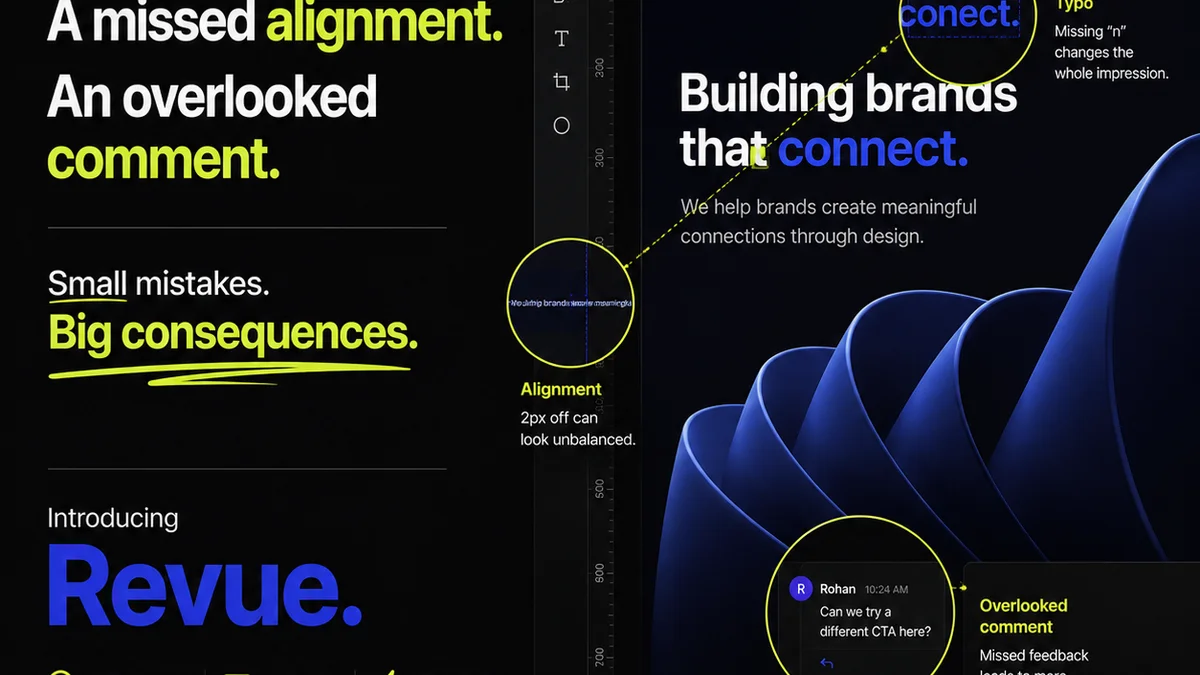
Everyone compares creative review tools by their features. Frame.io has X, Revue has Y. It’s a natural starting point. But that’s like choosing a car based on cupholder count. None of that is wrong. But it’s incomplete.
The deeper truth is that the best tool isn’t about what it *does*, but how it *fits*. How it solves your specific agency’s bottlenecks in client feedback, revision cycles, and final approvals.
1. The Feedback Labyrinth
Client feedback is the lifeblood of creative work. It’s also a notorious source of friction. You get an email with a vague comment. Then a Slack message clarifying. Then a phone call that contradicts the email. Each touchpoint is a potential misunderstanding.
This isn’t just annoying. It’s a productivity killer.
The Symptoms of Feedback Chaos
- Endless email chains that bury crucial decisions.
- Conflicting feedback from different stakeholders.
Frequently asked questions
What is the primary difference between Revue and Frame.io?
While both tools facilitate creative review, Frame.io is often seen as a comprehensive video review platform with advanced features for video professionals. Revue focuses on a broader range of creative assets and emphasizes centralized feedback, revision tracking, and quality assurance for agencies and design teams.
Which tool is better for agencies managing multiple clients?
Both can work, but Revue's strength lies in its centralized approach to feedback and approvals across various asset types, which can be particularly beneficial for agencies juggling numerous clients and projects with different workflows. Frame.io excels for video-heavy workflows.
Can Revue replace Frame.io for video review?
Revue supports video review with annotation capabilities. However, Frame.io offers more specialized features tailored specifically for video production workflows, such as advanced playback controls, time-based commenting on video, and integration with professional video editing software.
How does Revue improve revision management compared to Frame.io?
Revue is designed to provide clear visibility into revision history and approval status for all asset types, not just video. This helps agencies track changes, manage versions, and ensure everyone is working from the latest iteration, reducing confusion often found in fragmented feedback loops.