Everyone’s looking for the magic bullet to fix client feedback. You’ve probably heard that tools like GoVisually are the answer. And none of that is wrong. But it’s incomplete.
The real choice isn’t just about features. It’s about how a tool integrates into your workflow, how it scales with your team, and how it impacts your bottom line. This is the hard truth: the best creative feedback tool isn’t just the one with the most features, but the one that solves your specific operational bottlenecks.
1. The Core Promise: Streamlining Feedback
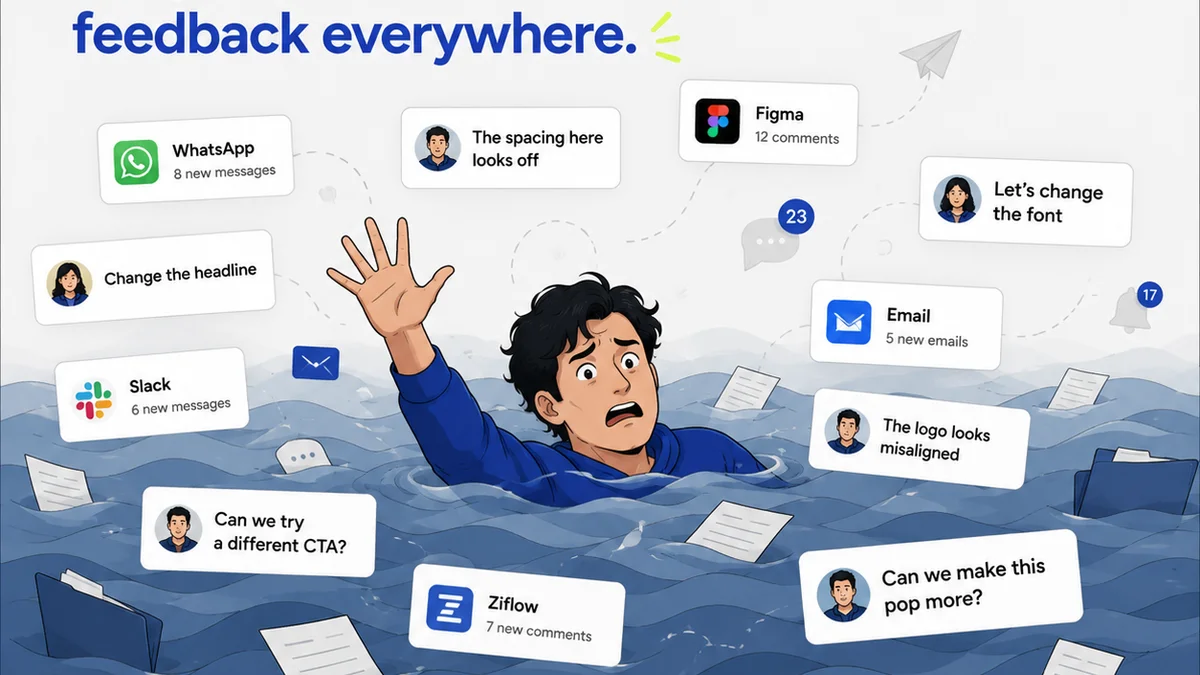
At their heart, both Revue and GoVisually aim to tame the chaos of client feedback. They promise to move feedback from scattered emails, Slack messages, and random annotation apps into a single, organized system.
This is critical because disorganized feedback leads to:
- Missed revisions
- Scope creep
- Wasted time chasing down comments
- Frustrated clients and teams
- Lower-quality output
Both platforms offer visual annotation tools. You can mark up designs, videos, and other creative assets directly. This is a huge step up from trying to describe a pixel shift in an email.
GoVisually: The Annotation Powerhouse
GoVisually leans heavily into its visual annotation capabilities. It’s built to be a robust platform for marking up specific points on a design. Think pixel-level precision and clear callouts.
Their focus is on giving clients and reviewers granular control over where and how they leave feedback. This can be powerful for detailed design reviews.
Revue: The Centralized Hub
Revue also offers visual annotation, but its strength lies in its broader scope. It’s designed as a central hub for all client communication and project assets, not just markups.
This means feedback is just one piece of the puzzle. Revue aims to connect that feedback directly to revisions, approvals, and overall project status.
2. Workflow Integration: Where the Rubber Meets the Road
This is where the operational reality diverges significantly. How does the tool *actually* fit into your day-to-day?
GoVisually: Standalone or Integrated?
GoVisually excels as a dedicated annotation tool. Many agencies use it for that specific purpose, often alongside other project management software. If your primary pain point is inefficient visual markups, GoVisually addresses that directly.
However, this can mean data lives in multiple places. Feedback in GoVisually might need to be manually transferred to your main PM tool, adding an extra step and potential for error.
It’s like having a fantastic screwdriver but needing to manually move the screws from the toolbox to the project site. Effective, but requires an extra trip.
Revue: The Integrated Ecosystem
Revue is built with integration in mind. The goal is to be the single source of truth for client collaboration. Feedback, revisions, approvals, and even final sign-offs all live within the same system.
This means comments made on an asset are directly linked to the version being revised. When a client approves, that approval is logged against that specific asset and version. There’s less context switching and fewer opportunities for information to get lost.
This approach reduces administrative overhead. It’s like having your toolbox, workbench, and project site all in one connected space. Less running around, more doing.
3. Revision Management: Beyond Just Comments
Feedback is only half the battle. What happens *after* the comments are made? This is a critical differentiator.
GoVisually: Focusing on the Markup
GoVisually provides tools to manage comments and markups. You can track their status and ensure they are addressed. However, its core strength remains in the annotation itself.
The connection to the *next* revision, or tracking the *history* of revisions in relation to specific feedback threads, can be less defined if not managed outside the tool.
Revue: Connecting Feedback to Action
Revue is designed to manage the entire revision cycle. Feedback is captured, assigned, and directly linked to the creation of new versions. This creates a clear audit trail.
When a client provides feedback on Version 2, and you upload Version 3, the system clearly shows which feedback led to which changes. Approvals are tied to specific versions, preventing confusion about what has been signed off.
This visibility is crucial for:
- Preventing
Frequently asked questions
What is the primary difference between Revue and GoVisually?
GoVisually excels as a dedicated visual annotation tool for precise markups. Revue offers visual annotation but functions as a more comprehensive, centralized hub for all client feedback, revisions, and approvals, aiming to streamline the entire project lifecycle.
Which tool is better for agencies managing multiple projects?
Revue's strength as a centralized hub for all client communication and project assets makes it particularly well-suited for agencies managing multiple projects, as it reduces context switching and consolidates information.
Can GoVisually handle video feedback?
Yes, GoVisually supports video feedback with annotation capabilities directly on the video timeline.
Does Revue offer granular design annotation like GoVisually?
Yes, Revue includes robust visual annotation features for markups on designs, videos, and other assets, similar to GoVisually's core functionality.
How do these tools help prevent scope creep?
Both tools help by providing a clear record of feedback. Revue further assists by linking feedback directly to specific revisions and approvals, making it easier to identify requests that fall outside agreed-upon scope.