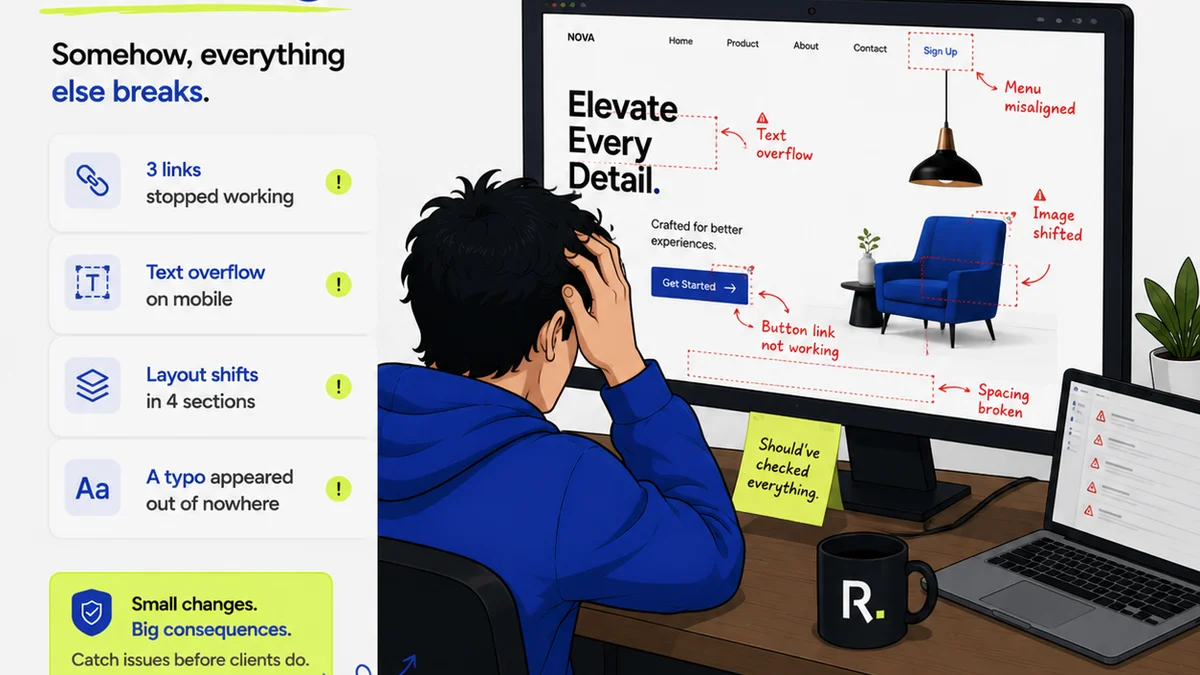
You’re probably looking at creative workflow tools like Revue and GoVisually and thinking, “They both manage feedback and revisions, right?” That’s not wrong. But it’s a dangerously incomplete picture.
The real difference lies in how deeply each tool integrates into the core of your agency’s operations, from initial client input to final sign-off. Choosing the right one isn't just about features; it’s about aligning with your team’s process and your business goals.
1. The Core Problem: Feedback Fragmentation
Every agency owner, creative director, or design lead knows the pain. Feedback comes from everywhere: emails, Slack messages, carrier pigeons, napkin scribbles. It’s scattered, contradictory, and often, just plain wrong.
This fragmentation isn't just annoying. It's a direct drag on productivity and profitability.
The Symptoms Are Obvious
- Endless email chains that bury important decisions.
- Version control nightmares where nobody knows which file is the latest.
- Misinterpreted feedback leading to wasted hours and unhappy clients.
- Lack of clear audit trails for approvals and revisions.
- Team members working off outdated information.
These aren't minor hiccups; they’re systemic issues that cost time and money. And they’re precisely what tools like GoVisually and Revue aim to solve.
2. Understanding GoVisually: The Feedback Hub
GoVisually positions itself as a dedicated platform for visual feedback and client approvals. Its strength lies in its focused approach to the review process itself.
Think of it as a highly specialized digital whiteboard for your creative assets.
Key Features and Strengths
- On-Image Annotation: Direct markup on static images and PDFs. This is GoVisually’s bread and butter.
- Version Comparison: Easily see how designs have evolved over time.
- Client Review Links: Share specific versions with clients for feedback without giving them full access.
- Basic Approval Workflows: Streamline the sign-off process for individual assets.
GoVisually excels when your primary challenge is collecting and organizing feedback directly on visual proofs. It’s good at making sure that red squiggle ends up on the right part of the design.
Where GoVisually Falls Short
While strong on direct feedback, GoVisually is less about managing the *entire* lifecycle of a creative project.
- It doesn’t inherently manage project timelines or task assignments beyond the feedback loop.
- Integration with broader project management systems can be clunky.
- It’s primarily focused on the *what* of feedback, less on the *why* or the *how* it impacts overall project status.
It's a powerful tool for a specific part of the creative process, but not necessarily the central nervous system of your entire agency.
3. Understanding Revue: The Centralized Creative Operations Hub
Revue takes a broader view. It’s built for agencies and in-house teams that need more than just a place to stick red marks on a JPG. It’s about orchestrating the entire workflow, from briefing to final delivery.
Revue aims to be the single source of truth for your creative operations.
Key Features and Strengths
- Centralized Client Feedback: Consolidates all client input, regardless of source, into a single, organized system. This goes beyond just on-image markups.
- Revision and Approval Management: Provides clear visibility into revision history, status, and who approved what, when.
- Quality Assurance Workflows: Supports structured checklists and processes to ensure creative assets meet internal and client standards before delivery.
- Integration Capabilities: Designed to connect with other tools you already use, pulling information in and pushing it out to create a seamless workflow.
- Project Visibility: Offers a higher-level view of project status, bottlenecks, and team capacity.
Revue focuses on the interconnectedness of feedback, revisions, approvals, and quality control, linking them directly to project progress and business outcomes.
The Revue Philosophy
The core idea is that creative work doesn’t happen in a vacuum. Feedback is just one input. Revisions are a consequence. Approvals are milestones. Quality checks are gatekeepers.
Revue connects these dots.
4. Comparing Workflows: Where Do They Diverge?
Let’s get practical. How do these tools change your day-to-day?
Scenario A: The Static Asset Review
A client needs to approve a banner ad. GoVisually shines here. You upload the JPG, send a link, the client adds comments directly on the image. Simple, clean, effective for that single task.
Revue can handle this too, but its strength is contextualizing it. Is this banner part of a larger campaign? What’s the deadline for approval? Who needs to check it for brand compliance *after* client approval? Revue connects these threads.
Scenario B: The Complex Campaign Approval
You’re launching a multi-channel campaign. There are social posts, web banners, email templates, and print collateral. Feedback is coming from marketing, legal, and the product team. Versioning is critical.
GoVisually might struggle to manage the sheer volume and interconnectedness. You’d likely end up juggling multiple review links and trying to piece together the overall status.
Revue is built for this. It allows you to group related assets, manage different feedback rounds for each, track approvals across multiple stakeholders, and ensure the final package is cohesive and compliant. The revision history is tied to the project, not just individual files.
Scenario C: The Internal Quality Check
Before sending a major deliverable to the client, you need an internal QA. This involves checking against a brand guide, ensuring all links work, and verifying copy accuracy.
GoVisually doesn't offer structured internal QA workflows. You might add comments to a file, but it’s not a formalized process.
Revue allows you to build custom QA checklists. Your team can systematically go through each item, mark it complete, and flag any issues. This process is logged, creating an audit trail and ensuring consistency. This is crucial for agencies that pride themselves on polished, professional output.
5. Integration and Scalability
No tool exists in isolation. How do GoVisually and Revue play with your existing stack?
GoVisually’s Approach
GoVisually offers some integrations, often focused on file storage (like Dropbox, Google Drive) or basic task management. Its API might allow for custom connections, but it’s not its primary focus.
It integrates well with the *act* of feedback, but less so with the broader operational systems of an agency.
Revue’s Approach
Revue is designed from the ground up to be an integration hub. It aims to connect with your project management software, your communication tools, and even your file storage, creating a unified view of creative operations.
This isn't just about convenience; it's about data flow. When feedback in Revue triggers a revision task in your PM tool, and that revision is logged back into Revue, you gain unparalleled operational intelligence.
This scalability is key for growing agencies. As your client load and team size increase, a tool that can orchestrate complexity becomes essential.
6. Cost and Value Proposition
Pricing models vary, but it’s important to look beyond the sticker price.
GoVisually
Often priced per user or per project, GoVisually can be cost-effective for teams whose primary need is focused visual feedback collection.
The value is high if your bottleneck is purely in the annotation and approval of individual assets.
Revue
Revue's pricing typically reflects its broader scope as an operational platform. It may have a higher entry point, but the value proposition is in streamlining multiple facets of the creative workflow.
The ROI comes from reduced errors, faster revision cycles, improved client satisfaction, and better team efficiency across the board. It’s an investment in operational maturity.
7. Where Revue Fits In
Revue isn't just another feedback tool; it's a system designed to bring order to the creative chaos that plagues many agencies. It addresses the core issues that GoVisually, in its focused way, also tackles, but within a larger operational framework.
Centralized feedback means no more hunting through emails. Revision and approval visibility ensures everyone is on the same page, preventing costly mistakes. Structured quality checks are your final line of defense against errors, protecting your agency’s reputation.
Think of GoVisually as an excellent specialist. Think of Revue as the general manager who ensures all the specialists are working together efficiently towards the same goal.
8. Final Thought
The assumption that all feedback tools are interchangeable is a costly one. GoVisually offers a powerful solution for a critical piece of the puzzle: visual annotation and client approval.
But for agencies aiming for true operational excellence—where efficiency, clarity, and profitability are paramount—the choice requires looking beyond the immediate feedback loop. It demands a tool that can integrate, orchestrate, and provide visibility across the entire creative lifecycle.
Which kind of tool truly serves the long-term health and growth of your agency?
Frequently asked questions
What is GoVisually best suited for?
GoVisually excels at collecting and managing visual feedback directly on creative assets like images and PDFs through on-image annotation and version comparison.
How does Revue differ from GoVisually?
Revue offers a broader approach to creative operations, centralizing feedback, managing revisions and approvals, and incorporating quality assurance workflows, aiming to be a complete operational hub rather than just a feedback tool.
Can Revue handle complex campaign approvals?
Yes, Revue is designed to manage multi-asset projects and complex approval processes involving multiple stakeholders and feedback rounds, providing better overall project visibility than tools focused solely on individual asset feedback.
Is GoVisually good for internal quality checks?
GoVisually does not typically offer structured internal quality assurance workflows. Revue allows for the creation of custom QA checklists to ensure assets meet specific standards before client delivery.
Which tool offers better integration capabilities?
Revue is built with integration in mind, aiming to connect with other project management and operational tools to create a seamless data flow. GoVisually's integrations are generally more focused on file storage and basic task management.