Everyone thinks choosing the right creative review tool comes down to a checklist of features. You compare GoVisually to Revue, or Frame.io to Filestage, and tick boxes for annotation, version control, and client comments. It’s a logical approach. It feels thorough.
None of that is wrong. But it’s incomplete.
The hard truth is that the most critical differences between creative review platforms aren’t the features themselves, but how those features integrate into your actual agency workflow and, ultimately, your bottom line.
1. The Illusion of Feature Parity
Most modern creative review tools offer a core set of functionalities. You can upload files, leave comments, mark them as resolved, and track versions. This is table stakes.
Comparing Revue to GoVisually, or any similar platform, based solely on these basics is like comparing two cars by looking only at whether they have four wheels and an engine.
It misses the nuance of performance, user experience, and how they actually handle the demands of daily use.
Consider these common scenarios:
- Clients who aren't tech-savvy.
- Complex, multi-stage feedback loops.
- The need for clear audit trails for scope creep.
- Teams juggling multiple projects and clients simultaneously.
A feature list won't tell you how well a tool handles these real-world pressures.
The Difference is in the Details
It’s in the intuitive design that reduces client confusion. It’s in the speed of upload and download for large files. It's in the clarity of revision history when a client says, "We never asked for that change."
These aren't headline features. They are the operational lubricants that keep an agency running smoothly.
2. Workflow Integration: The Real Bottleneck
Your creative review tool isn't a standalone piece of software. It’s a node in a complex network of communication, project management, and client interaction.
How does the tool fit into your existing process?
- Onboarding: How easy is it to get new clients and team members set up? A steep learning curve for clients means more support time for your team, eating into billable hours.
- Daily Use: Is leaving feedback a drag-and-drop affair or a multi-step process? Are notifications clear and actionable, or do they create inbox clutter?
- Project Handoff: Does the tool provide a clear, organized archive of all feedback and approvals for final sign-off and future reference?
A tool that requires significant workarounds or extensive training for either your team or your clients becomes a bottleneck. It slows down the process, introduces friction, and increases the risk of errors.
This is where the comparison between Revue and GoVisually (or any others) gets interesting. It’s not about *if* they do something, but *how* they do it, and how that *how* aligns with your agency’s specific operational rhythm.
The Cost of Friction
Every extra click, every confused client email, every missed revision adds up. It’s not just about time; it’s about morale, client satisfaction, and profitability.
A tool that streamlines workflow, even with seemingly minor differences in features, can have an outsized impact on your business.
3. Visibility and Accountability
This is often the most overlooked aspect. Creative review tools are not just about gathering feedback; they are about establishing a clear record of decisions.
When a client requests a change, is there an undeniable record of that request and its approval?
When a project goes over scope, can you easily point to the specific feedback that triggered the additional work?
This visibility is crucial for:
- Scope Management: Preventing scope creep is a constant battle. A robust review tool provides the evidence needed to manage client expectations and justify additional billing.
- Internal Accountability: It clarifies who signed off on what, reducing finger-pointing and improving internal communication about project status.
- Client Relationships: Transparency builds trust. When clients see a clear history, they are more likely to respect the process and the effort involved.
Tools like GoVisually and Revue approach this differently. Some focus on a simple, clean interface for feedback, while others build in more robust audit trails and reporting. Understanding which approach best suits your agency's need for accountability is key.
4. The True Cost: Beyond the Subscription Fee
The sticker price of a creative review tool is rarely the full story.
Consider the total cost of ownership:
- Training Time: For your internal team and for clients.
- Support Overhead: Time spent answering questions about how to use the tool.
- Lost Billable Hours: Due to workflow slowdowns or rework caused by unclear feedback.
- Cost of Errors: Mistakes made because feedback was missed or misinterpreted.
- Client Churn: Dissatisfied clients due to a clunky or frustrating review process.
When comparing Revue vs. GoVisually, or any other options, look beyond the monthly or annual fee. Ask yourself: Which tool will reduce friction, improve clarity, and ultimately save us money and time?
The answer often lies not in the most feature-rich option, but the one that best supports your operational realities.
Where Revue Fits In
Revue is built from the ground up with the agency workflow in mind. We understand that creative review isn't just about comments on a screen; it's about managing client relationships, protecting your time, and ensuring project profitability.
Instead of just offering a barrage of annotation tools, Revue focuses on centralizing client feedback, making revisions clear, and providing definitive approval stages. This means:
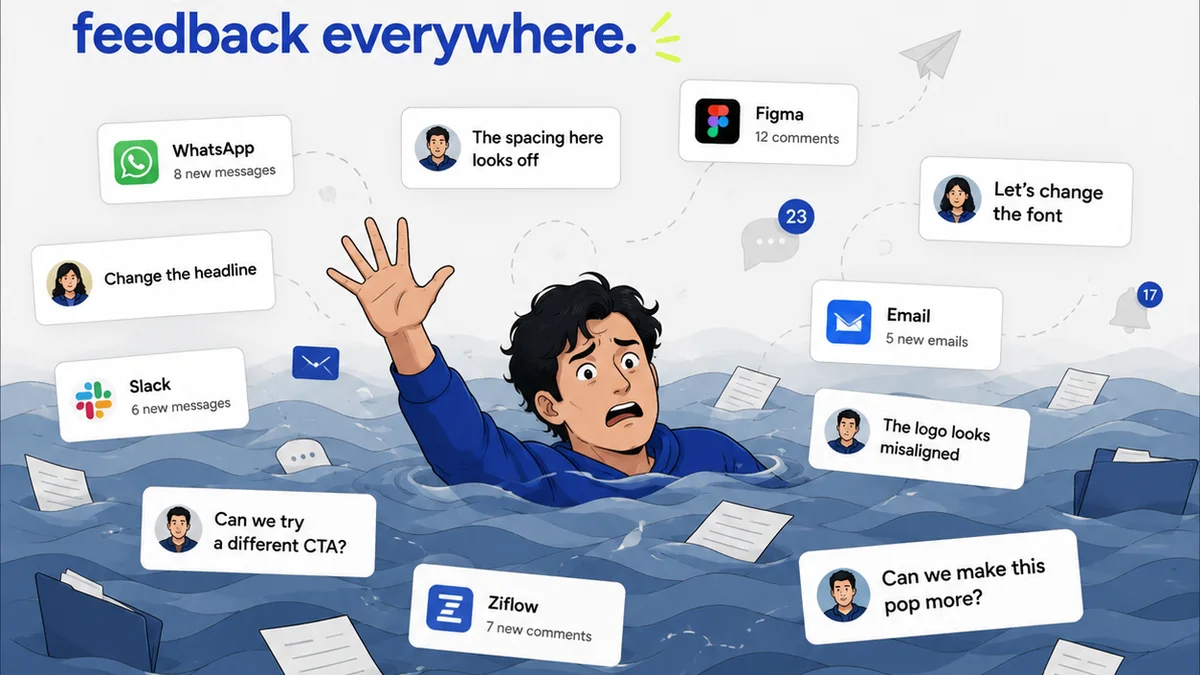
- Streamlined Communication: All feedback lives in one place, linked directly to the asset. No more hunting through emails or Slack messages.
- Clear Revision Tracking: See every iteration, every comment, and every approval in a clear, chronological order. This protects you from scope creep and provides an irrefutable audit trail.
- Simplified Approvals: Clients can easily approve or reject versions, with clear digital sign-offs that lock in decisions.
- Quality Control: Features designed to help you run through your own checklists before final delivery, ensuring nothing slips through the cracks.
We believe the best tools fade into the background, enabling your team and your clients to focus on the creative work, not the process of reviewing it.
Final Thought
The landscape of creative review tools is crowded. Many offer similar functionalities. But true differentiation comes from understanding the operational realities of agency life.
Are you choosing a tool based on a feature list, or on its ability to integrate seamlessly, reduce friction, and protect your agency's time and profitability?
The answer to that question will shape your workflow for years to come.
Frequently asked questions
What is the primary difference between Revue and GoVisually?
While both offer creative review features, the key difference lies in their approach to workflow integration and accountability. Revue emphasizes centralized feedback, clear revision tracking, and definitive approval stages to protect agency time and profitability, whereas GoVisually may focus more broadly on collaborative annotation.
How does a creative review tool impact agency profitability?
A good creative review tool reduces friction in the feedback process, minimizes miscommunication, prevents scope creep through clear audit trails, and saves time on administrative tasks. This leads to fewer errors, faster project completion, and ultimately, higher profitability.
Is it better to choose a tool with more features or one that integrates better?
For agencies, integration and workflow alignment are typically more critical than a sheer number of features. A tool that simplifies your existing processes and reduces client confusion will likely have a greater positive impact than one with many features that don't fit your operational reality.
How can a review tool help manage scope creep?
By providing a clear, timestamped record of all feedback, requests, and approvals. When a client asks for changes outside the original scope, you can easily refer to the documented feedback and approvals to justify additional time or costs.