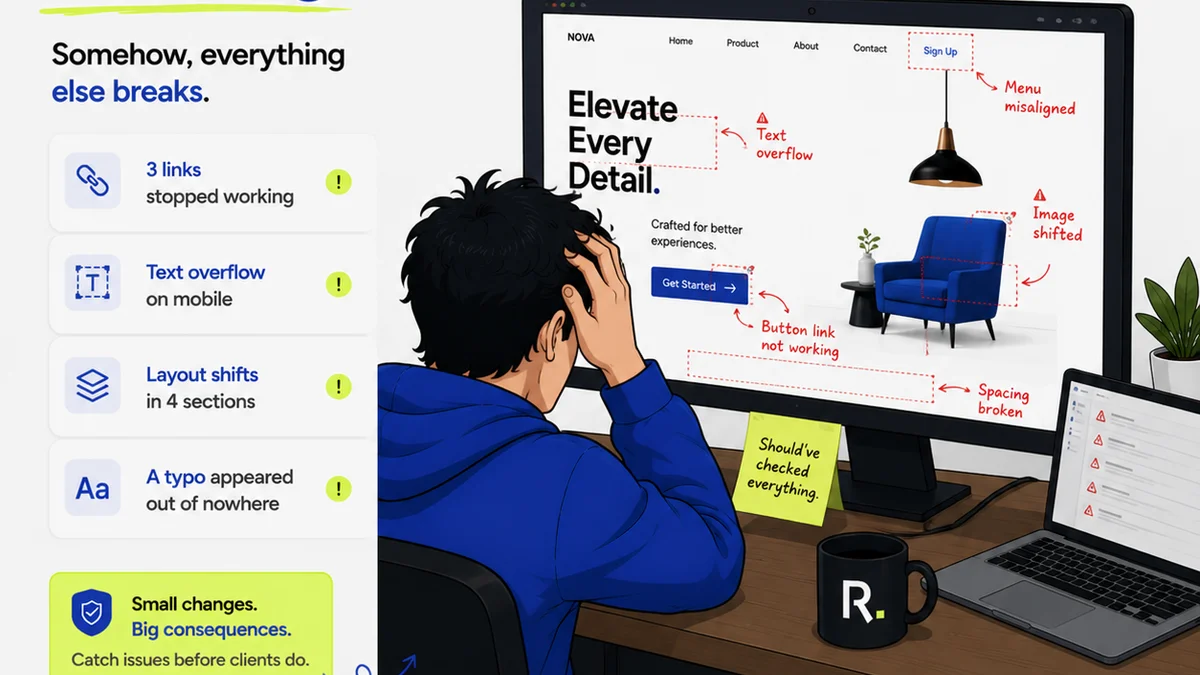
You've probably heard it a million times: Monday.com is the ultimate work OS. It's flexible, customizable, and can manage anything from project timelines to client onboarding. None of that is wrong. But it’s incomplete.
The real story for creative agencies isn't about the tool's potential. It's about how it handles the messy, human-centric reality of creative feedback and approvals. And that's where many agencies stumble, treating a powerful but generic platform like Monday.com as a magic bullet for complex creative workflows.
1. The 'One Tool to Rule Them All' Fallacy
Many agencies adopt platforms like Monday.com with the grand vision of consolidating *everything*. Project management, client communication, asset delivery, approvals – the works. It feels efficient on paper.
The hard truth? This shotgun approach often creates more silos than it breaks down. Instead of streamlining, you end up with a complex, hyper-customized system that’s hard to navigate, difficult to train new hires on, and ultimately, a bottleneck for the very feedback loops it’s supposed to improve.
Consider the common pitfalls:
- Information Overload: Trying to cram every piece of client communication, every revision note, and every approval status into a single, sprawling board.
- Context Collapse: Feedback gets buried under task updates, making it hard to see the creative rationale behind a change.
- User Fatigue: Clients and internal teams alike get lost in the complexity, leading to missed comments, duplicate questions, and frustration.
- Reporting Nightmares: Trying to extract meaningful insights on feedback volume or approval cycles from a system not built for creative specifics.
Monday.com *can* be configured for this, but the effort required to make it truly effective for creative feedback is immense. And often, it still falls short of dedicated tools.
2. Underestimating the Nuance of Creative Feedback
Creative feedback isn't just a task to be checked off. It's a conversation, often iterative, layered, and sometimes subjective. It requires context, visual reference, and clear communication.
Platforms like Monday.com, while excellent for task management and process automation, often treat feedback as a simple data point or a to-do item.
This leads to:
- Generic Commenting: Relying on text-based comments within a task card, lacking the ability to annotate directly on an image or video frame.
- Loss of Visual Context: When feedback is detached from the visual asset itself, understanding the critic's intent becomes a guessing game.
- Version Control Chaos: Tracking which version of an asset a specific comment refers to can become a manual, error-prone process.
- Delayed Decisions: Without a clear, visual thread of feedback and revisions, stakeholders might delay approvals waiting for clarification or simply getting overwhelmed.
This isn't a knock on Monday.com's capabilities; it's a recognition that its core strength lies in structured workflows, not the fluid, visual nature of creative critique.
3. Ignoring the Client Experience
Your clients are not project managers. They're busy professionals who want to see great creative work, provide input, and move on. Expecting them to master a complex, customized Monday.com board for approvals is a recipe for friction.
The user experience for a client should be frictionless. They should be able to:
- See the creative work clearly.
- Provide feedback directly on the asset.
- Understand what needs their approval.
- Track the status of their requests easily.
When agencies try to force clients into generic project management tools for feedback, it often results in:
- Confused Clients: They don't understand the interface or where to leave comments.
- Email Back-and-Forths: Clients default to email because it’s familiar, defeating the purpose of the centralized tool.
- Delayed Responses: The barrier to entry is too high, leading to extended review cycles.
- Damaged Relationships: A clunky, confusing feedback process can erode client confidence.
Monday.com might be great for your internal team's task tracking, but it often creates an unnecessary hurdle for the people who matter most: your clients.
4. The Hidden Costs of Over-Customization
Agencies often spend significant time and resources building elaborate workflows in Monday.com. This involves custom fields, complex automations, and intricate board structures.
While customization is a strength, excessive customization for a specific function like creative feedback comes with hidden costs:
- Development Time: Your team spends hours building and refining the system instead of focusing on client work.
- Maintenance Overhead: As your processes evolve, so does the need to update these custom workflows, creating an ongoing burden.
- Onboarding Challenges: New team members need extensive training to understand the agency's unique Monday.com setup.
- Scalability Issues: What works for a small team might not scale effectively as the agency grows or takes on larger projects.
This effort is often better spent on perfecting the creative output itself, not on building a bespoke project management system from scratch.
Where Revue Fits In
This is where a tool like Revue shines. It’s not trying to be an everything-OS. It’s purpose-built for the specific, often challenging, workflow of creative feedback and approvals.
Revue centralizes client feedback directly on the visual assets. No more hunting through email chains or buried comments in a task manager.
It provides clear visibility into revision stages and approval statuses, reducing ambiguity and speeding up decision-making.
For agencies, this means:
- Streamlined Feedback: Direct annotation on images and videos.
- Clear Approvals: One-click approvals and clear revision history.
- Reduced Friction: An intuitive experience for both internal teams and clients.
- Focus on Creativity: Less time managing the workflow, more time creating great work.
Revue integrates into your existing stack, acting as the specialized hub for what matters most: getting clear, actionable feedback and moving projects forward efficiently.
5. Forgetting the 'Why' Behind the Tool
Ultimately, the mistake isn't choosing Monday.com. It's forgetting *why* you're choosing a tool in the first place. Are you trying to manage tasks, or are you trying to improve the flow of creative work and client collaboration?
If your goal is to centralize feedback, streamline revisions, and gain visibility into approvals – especially for visual creative work – a dedicated solution often proves more effective and less costly in the long run.
Trying to force a general-purpose platform into a specialized role leads to workarounds, frustration, and ultimately, a less efficient creative process. It’s like using a hammer to screw in a bolt – you might get it done, but it’s not the right tool for the job, and it’s likely to cause damage.
Final Thought
Is your current workflow tool helping you deliver better creative, faster? Or is it becoming another layer of complexity to manage? Consider the specific bottlenecks in your creative process. The right tool doesn't just organize tasks; it elevates the core function of your agency: creative collaboration and client satisfaction.
Frequently asked questions
What are the main differences between Monday.com and Revue for creative agencies?
Monday.com is a versatile work OS designed for broad task and project management, highly customizable but can become complex for specific creative feedback. Revue is a specialized tool focused on centralizing client feedback, streamlining revisions, and managing approvals directly on visual assets, offering a more focused and intuitive experience for creative workflows.
Is Monday.com bad for creative feedback?
Monday.com is not inherently 'bad,' but it requires significant customization to handle creative feedback effectively. Agencies often find that its general-purpose nature leads to information overload, context loss, and a less-than-ideal client experience for visual reviews compared to specialized tools.
How can agencies avoid over-customizing project management tools?
Avoid over-customization by clearly defining the primary goal of the tool. If it's creative feedback, prioritize solutions built for that purpose. Focus internal resources on creative output rather than building complex, bespoke systems that require constant maintenance and training.
What is the biggest mistake agencies make when choosing workflow tools?
The biggest mistake is choosing a tool based on its potential flexibility rather than its suitability for the core function it needs to perform. For creative agencies, this often means selecting a general project management tool when a specialized client feedback and approval platform would be more efficient and less prone to workflow friction.