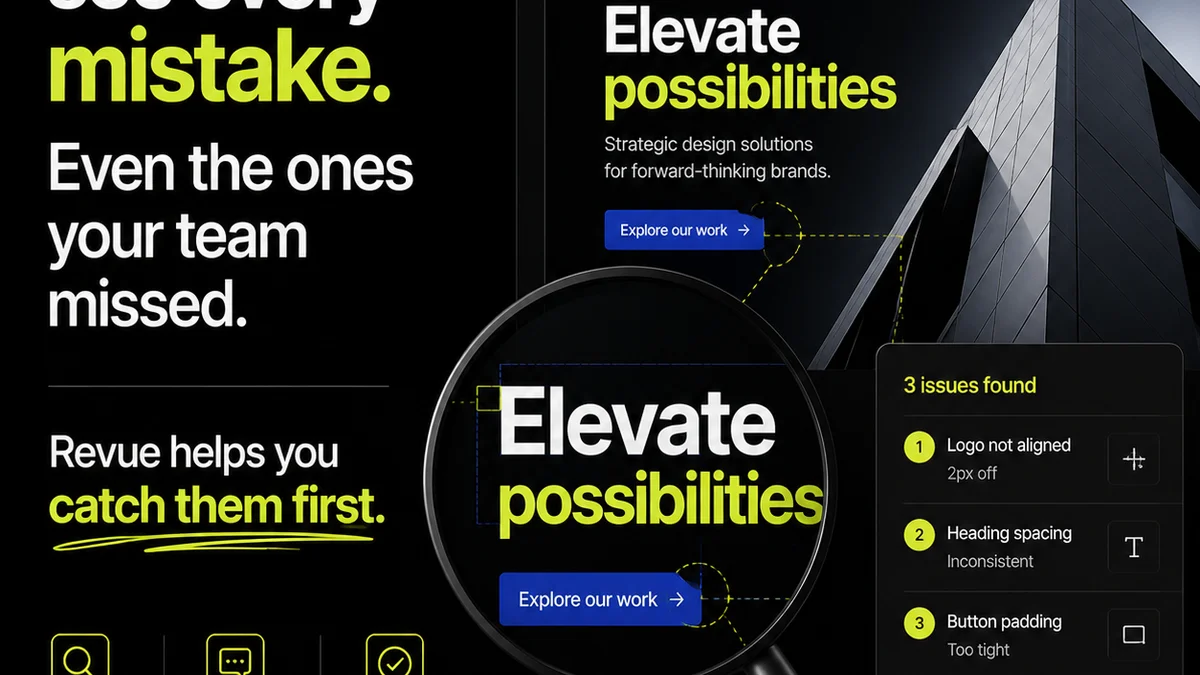
You're looking for a creative review and approval tool. Maybe you've heard of Revue. Maybe you've heard of Ziflow. You're probably thinking it's a simple feature-by-feature comparison: which one has more annotation tools? Which one integrates with your DAM?
None of that is wrong. But it’s incomplete.
The hard truth is, the best tool isn't about the most features. It's about the tool that best fits your actual creative workflow, reducing friction, not adding to it. Comparing Revue and Ziflow on specs alone misses the operational impact.
1. The Core Workflow Divide: Feedback vs. Workflow Management
At their heart, tools like Revue and Ziflow approach creative feedback differently. This isn't a minor nuance; it's the foundational difference that dictates how your team and clients will interact with the platform.
Ziflow: The Feature-Rich All-Rounder
Ziflow positions itself as a comprehensive platform for managing the entire creative workflow, from brief to final delivery. It aims to be the central hub for all creative production.
- Extensive Annotation Tools: Ziflow boasts a wide array of annotation options, catering to detailed, pixel-level feedback.
- Project Management Features: It includes capabilities for task management, approvals, and version control, aiming to replace multiple tools.
- Integrations Galore: Ziflow emphasizes broad integration with other business software, promising a connected ecosystem.
This breadth can be powerful. But it can also introduce complexity. A tool that tries to do everything often requires significant setup and training.
Revue: The Focused Feedback Specialist
Revue, on the other hand, hones in on the critical stage of creative review and approval. Its strength lies in streamlining how feedback is given, received, and acted upon, specifically for creative assets.
- Intuitive Annotation: While robust, Revue's annotation tools are designed for clarity and ease of use, ensuring feedback is actionable.
- Centralized Client Input: The platform excels at consolidating feedback from multiple stakeholders into a single, organized stream.
- Revision Visibility: It provides clear tracking of revisions and approval status, essential for keeping projects on track.
This focus means Revue is often quicker to adopt and easier for clients to use, especially those less tech-savvy. It prioritizes the quality and clarity of feedback over a sprawling feature set.
2. User Experience: Agency vs. Client Demands
The user experience (UX) is paramount. A tool that's clunky for your internal team or confusing for your clients will create bottlenecks, no matter how many features it has.
The Agency Side
For internal creative teams and project managers, efficiency is key. This means quick uploads, easy navigation, and clear communication trails.
Ziflow’s extensive feature set might appeal to project managers looking for a single system of record. However, this can also mean a steeper learning curve and more administrative overhead to manage.
Revue’s streamlined interface aims for immediate productivity. The goal is for designers and reviewers to spend less time learning the tool and more time iterating on creative work.
The Client Side
Client experience is often the make-or-break factor for review tools. Clients are not typically power users; they want to provide feedback easily and move on.
A complex interface with too many options can overwhelm clients. They might miss crucial features or provide feedback in a disorganized way, leading to more back-and-forth.
Revue's design prioritizes simplicity. It presents a clear, uncluttered interface for clients to add comments and mark approvals, reducing friction and speeding up the feedback loop.
3. Integration and Ecosystem: Best-of-Breed vs. All-in-One
How a tool fits into your existing tech stack is a major consideration. Are you looking for a central hub, or a specialist that complements your existing tools?
Ziflow's Integration Strategy
Ziflow often highlights its integrations. This suggests an approach where it aims to connect with a wide range of other business applications, from project management software to creative suites.
The promise is a more unified workflow. But the reality of maintaining numerous integrations can be complex. Each connection adds a layer of potential failure or requires ongoing management.
Revue's Complementary Approach
Revue focuses on doing one thing exceptionally well: creative feedback and approvals. Its integrations are typically geared towards enhancing this core function, rather than attempting to replace entire systems.
This
Frequently asked questions
What is the primary difference between Revue and Ziflow?
The primary difference lies in their core focus. Ziflow aims to be a comprehensive creative workflow management platform, offering a wide range of features. Revue specializes in streamlining the creative review and approval process, emphasizing ease of use and clarity of feedback for both internal teams and clients.
Which tool is better for client feedback?
Revue is generally considered more client-friendly due to its simpler, more intuitive interface. Clients often find it easier to provide clear, actionable feedback without being overwhelmed by features, which can speed up the approval process. Ziflow can work for clients, but may require more onboarding.
Can Revue replace Ziflow for project management?
No, Revue is not designed to replace comprehensive project management systems. It excels at managing the feedback and approval stages of creative projects. Ziflow has broader project management capabilities, but agencies often find it more effective to use Revue for its specialized feedback strengths and integrate it with their existing project management tools.
Which tool is easier to implement for an agency?
Revue is typically easier and faster to implement. Its focused functionality means less training is required for internal teams and clients. Ziflow's extensive feature set may require more in-depth setup and training to maximize its potential.