Everyone wants to know the difference between Revue and Ziflow. They’re both tools for creative review and approval, right? You probably think it’s about which one has more features, a slicker interface, or a better price point. None of that is wrong. But it’s incomplete.
The hard truth is, the comparison isn’t about the tools themselves. It’s about the operational philosophy they embody and the workflows they enable. Choosing between Revue and Ziflow is choosing a fundamentally different way to manage creative work.
1. The Illusion of Feature Parity
Agencies often approach tool selection like building a spec sheet. They list desired features: annotation, version control, task management, client portals, SSO. Then they tick boxes.
Both Revue and Ziflow will likely satisfy most of your feature checklist. They both offer ways to mark up designs, track revisions, and get sign-offs. So, if the features are similar, where’s the divergence?
The divergence is in how these features are integrated into a cohesive workflow and what kind of workflow they promote.
The Core Difference: Centralization vs. Dispersal
Think about your current creative process. Where does feedback live? Is it scattered across emails, Slack messages, Zoom call notes, and random documents? Or is it in one place?
This is the primary axis of differentiation. Ziflow, like many established platforms, often presents a comprehensive, feature-rich environment designed to capture *everything* within its walls. It aims to be the single source of truth for the review process.
Revue, on the other hand, focuses on a more curated, streamlined approach. It’s built to be the central hub for feedback and approval, but it’s designed to integrate with, rather than replace, your existing communication and project management tools. This distinction matters profoundly for agency operations.
2. Understanding Operational Philosophy
Every tool subtly nudges your team towards a certain way of working. This is their operational philosophy.
Ziflow often leans into a philosophy of comprehensive control and integration within its ecosystem. It wants to manage the entire review lifecycle, pulling in stakeholders and assets, and providing a robust, self-contained platform.
This can be powerful for large, complex projects where strict process adherence is paramount. It offers a deep feature set that can be configured to manage intricate approval chains.
However, this can also lead to:
- Overly complex onboarding for clients and team members.
- A feeling of being locked into a specific system, even for simple tasks.
- Potential for information silos if not managed perfectly, despite the intent.
- A steep learning curve for advanced features.
Revue operates from a philosophy of intelligent centralization. It acknowledges that creative teams use a variety of tools (Figma, Adobe Creative Suite, project management software like Asana or Monday.com, communication platforms like Slack). Revue’s goal is to be the definitive place for creative feedback and approvals, pulling in assets and consolidating comments, but not necessarily dictating every step of the project lifecycle.
This approach prioritizes:
- Speed and ease of use for both internal teams and external clients.
- Reduced friction in the feedback loop.
- Seamless integration with the tools you already use, reducing the need for extensive training or process change.
- A clearer focus on the critical path of review and approval, cutting through the noise of general project management.
3. The Client Experience Factor
How does your chosen tool impact the client? This is often underestimated.
A tool like Ziflow, with its extensive feature set, can be a fantastic asset if your client is highly process-oriented and willing to engage deeply with a new platform. It offers a high degree of transparency and control for them.
But what about the client who just wants to see a design, make a quick comment, and move on? For them, a complex platform can be daunting. It can introduce friction, require extra training, and feel like an unnecessary hurdle.
Revue is designed with this in mind. Its streamlined interface and focused functionality mean clients can jump in, provide feedback, and approve work with minimal fuss. The goal is to make the approval process as invisible and frictionless as possible.
This is crucial for agencies that value client satisfaction and want to minimize the administrative burden on both sides.
4. Version Control and Revision Tracking: More Than Just History
Both platforms offer version control. But the implications for workflow differ.
In a comprehensive system like Ziflow, version control is often part of a larger project management module. It’s about tracking the evolution of an asset within the platform’s defined project structure.
In Revue, version control is tightly coupled with the feedback loop. Each new version uploaded is directly linked to the previous feedback. This creates a clear, auditable trail that directly answers: “What changed, and why?”
This is vital for:
- Dispute resolution: Easily showing what was requested versus what was delivered.
- Scope creep identification: Pinpointing when requests moved beyond the original brief.
- Team accountability: Ensuring feedback is acted upon and revisions are implemented correctly.
- Historical reference: Quickly referencing past iterations without getting lost in a general project timeline.
The Revue approach emphasizes the direct line between feedback, revision, and approval, making the process transparent and actionable.
5. Integration: The Ecosystem vs. The Island
This is where the operational philosophies clash most directly.
Ziflow, aiming for comprehensive control, often positions itself as a central hub that can integrate with other systems, but its core strength is its internal ecosystem. It’s a powerful, self-contained environment.
Revue, conversely, is built with the understanding that your agency already has a tech stack. It prioritizes seamless integration with the tools you use daily. Think about:
- Design tools: Connecting directly to Figma or Adobe assets.
- Project Management: Linking feedback to tasks in Asana, Jira, or Monday.com.
- Communication: Notifying teams on Slack about new feedback or approvals.
This focus on integration means Revue doesn’t force you to abandon your existing workflows or tools. Instead, it enhances them by providing a dedicated, streamlined layer for feedback and approvals. It’s about making your existing tools work *better* together, rather than forcing everything into one box.
This approach reduces training overhead, minimizes disruption, and allows your team to stay in their comfort zones while still improving a critical part of the workflow.
Where Revue Fits In
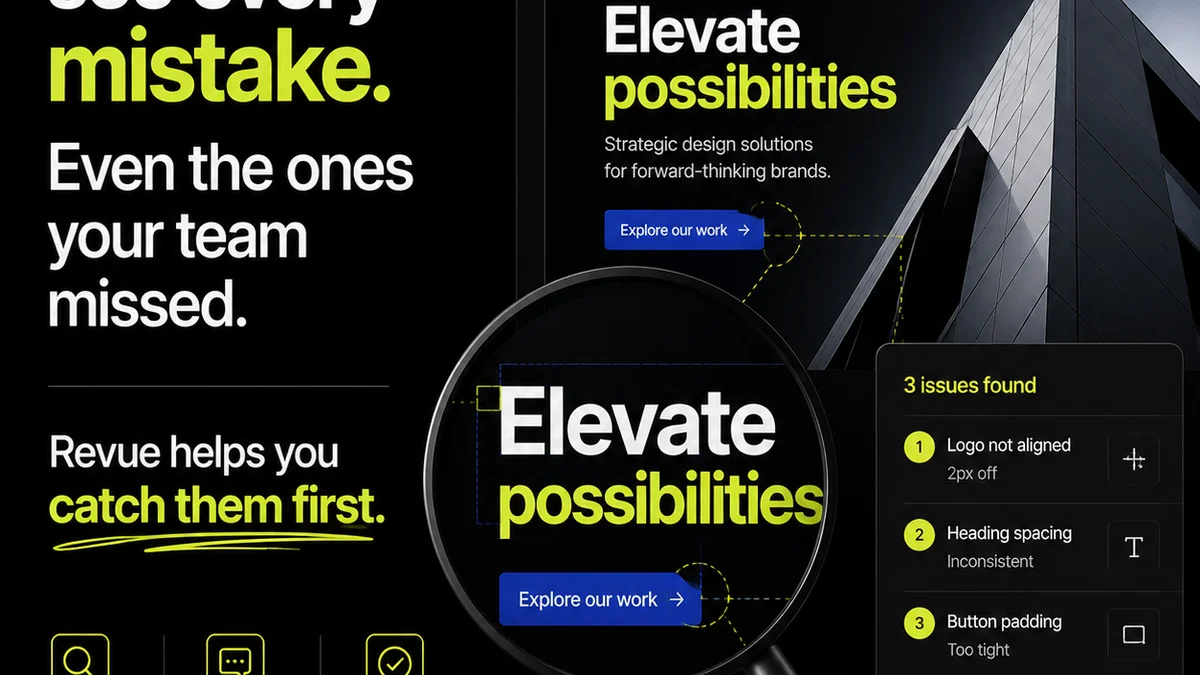
Revue isn’t just another review tool; it’s a workflow accelerator for creative operations. It tackles the chaos of scattered feedback by providing a single, definitive source for all creative review and approval activity.
Instead of digging through emails or Slack threads, your team knows exactly where to find client comments, stakeholder approvals, and the latest asset versions. This centralized feedback system directly feeds into efficient revision management. When a revision is ready, it’s clear which feedback points it addresses.
Furthermore, Revue provides the visibility needed for quality checks. By having a clear record of feedback, revisions, and final approvals, you build an auditable history that helps maintain creative quality and manage client expectations effectively.
It’s about bringing order to the creative review process, making it faster, more transparent, and less prone to errors, without disrupting the tools and processes your team already relies on.
6. The Cost of Complexity
Feature checklists often obscure the true cost of a tool: the cost of complexity.
Complex platforms require more training, more setup, and more ongoing management. They can slow down adoption and lead to underutilization of features.
For agencies that need to move quickly and efficiently, especially those working with multiple clients and projects simultaneously, this complexity can become a significant bottleneck.
Revue’s deliberate focus on core review and approval workflows means it’s designed for speed and ease of use. The learning curve is gentle, onboarding is quick, and the interface is intuitive. This translates to faster project turnarounds and less administrative overhead.
The operational cost of implementing and maintaining a tool should be as critical a factor as its feature set. Simplicity, when applied strategically, is a powerful efficiency driver.
Final Thought
The choice between Revue and Ziflow, or any similar tools, isn't just about ticking boxes on a feature list. It's a strategic decision about how you want your agency to operate. Do you want a comprehensive, all-encompassing system that dictates workflow, or a streamlined, integrated solution that enhances your existing processes?
Consider the true impact on your team's efficiency, your clients' experience, and the overall agility of your creative operations. The answer lies not in the features, but in the operational reality they create.
Frequently asked questions
What is the main difference in philosophy between Revue and Ziflow?
Ziflow often emphasizes comprehensive control and a self-contained ecosystem for managing the entire review lifecycle. Revue focuses on intelligent centralization, acting as a streamlined hub for feedback and approvals that integrates with your existing tools rather than replacing them.
How does each tool impact the client experience?
Ziflow can offer a robust experience for process-oriented clients but may be complex for those seeking simplicity. Revue prioritizes a frictionless, easy-to-use experience for clients, minimizing onboarding and confusion.
Which tool is better for agencies using multiple existing software?
Revue is generally better suited for agencies that want to integrate a feedback tool into their existing tech stack (e.g., Figma, Adobe, Asana, Slack) without disrupting current workflows. Ziflow's strength lies more within its own comprehensive ecosystem.
Is feature parity important when choosing between Revue and Ziflow?
While both tools offer similar core features, the real differentiator is how those features are implemented and how they support your agency's specific operational philosophy and workflow. Focusing solely on features can be misleading.