Everyone says you need a creative workflow tool. That it’ll speed things up, cut down errors, and make clients happy. None of that is wrong. But it’s incomplete.
The real challenge isn't just *having* a tool. It’s picking the *right* tool for your specific agency pain points. And understanding that the tool is only as good as the process it supports.
Many agencies compare platforms like Revue and Ziflow based on feature lists. They look at annotation types, version control, and user roles. They assume that if a tool has more features, it’s automatically better. That’s a mistake.
The hard truth? The best platform for your agency isn't about the bells and whistles. It's about how effectively it solves your most persistent workflow bottlenecks. Specifically, how it handles client feedback, revision tracking, and final approvals.
1. The Feedback Feedback Loop: Chaos vs. Clarity
Client feedback is the lifeblood of creative work. It's also a notorious black hole for agency time and sanity. The assumption is that any platform with commenting will fix this.
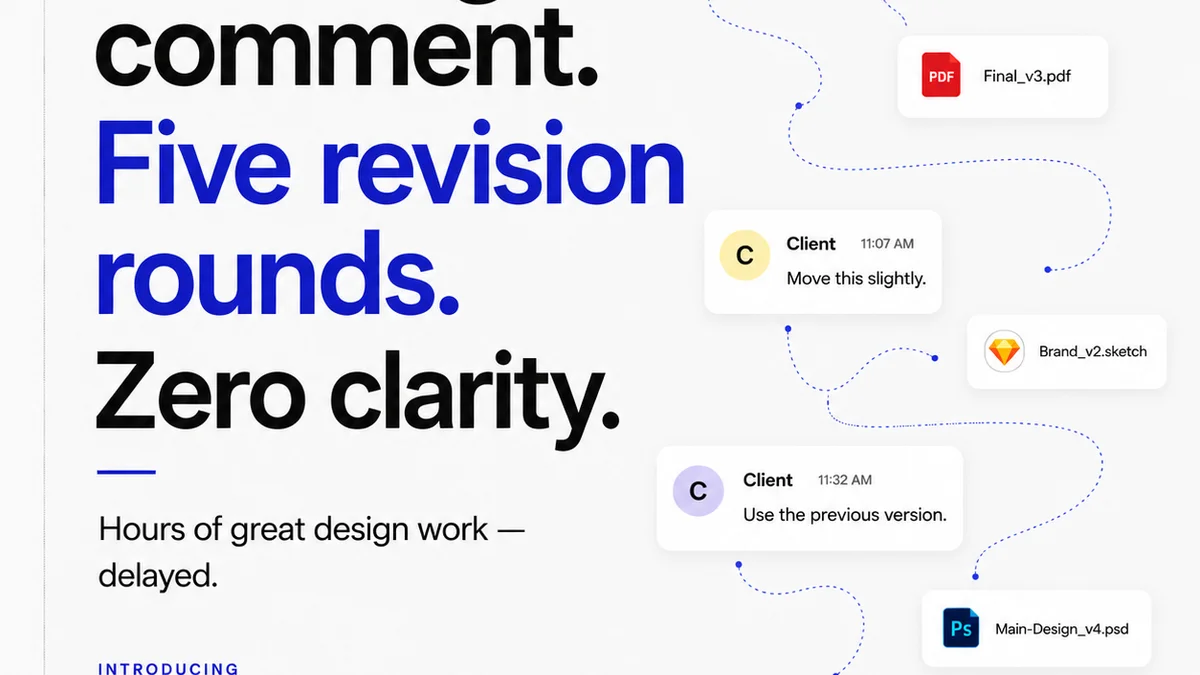
The reality is far messier. Unstructured feedback leads to endless back-and-forth. It’s often vague, contradictory, or delivered through insecure channels.
The Symptoms of Feedback Friction
- Endless email chains with feedback buried deep.
- Misinterpretations leading to wasted revisions.
- Difficulty tracking who said what, and when.
- Clients providing feedback via Slack, text, or even phone calls.
- Creative teams guessing at the client’s true intent.
This isn't just annoying. It’s expensive. Every hour spent deciphering poor feedback is an hour not spent creating. Or billing.
The Goal: Actionable, Centralized Feedback
A good review platform doesn’t just collect comments. It structures them. It makes them actionable. It ensures that every piece of feedback is tied to a specific element and a specific version.
Think about it: What’s the difference between a client saying “I don’t like this” and “Change the kerning on the headline to 15px”? One is noise. The other is direction.
This is where platforms differentiate. Some offer basic annotation. Others provide granular control, allowing stakeholders to highlight specific areas, draw shapes, or even leave video comments.
The key is whether the tool forces clarity. Does it guide the client (and your team) towards providing specific, contextual feedback? Or does it just replicate the chaos of email in a new interface?
2. Revision Management: Version Control is Not Enough
You’ve got the feedback. Now what? The next step is managing revisions. Most platforms tout robust version control. They let you upload new versions and compare them.
This is table stakes. It’s like saying a word processor is good because it has a save button.
The real challenge with revisions isn’t just tracking them. It’s managing the *state* of the work. It’s ensuring that the right version is being reviewed at the right time. And that everyone is looking at the same thing.
The Pitfalls of Poor Revision Handling
- Sending out a new version without clearly indicating what changed.
- Team members working on outdated files.
- Clients approving a version that’s already been superseded.
- Difficulty reverting to a previous stable version if a new direction fails.
- Lack of transparency on the revision history for stakeholders.
This leads to confusion, duplicated effort, and missed deadlines. It erodes trust between the agency and the client.
The Goal: A Clear Audit Trail
Effective revision management provides a clear, chronological audit trail. Each version should be distinctly labeled, with notes on what was updated based on feedback.
Crucially, the platform should make it easy to see the *current* approved version versus older iterations. It should prevent accidental approvals of old work.
Consider the workflow: When feedback is addressed, a new version is uploaded. This new version becomes the active review item. Previous versions are archived but accessible. The system should clearly show the progression, making it easy to trace decisions and changes.
Does the tool facilitate this clarity? Or does it just create a long list of files that require manual cross-referencing?
3. Approval Workflows: From Sign-off to Sign-off
The final hurdle is approval. This sounds straightforward, but it’s often where projects get stuck. A simple “Looks good” email isn’t a formal approval.
Agencies need a system that captures explicit sign-off. This protects both the agency and the client. It provides a definitive record that the work meets requirements.
The Dangers of Ambiguous Approvals
- Clients claiming they never approved a specific element.
- Disputes over scope creep after a project is considered “done.”
- Difficulty in handoff to development or production without clear sign-off.
- Lost revenue due to unclear project completion milestones.
- Internal confusion about project status.
The assumption is that a button click is enough. But the process leading up to that button click matters immensely.
The Goal: Defined, Trackable Approvals
A robust approval workflow should be configurable. It might involve multiple stakeholders, different levels of approval, or conditional sign-offs.
The system should notify the right people at the right time. It should provide a clear status indicator (e.g., Pending, Approved, Rejected). And the final approval should be logged with a timestamp and user identification.
This isn’t just about bureaucracy. It’s about de-risking the project. It ensures that when a client says “yes,” it’s a documented, unambiguous commitment.
Think about the complexity: Do you need a single approver? A committee? Does the approval need to happen sequentially or can multiple people approve simultaneously? The tool’s ability to map to your actual approval process is critical.
4. Where Revue Fits In
When evaluating tools like Revue and Ziflow, it’s easy to get lost in the weeds of specific features. But remember the core workflow challenges: feedback, revisions, and approvals.
Revue, at its heart, is designed to bring clarity and control to these critical stages. It’s not just about collecting comments; it’s about centralizing the entire review and approval process.
The goal is to eliminate the ambiguity that plagues creative projects. By providing a single source of truth for feedback and revisions, Revue helps ensure that everyone is aligned.
This means:
- Centralized Feedback: All client comments live in one place, linked to specific versions and elements. No more hunting through emails or Slack.
- Clear Revision History: Easily track every iteration. Understand what changed, why it changed, and who approved it.
- Streamlined Approvals: Define clear sign-off stages to prevent miscommunications and ensure formal acceptance of the work.
- Quality Assurance: With all feedback and revisions documented, your team can perform thorough quality checks against agreed-upon requirements before final delivery.
The focus is on making the often-messy process of creative review transparent and manageable. It’s about moving from reactive firefighting to proactive project control.
5. Beyond the Features: Process is King
No tool, whether it’s Revue, Ziflow, or anything else, can magically fix a broken process. A powerful platform used haphazardly will yield poor results.
The most successful agencies don’t just buy software. They define their workflows first. They map out how feedback should be given, how revisions should be handled, and how approvals should be secured.
Then, they choose a tool that supports and enforces that defined process.
Common Workflow Pitfalls
- Lack of a clear internal review process before client delivery.
- Ambiguous client briefs leading to subjective feedback.
- Failure to define the scope of revisions included in a project.
- Not having a designated point person for feedback consolidation.
- Treating feedback as a suggestion rather than a directive (or vice-versa).
Your agency’s internal processes are the foundation. The review and approval tool is the structure built upon it.
A tool like Ziflow might offer a vast array of advanced features. A tool like Revue might focus on a streamlined, intuitive experience for core needs. The choice depends on which best aligns with your agency’s specific needs and, more importantly, your defined workflow.
Final Thought
When comparing creative workflow tools, resist the urge to simply count features. Instead, ask yourself: Does this platform fundamentally solve my biggest feedback and approval headaches?
Does it bring clarity where there’s chaos? Does it create an auditable trail where there’s ambiguity? Does it empower your team to deliver great work, efficiently and without costly missteps?
The right tool isn’t the one with the most buttons. It’s the one that helps you get the job done, right, the first time. What’s holding your agency back right now?
Frequently asked questions
What is the primary difference between Revue and Ziflow?
While both are creative review and approval platforms, Ziflow often emphasizes a broader feature set for complex enterprise needs, whereas Revue typically focuses on streamlining core feedback, revision, and approval workflows for agencies and in-house teams, prioritizing clarity and ease of use.
How does a creative workflow tool help manage client feedback?
Creative workflow tools centralize feedback, linking comments to specific elements and versions. This eliminates scattered communication across emails and chats, providing a clear, actionable record of client input and reducing misinterpretations.
Why is revision management important in creative projects?
Effective revision management ensures a clear audit trail of all project iterations. It prevents team members from working on outdated files, avoids client approvals of superseded versions, and makes it easy to track changes and revert to previous stable states if necessary.
What makes an approval workflow 'robust'?
A robust approval workflow is configurable to your specific needs, allowing for multiple stakeholders, sequential or parallel approvals, and clear status indicators (Pending, Approved, Rejected). It captures explicit, documented sign-off with timestamps and user identification.
Can a tool fix a broken agency process?
No, a tool cannot fix a fundamentally broken process. The most effective approach is to define your agency's workflows first, then select a tool that supports and enforces those defined processes. The tool amplifies your process; it doesn't replace it.