Everyone talks about User Experience (UX) like it’s magic. Great UX, they say, makes software intuitive. It delights users. It drives adoption. None of that is wrong. But it’s incomplete.
The hard truth? For creative agencies and in-house teams managing client work, the real value of SaaS UX services isn't just about pretty interfaces or happy users. It's about operational efficiency, reduced risk, and ultimately, a healthier bottom line. It’s about how the right tools streamline your entire creative process, from initial brief to final sign-off.
1. The Myth of 'Good Enough' UX
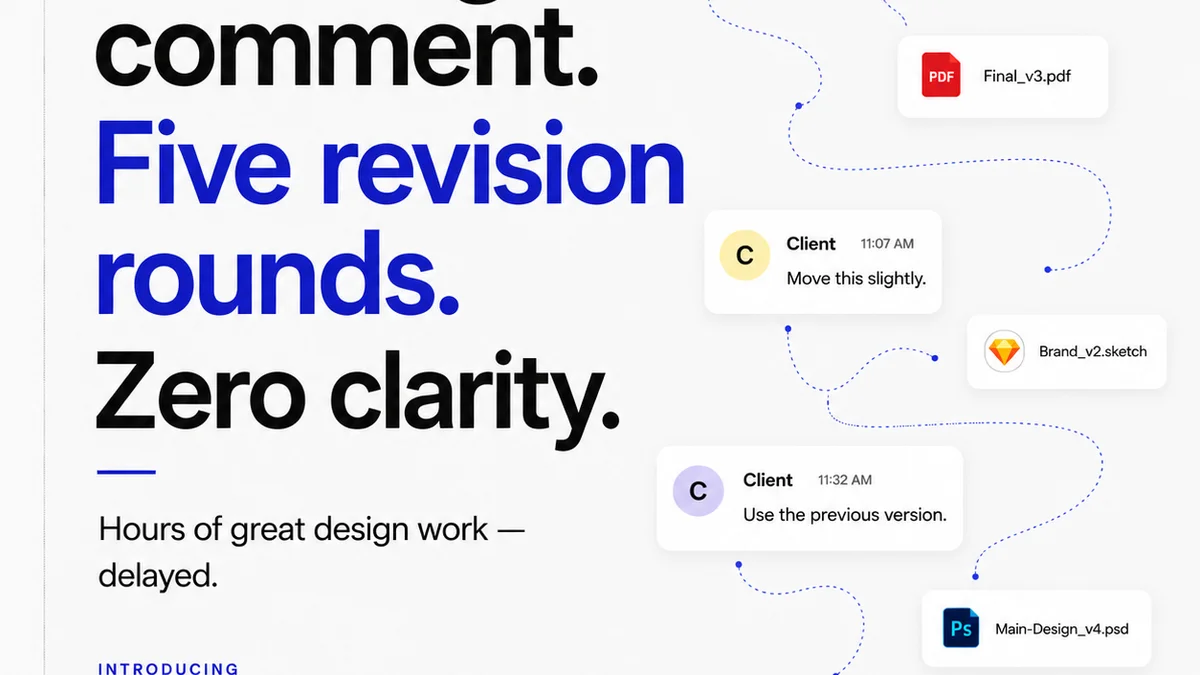
Many agencies assume that if their team can *use* a piece of software, it's good enough. They tolerate clunky workflows, scattered feedback, and manual tracking because, well, it gets the job done. This is a dangerous assumption.
Why? Because 'good enough' is the enemy of 'great'. It’s the silent killer of productivity and the breeding ground for errors.
The Hidden Costs of Mediocre UX
- Endless email chains for feedback, buried under irrelevant messages.
- Version control nightmares, with teams working on outdated assets.
- Client confusion and frustration, leading to rushed, poor decisions.
- Wasted hours on manual status updates and internal communication.
- Increased likelihood of critical errors slipping through the cracks.
These aren't minor inconveniences. They are drains on your resources, impacting project timelines and profitability.
2. Operationalizing UX: The Agency Imperative
Effective SaaS UX services, when applied to agency workflows, should do more than just look good. They should fundamentally improve how your team operates. This means focusing on the core pain points of creative project management.
Think about the journey of a creative asset. It starts with a brief, moves through design, gets reviewed, revised, and finally approved. Each step is a potential bottleneck. Each step requires clear communication and accurate tracking.
Key Areas Where UX Makes a Difference
When evaluating SaaS tools, look beyond superficial features. Consider how they impact these critical operational areas:
- Feedback Centralization: Can all client and stakeholder feedback live in one place, directly on the asset? Are annotations clear and actionable?
- Revision Tracking: Is it easy to see what’s changed between versions? Can you roll back to previous iterations if needed?
- Approval Workflows: Are there clear, defined steps for review and sign-off? Can you track who has approved what and when?
- Quality Assurance: Does the tool help catch common errors or ensure compliance with brand guidelines before final delivery?
- Communication Clarity: Does the platform reduce the need for external emails and messages about the asset itself?
A tool that excels in these areas isn't just software; it's a strategic advantage. It’s about building a more robust, predictable, and profitable creative operation.
3. The Tangible Benefits: Beyond User Delight
Let's cut through the fluff. What are the concrete, measurable benefits of investing in SaaS solutions with strong UX designed for creative workflows?
Reduced Project Timelines
Faster feedback loops and streamlined approvals mean projects move from start to finish more quickly. This frees up your team for more billable work.
Lowered Revision Costs
Clearer feedback and better version control minimize costly, time-consuming revisions caused by miscommunication or outdated information.
Improved Client Relationships
A transparent, organized process builds trust. Clients appreciate seeing their feedback actioned clearly and understanding the project's status without constant chasing.
Minimized Errors and Rework
Robust QA features and clear communication reduce the chance of critical mistakes, saving you from expensive and reputation-damaging rework.
Enhanced Team Collaboration
When everyone is on the same page, working within a system designed for clarity, collaboration naturally improves. Less time spent deciphering notes, more time creating.
This isn't about making software *feel* nice. It's about making your entire business *run* better.
4. Where Revue Fits In
This is precisely why Revue was built. We saw agencies and creative teams drowning in scattered feedback, struggling with version control, and losing visibility into the revision and approval process. The operational friction was immense.
Revue offers a centralized platform designed to address these core challenges:
- Centralized Feedback: All client comments, annotations, and stakeholder input live directly on the creative asset. No more hunting through emails or Slack messages.
- Clear Revision History: Easily track every change, compare versions, and understand the evolution of an asset. Roll back to previous states with confidence.
- Streamlined Approvals: Define custom approval workflows, track progress, and get clear, documented sign-offs. Eliminate ambiguity about who needs to approve what and when.
- Integrated Quality Checks: Build in steps for internal review and quality assurance, ensuring assets meet standards before they reach the client.
Our focus is on the operational reality of creative work. We provide the structure and clarity needed to move projects forward efficiently, turning potential chaos into a controlled, predictable flow.
5. Choosing the Right SaaS UX: What to Look For
When evaluating SaaS solutions for your agency, don't just look at feature lists. Apply a critical UX lens focused on your operational needs.
Ask the Right Questions
- Does the user interface feel intuitive, or does it require extensive training?
- Can a new team member understand the core workflows within an hour?
- How does the tool handle conflicting feedback from multiple stakeholders?
- Is it easy to find specific feedback or approvals from weeks ago?
- Does it integrate with other tools you rely on, or create more silos?
- What is the process for onboarding and ongoing support?
- Does the company demonstrate a deep understanding of creative agency workflows?
Prioritize tools that reduce friction, not add to it. Look for solutions that are built *for* the way creative teams actually work, not just for the theoretical ideal.
Final Thought
Is
Frequently asked questions
What is the primary benefit of good SaaS UX for creative agencies?
The primary benefit is operational efficiency. Good SaaS UX streamlines feedback, revisions, and approvals, reducing project timelines, minimizing costly errors, and improving team collaboration, which directly impacts profitability.
How can SaaS UX help manage client feedback effectively?
Effective SaaS UX allows for centralized feedback directly on creative assets. This means all comments, annotations, and stakeholder input are organized in one place, reducing confusion, preventing lost feedback, and ensuring clarity on required changes.
What should agencies look for when evaluating SaaS UX for their workflow?
Agencies should prioritize SaaS solutions that offer intuitive interfaces, clear revision tracking, streamlined approval workflows, and effective communication tools. Look for software that demonstrably reduces friction in the creative process, rather than adding to it.
Can good UX in SaaS tools prevent rework?
Yes. By centralizing feedback, providing clear version control, and facilitating robust approval processes, good SaaS UX significantly reduces the chances of misinterpretation or working on outdated versions, thereby minimizing costly rework.