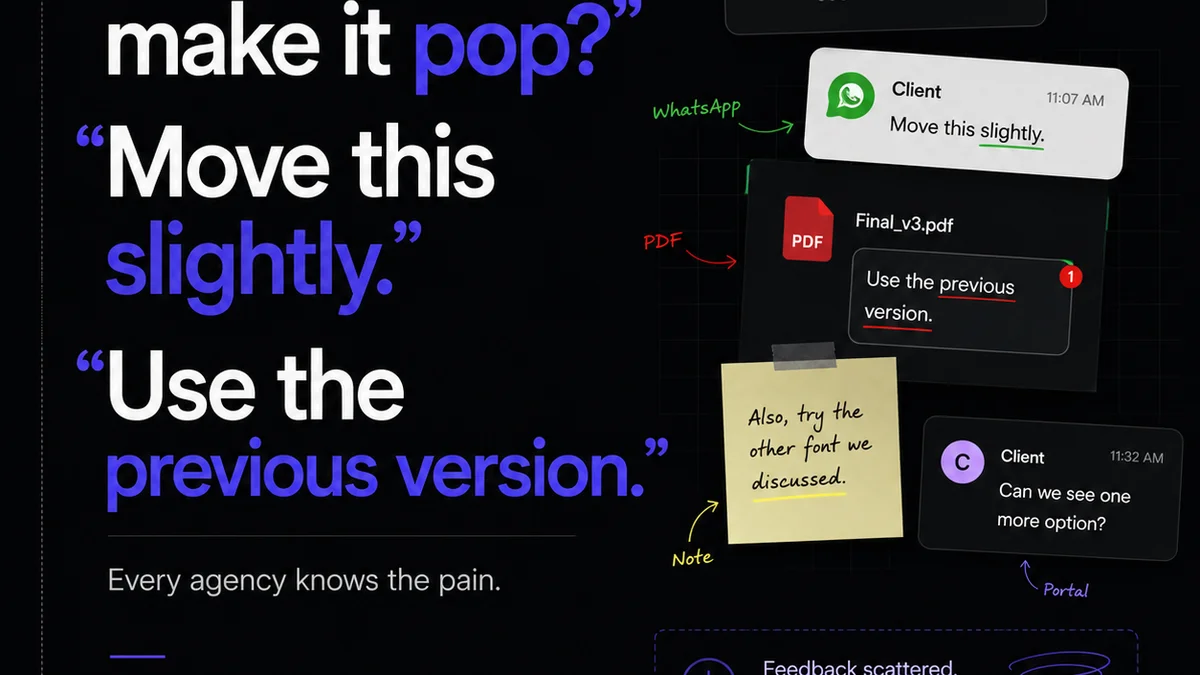
Everyone thinks they know how to run a stakeholder design review. You schedule a meeting, show the work, get some feedback, and move on. Easy, right?
None of that is wrong. But it’s incomplete.
The hard truth is that most stakeholder design reviews are performative. They feel like a necessary evil, a box to tick. But they’re actually a minefield of potential project derailment. Or, if handled correctly, your single best chance to align everyone and ensure the work actually lands.
1. The 'Review' is a Misnomer
Let’s start with the name. “Stakeholder design review.” It sounds like a final check. A moment to confirm everyone’s on the same page before launch. That’s the assumption. The reality is far messier.
A true review implies critical evaluation. A judgment against established criteria. But most stakeholder meetings are actually about information dissemination and opinion gathering. Not rigorous assessment.
This distinction is crucial. If you go into a meeting expecting a deep, critical audit from stakeholders who haven’t been prepped, you’re setting yourself up for disappointment. Or worse, unexpected objections that halt progress.
The Real Goal: Alignment, Not Just Approval
The primary objective of a stakeholder design review shouldn't be a signature. It should be shared understanding. A collective buy-in that the direction is sound and the execution is on track.
When you frame it this way, the entire approach shifts. You’re not just presenting pretty pictures. You’re guiding a conversation. You’re managing expectations. You’re building consensus.
Symptoms of a Misunderstood Review
- Endless, nitpicky feedback on minor details.
- Stakeholders who were absent suddenly reappearing with major concerns.
- The client asking for “just one more change” after the review.
- A general feeling of confusion or misalignment after the meeting.
- The review feeling like a formality, not a crucial decision point.
These aren't signs of bad design. They're signs of a poorly structured review process.
2. Pre-Review: The Unseen Foundation
The most successful stakeholder design reviews don’t start in the meeting room. They start weeks, sometimes months, before. They start with foundational work.
This means ensuring stakeholders understand the project goals, the target audience, and the strategic objectives. Without this context, their feedback will be subjective, unfocused, and ultimately unhelpful.
Setting the Stage for Success
Before you even show a wireframe, let alone a high-fidelity mockup, you need to:
- Define Clear Objectives: What is this design supposed to achieve? What problem does it solve?
- Establish Success Metrics: How will we know if it’s working? (e.g., increased conversion, reduced bounce rate, improved user satisfaction).
- Identify Key Stakeholders: Who *really* needs to weigh in? Who has decision-making authority?
- Understand Their Perspectives: What are their individual goals and concerns related to this project?
- Provide Pre-Reading: Share project briefs, user research summaries, and previous iterations well in advance.
This pre-work ensures that when you present the design, everyone is operating from the same playbook. They’re not just looking at aesthetics; they’re evaluating against shared goals.
The Kick-off Meeting Matters
A dedicated kick-off meeting is non-negotiable. This is where you:
- Reiterate project goals.
- Define the scope of the design work.
- Outline the review process and timeline.
- Establish communication channels.
- Identify potential risks and dependencies.
If stakeholders haven't bought into the strategy by this point, they won't magically agree with the design later.
3. The Review Meeting: Facilitation, Not Presentation
Many teams treat the review meeting as a presentation. They walk through every screen, explaining every decision. This is a mistake.
The meeting should be a facilitated discussion. Your role as the presenter is to guide the conversation, not to defend every pixel.
Structure for Clarity
- Start with the Why: Briefly re-state the project goals and how the design addresses them.
- Focus on Key Decisions: Highlight the most critical areas where you need feedback. Don't get bogged down in minor UI elements unless they directly impact the core objectives.
- Use a Feedback Framework: Guide stakeholders on the *type* of feedback you need. Are you looking for strategic alignment, usability concerns, or aesthetic preferences?
- Timeboxing is Your Friend: Allocate specific time slots for each section or decision point.
- Document Everything: Have a dedicated note-taker. Capture decisions, action items, and feedback clearly.
Resist the urge to answer every question immediately. Sometimes, a question is a proxy for a deeper concern. Ask clarifying questions: “Can you tell me more about why that’s important?” or “How does that relate to our goal of X?”
Handling Unsolicited Feedback
You will get feedback that feels off-topic or subjective. This is where your pre-work pays off.
If feedback contradicts the project goals or established strategy, gently steer the conversation back. “That’s an interesting point. How do you see that impacting our primary objective of improving conversion rates?”
If the feedback is purely subjective (e.g., “I don’t like blue”), refer back to the established brand guidelines or user research that informed the color choice. “We chose this palette based on our target audience research, which indicated a preference for calming, trustworthy colors. Does this specific shade present a problem for usability?”
4. Post-Review: Action and Follow-Up
The meeting isn't the end; it's the beginning of the next phase. What happens after the review is often more critical than the review itself.
This is where clarity turns into action. Misalignment gets corrected. And the project moves forward with confidence.
Processing Feedback Effectively
- Synthesize and Prioritize: Group similar feedback. Distinguish between critical issues and minor suggestions.
- Identify Actionable Items: What specific tasks need to be done based on the feedback?
- Assign Ownership and Deadlines: Who is responsible for each action item, and by when?
- Communicate Next Steps: Share a summary of the meeting, including decisions made and action items, with all stakeholders.
This documentation is vital. It creates accountability and ensures everyone knows what’s expected. It prevents the “he said, she said” scenarios that plague many projects.
Closing the Loop
Once the action items are completed, you need to close the loop with stakeholders.
This might involve a quick email update, a brief follow-up meeting to show revised designs, or simply updating the project management tool.
The key is transparency. Stakeholders need to see that their feedback was heard and acted upon (or that a clear rationale was provided if it wasn't incorporated). This builds trust for future reviews.
Where Revue Fits In
Managing stakeholder design reviews effectively, especially across multiple projects and clients, requires robust communication and clear tracking. This is where a centralized platform like Revue becomes indispensable.
Revue helps you move beyond scattered email threads and chaotic meeting notes. It provides a single source of truth for all creative assets and feedback.
- Centralized Feedback Hub: Upload all design iterations to Revue. Stakeholders can leave comments directly on the visual, ensuring feedback is contextual and easy to track.
- Revision and Approval Visibility: See every version of a design and who approved what, and when. This eliminates ambiguity and prevents scope creep by providing a clear audit trail.
- Streamlined Communication: Notifications keep everyone informed about new feedback, revisions, and approvals, ensuring timely responses.
- Quality Assurance Checks: Use Revue to ensure that all feedback has been addressed and that the final deliverable meets all requirements before final sign-off.
By centralizing your workflow, you reduce the friction inherent in stakeholder reviews, allowing your team to focus on creating great work, not managing endless communication loops.
Final Thought
Stakeholder design reviews are not a passive checkpoint. They are an active, strategic process. They are your opportunity to build shared understanding and ensure your creative work achieves its intended impact. Are you treating them as such?
Frequently asked questions
What is the most common mistake in stakeholder design reviews?
The most common mistake is treating the review as a mere formality or a final approval step, rather than as a critical opportunity for strategic alignment and detailed feedback. This often leads to subjective critiques, scope creep, and missed opportunities for course correction.
How can I ensure stakeholders provide constructive feedback?
Ensure stakeholders have ample pre-reading material that outlines project goals, target audience, and strategic objectives. During the review, guide the conversation by asking them to tie their feedback back to these objectives. Use a feedback framework to specify the type of input you need (e.g., strategic, usability, aesthetic).
What should happen immediately after a design review meeting?
Immediately after the meeting, synthesize and prioritize all feedback received. Document clear, actionable items, assign ownership and deadlines for each, and then communicate these next steps to all stakeholders. This ensures accountability and transparency.
How do I handle subjective feedback like 'I don't like this color'?
Gently steer subjective feedback back to project objectives or user research. You can ask how the preference relates to the project's goals or user needs. Referencing established brand guidelines or research findings provides a rational basis for design decisions, moving the conversation away from personal taste.