Everyone talks about getting stakeholder feedback. The assumption is that if you just ask the right questions, you’ll get clear, actionable input.
None of that is wrong. But it’s incomplete.
The hard truth? Most feedback is a symptom, not a solution. It’s a tangled mess of opinions, preferences, and sometimes, outright misunderstandings.
Your job isn’t just to collect feedback; it’s to *decode* it. To turn a flood of subjective noise into objective, actionable direction. This stakeholder feedback checklist is designed to help you do just that.
1. Define the Goal, Not Just the Task
Before anyone even *sees* the work, you need crystal clarity on what success looks like. This isn’t about checking boxes; it’s about understanding the business objective.
What problem are we trying to solve? What behavior are we trying to drive? What does success look like *beyond* this specific deliverable?
The 'Why' Behind the 'What'
- Is this a brand awareness campaign, or is it directly tied to sales conversions?
- Is the goal to educate users, or to entertain them?
- Are we launching a new product feature, or iterating on an existing one?
Without this context, feedback becomes a guessing game. Stakeholders might focus on aesthetics when the real goal is usability, or vice versa.
2. Establish Feedback Channels and Cadence
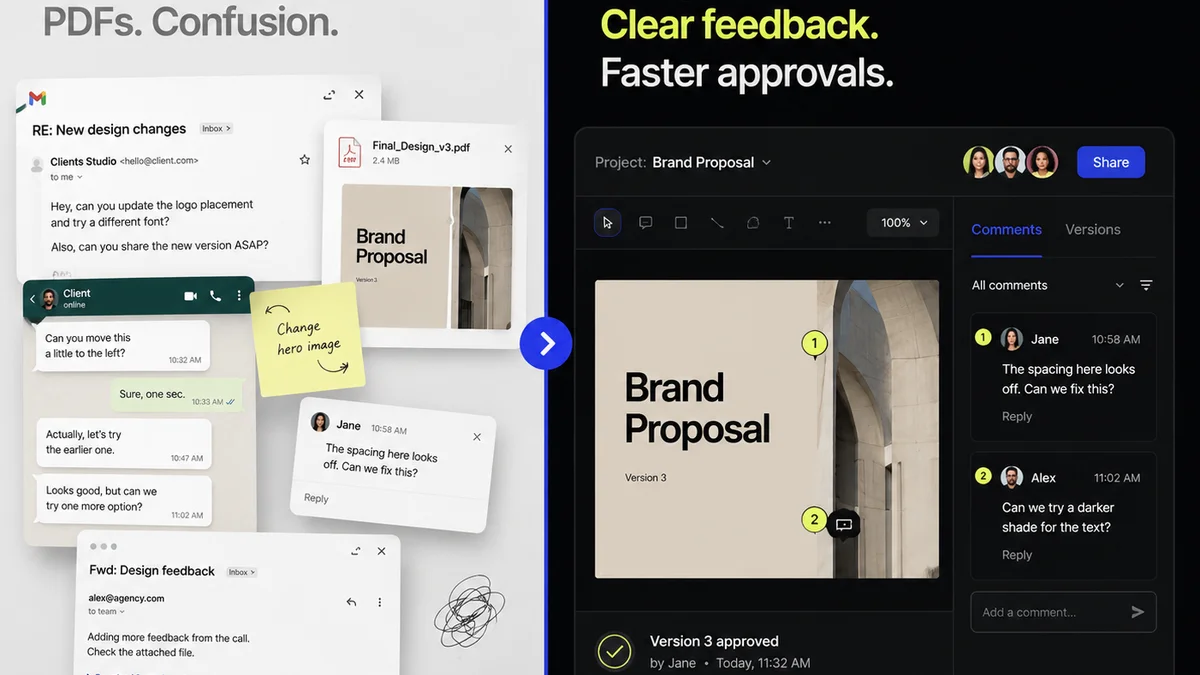
Chaos thrives when feedback channels are undefined. Email chains, Slack messages, hallway conversations – they all become black holes for critical input.
You need a structured approach. Agree on where feedback lives and when it will be given and reviewed.
Setting Expectations
- Centralized Platform: Designate a single tool for all feedback. This prevents miscommunication and ensures everything is documented.
- Scheduled Reviews: Don't rely on ad-hoc feedback. Schedule specific review sessions at key milestones.
- Clear Deadlines: Communicate when feedback is due. Unresponsiveness is a form of feedback itself – and it costs time and money.
- Designated Reviewers: Identify who has the final say. Too many cooks spoil the broth, and too many opinions dilute the vision.
This isn't about gatekeeping; it's about efficiency. It ensures that the right people provide feedback at the right time, in the right way.
3. Equip Stakeholders with Context
You can't expect useful feedback if stakeholders are flying blind. They need to understand the project's background, objectives, and constraints.
Provide Essential Information
- Project Brief Recap: Remind everyone of the original goals and scope.
- Target Audience Profile: Who are we designing for? What are their needs and pain points?
- Technical Constraints: What are the limitations of the platform, budget, or timeline?
- Previous Iterations: If applicable, show how previous feedback was incorporated.
The more context you provide, the more informed and relevant the feedback will be. It helps stakeholders think critically, rather than just reacting subjectively.
4. Frame the Feedback Request
How you *ask* for feedback dramatically influences the quality of what you receive. Generic requests yield generic responses.
Specific Questions Yield Specific Answers
- Instead of: “What do you think of this?”
- Try: “Does this hero section clearly communicate the value proposition for new users?”
- Instead of: “Any issues with this flow?”
- Try: “Can a first-time user easily complete the checkout process based on this design?”
Focus feedback requests on specific aspects of the design or functionality that relate directly to the project goals. This guides the reviewer’s attention.
5. Differentiate Between Opinion and Requirement
This is where many teams stumble. Not all feedback is created equal. Some is subjective preference, some is a critical functional requirement.
The 'Must-Have' vs. 'Nice-to-Have' Filter
- Objective Criteria: Does the feedback align with the project goals, user needs, or brand guidelines?
- Impact Assessment: How significant is the proposed change? Does it require a complete rework or a minor tweak?
- Source of Feedback: Is this a personal preference or a genuine user pain point?
Your role is to be the filter. You translate subjective input into objective requirements that can be acted upon.
6. Identify the Root Cause of Vague Feedback
Vague feedback is a red flag. It often signals underlying issues with the project, the communication, or the stakeholder’s understanding.
Common Culprits
- Unclear Objectives: If the goals aren't clear, feedback will be unfocused.
- Lack of User Empathy: Stakeholders might be designing for themselves, not the end-user.
- Conflicting Priorities: Different stakeholders may have competing agendas.
- Insufficient Context: As mentioned, lack of information leads to uninformed opinions.
Don't just accept vague comments. Dig deeper. Ask clarifying questions like, “Can you elaborate on what you mean by ‘it doesn’t feel right’?” or “What specific outcome are you hoping this change will achieve?”
7. Use a Structured Review Process
A formal review process ensures that feedback is captured, discussed, and actioned consistently. It moves beyond the informal and into the operational.
Key Steps in the Process
- Feedback Submission: Stakeholders submit feedback through the designated channel by the agreed-upon deadline.
- Consolidation & Triage: The project lead reviews all feedback, categorizes it (e.g., bug, enhancement, clarification), and assesses its validity against project goals.
- Discussion & Decision: A dedicated meeting (or asynchronous discussion) to review consolidated feedback with key stakeholders. Decisions are made on what to implement, defer, or reject, with clear rationale.
- Action & Implementation: Approved changes are added to the project backlog and implemented by the design/dev team.
- Communication of Outcomes: Clearly communicate back to stakeholders which feedback was actioned, deferred, or rejected, and why.
This structured approach transforms feedback from a potential roadblock into a predictable part of the workflow.
8. Leverage Visual Annotation Tools
Sometimes, words fail. Visual feedback tools allow stakeholders to point to exactly what they mean, reducing ambiguity.
Tools that allow direct annotation on mockups or prototypes are invaluable. They eliminate the need for lengthy descriptions and ensure everyone is looking at the same element.
9. Where Revue Fits In
Managing stakeholder feedback effectively is a core challenge for creative teams. It requires structure, clarity, and accountability.
Revue is built to bring order to this chaos. By centralizing client feedback, you create a single source of truth. Every comment, every revision, every approval lives in one place, visible to everyone involved.
This visibility cuts through the noise. You can easily track the history of feedback, understand the rationale behind decisions, and ensure that changes align with original objectives. It transforms a fragmented process into a streamlined, transparent workflow, making it easier to manage revisions and conduct quality checks before final delivery.
10. The Post-Mortem on Feedback
After a project (or a significant phase) wraps up, take time to review the feedback process itself. What worked? What didn’t?
Questions for Reflection
- Was the feedback timely and relevant?
- Were the objectives clear from the start?
- Did the chosen channels work effectively?
- Were there any points of significant confusion or conflict?
- How could the process be improved for the next project?
Treating the feedback process as an iterative project in itself will lead to continuous improvement.
Final Thought
Collecting feedback is easy. The real skill lies in transforming it. It’s about moving from a reactive, opinion-driven process to a proactive, goal-driven one. Are you managing feedback, or is feedback managing you?
Frequently asked questions
What is the most common mistake when collecting stakeholder feedback?
The most common mistake is treating all feedback as equally valid and actionable. Often, feedback is subjective opinion or a symptom of unclear objectives, rather than a concrete requirement. A good checklist helps differentiate.
How can I ensure feedback is actionable?
Actionable feedback is specific, objective, and aligned with project goals. Frame your requests with clear questions focused on outcomes, and ask stakeholders to justify their suggestions against the project brief and user needs.
What's the best way to handle conflicting feedback from different stakeholders?
Identify the project's ultimate goals and priorities. Facilitate a discussion where conflicting points are debated based on their impact on these goals. The person or role with final decision-making authority should make the call, with clear communication on why.
How often should feedback be solicited?
Feedback should be solicited at key milestones, not constantly. This means defining specific review points in your project plan. Ad-hoc feedback can derail progress, while structured reviews ensure timely input without disrupting the workflow.