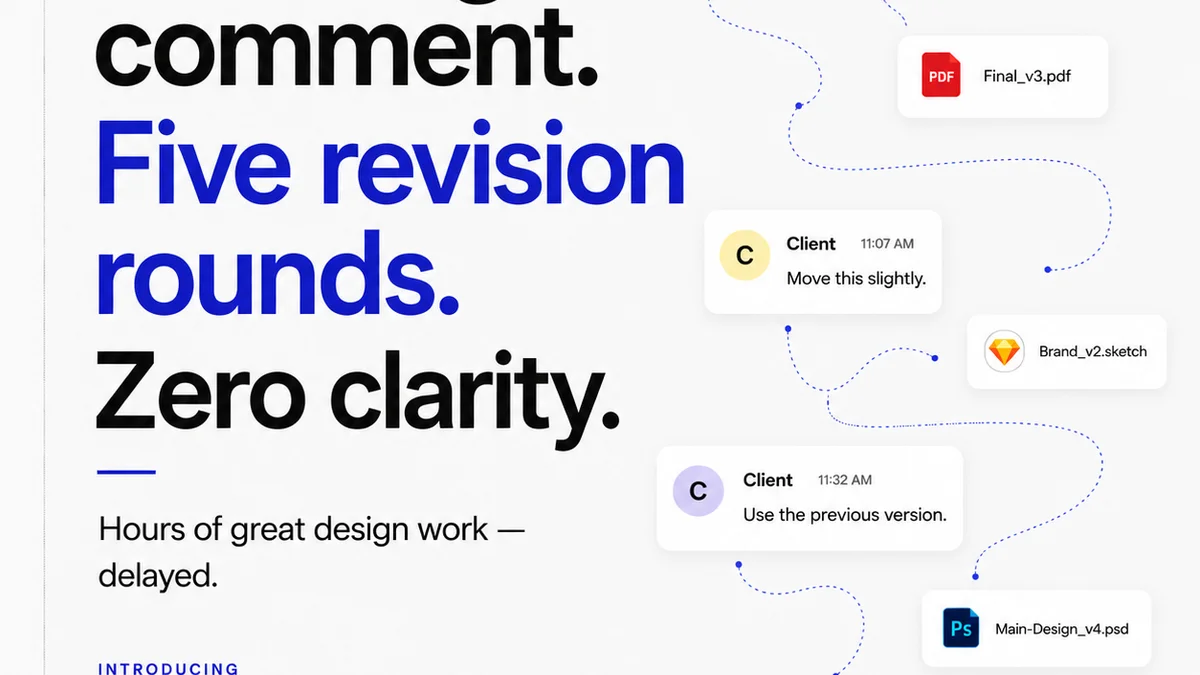
You think you need stakeholder feedback software to make clients happy. That they’ll finally get their revisions in on time, in one place, and stop emailing PDFs back and forth.
None of that is wrong. But it’s incomplete.
The real reason you need better stakeholder feedback software is to make *your team* more efficient, reduce errors, and speed up project delivery. Client satisfaction is a byproduct, not the primary driver.
Here’s the hard truth: most feedback tools just shuffle the same old chaos into a new interface. They don’t fundamentally change how feedback is given, received, or acted upon. You need software that tackles the root causes of feedback friction.
1. Centralization is Table Stakes, Not the Whole Game
Everyone talks about centralized feedback. It’s the lowest bar for any decent stakeholder feedback software.
But what does “centralized” actually mean for your agency’s workflow?
- Is it just one inbox for comments, or does it intelligently route feedback to the right person or department?
- Can it handle multiple file types and versions without creating confusion?
- Does it integrate with your existing project management tools, or create another silo?
True centralization means eliminating the need for people to hunt for feedback across emails, Slack channels, shared drives, and random documents. It means clarity on what feedback is relevant, and who needs to act on it.
The Illusion of ‘One Source of Truth’
A shared folder is technically a single source of truth. Doesn’t mean it’s useful.
Your stakeholder feedback software needs to provide context. Who gave this comment? When? What was the specific element they were referring to? Without that, you’re just drowning in data, not insights.
2. Version Control That Doesn’t Make You Cry
Revision hell is a real thing. And bad version control in your feedback software fuels it.
You’ve got v1, v2, v2-final, v2-final-REALLY-final. Your client’s internal team has their own versions.
Stakeholder feedback software should make managing versions effortless, not add to the confusion.
- Can you easily compare different versions side-by-side?
- Is it clear which version is the current, approved one?
- Does it prevent accidental overwrites or deletions of previous iterations?
The best systems allow you to roll back to previous versions or branch off for experimental revisions without losing the main thread.
The Hidden Cost of Version Ambiguity
Every minute spent figuring out which version is which is billable time lost. Or, worse, work done on the wrong asset.
This isn’t just about aesthetics; it’s about accuracy and accountability. Did we build v2 or v3? This needs to be unambiguous.
3. Actionable Insights, Not Just Comments
A comment is just a comment until it’s turned into an action. Your stakeholder feedback software should bridge that gap.
This means moving beyond simple annotation tools.
- Can you assign comments as tasks?
- Can you set deadlines for feedback resolution?
- Does it provide a clear audit trail of who said what, when, and what was done about it?
Look for features that allow you to convert feedback directly into actionable items within your workflow. This cuts down on misinterpretation and ensures nothing falls through the cracks.
Beyond ‘Looks Good’
“Looks good” is not feedback. “Can we make the logo bigger?” is a start, but still vague.
Your stakeholder feedback software needs to encourage more specific input. Can it prompt users for clarification? Can it highlight areas needing more detail? The goal is to get objective, specific, and constructive input that can actually be implemented.
4. Approval Workflows That Actually Work
Getting sign-off is often the biggest bottleneck. Many stakeholder feedback software solutions offer approval features, but they’re often tacked on.
A true approval workflow needs to be integrated and intelligent.
- Can you set up multi-stage approvals?
- Does it automatically notify the next approver when the previous stage is complete?
- Can you track the status of approvals in real-time?
- What happens when feedback is given *after* an approval?
The system should guide the process, making it clear what’s needed, who needs to do it, and what the current status is. It should prevent scope creep by clearly marking approved stages.
The Human Element in Approvals
Even with software, people are involved. Your system needs to accommodate different team structures and client dynamics.
Can it handle situations where a client representative needs to approve, but a specific team member needs to be notified? Flexibility is key.
5. Security and Permissions That Matter
You’re dealing with client assets, often sensitive ones. Security isn't optional; it's paramount.
When evaluating stakeholder feedback software, scrutinize their security protocols.
- What kind of access controls are in place?
- Can you set granular permissions for different users and teams?
- Is the data encrypted in transit and at rest?
- What are their data retention policies?
You need to ensure that only authorized individuals can view, comment on, or approve specific projects. A breach isn't just bad PR; it can be catastrophic.
Client Data is Your Responsibility
Assume nothing. Verify everything. Your reputation depends on protecting client information.
Where Revue Fits In
Managing creative projects means wrangling feedback, revisions, and approvals. It’s a complex dance, and email chains and spreadsheets just can’t keep up.
Revue provides a centralized hub designed specifically for creative agencies and in-house teams.
It streamlines the entire feedback loop:
- Centralized Feedback: All client comments and stakeholder input live in one place, directly attached to the creative asset. No more hunting through emails.
- Revision & Approval Visibility: Track the history of revisions and approvals clearly. Know exactly which version is current and who signed off on it.
- Quality Checks: Built-in tools help ensure all feedback has been addressed and approved before final delivery, reducing costly errors.
Revue is built to tackle the operational realities of creative workflows, ensuring clarity and efficiency from kickoff to final delivery.
Final Thought
The right stakeholder feedback software doesn't just collect comments; it actively improves your agency's ability to deliver great work, faster. It’s an investment in your team’s sanity and your bottom line.
Are you choosing tools that solve problems, or just tools that look good on a feature list?
Frequently asked questions
What's the difference between basic feedback tools and effective stakeholder feedback software?
Basic tools often just provide a space to leave comments. Effective software integrates feedback into actionable tasks, manages versions, tracks approvals, and provides context, all within a secure, centralized system designed for creative workflows.
How can stakeholder feedback software improve client relationships?
By providing a clear, organized, and transparent process for feedback and approvals, clients feel more informed and confident. Reduced errors and faster turnaround times also contribute to higher client satisfaction.
Is it worth investing in dedicated stakeholder feedback software if we already use project management tools?
Yes, often. While project management tools are essential, they may not have the specialized features for visual feedback, version comparison, and nuanced approval workflows that creative projects demand. Dedicated software fills these gaps, preventing feedback from becoming a bottleneck.
How does stakeholder feedback software help with internal team efficiency?
It reduces time spent searching for feedback, clarifies who is responsible for what action, minimizes misinterpretations, and streamlines the approval process. This allows your team to focus on creative execution rather than administrative overhead.