Everyone agrees that stakeholder reviews are essential for media projects. You need buy-in, alignment, and sign-off. That’s table stakes.
But most agencies and teams treat stakeholder reviews like a black box. Feedback comes in, revisions go out. Repeat until someone gives up. It’s a recipe for frustration, scope creep, and missed deadlines.
The hard truth? A chaotic review process isn’t just inefficient; it’s actively damaging your project’s quality and profitability. It breeds miscommunication, erodes trust, and often results in a final product that misses the mark.
1. The Illusion of 'Simple' Feedback
You've got your client, their boss, the marketing VP, maybe legal. Everyone has an opinion. And they all think their feedback is crystal clear and easy to implement.
This is where most projects go off the rails. What seems like a minor tweak to a stakeholder can have ripple effects across the entire asset.
Common Pitfalls:
- Ambiguous language: "Make it pop more."
- Conflicting feedback: Two stakeholders want opposite things.
- Late-stage major changes: "We don't like the direction." (after three rounds!)
- Focusing on aesthetics over strategy: Tweaking colors instead of clarifying the core message.
- Lack of context: Feedback without understanding the project goals or constraints.
This isn't about stakeholders being difficult. It's about a lack of a structured process to guide their input effectively.
2. Defining the 'What' and 'Why' Upfront
Before any creative work even begins, the review process needs definition. This isn't just about scope; it's about setting expectations for feedback itself.
What are we trying to achieve with this media asset? What does success look like? Who has the final say?
A clear brief is the first line of defense. It should outline:
- Project objectives and KPIs.
- Target audience.
- Key messages.
- Mandatory elements (logos, disclaimers, etc.).
- Brand guidelines.
- Deliverables and technical specifications.
This document becomes the north star. Any feedback that deviates from it needs to be challenged, or at least contextualized.
3. Establishing the 'Who' and 'When'
Who gets to give feedback? And crucially, who has the final decision-making authority?
Not everyone on the client side needs to be in every review meeting. Identify the key stakeholders for each stage of the project.
- Primary Approver: The single person with the ultimate sign-off.
- Key Stakeholders: Those whose input is critical for alignment (e.g., marketing lead, product manager).
- Informational Stakeholders: Those who need to be kept in the loop but don't provide approval (e.g., wider team, external partners).
Define clear review cycles and deadlines. Communicate these upfront. If a stakeholder misses a deadline, the project moves forward based on the feedback received. This is tough but necessary.
4. Structuring the Feedback Mechanism
How will feedback be collected and managed? Email chains? Scattered documents? A shared spreadsheet?
This is where most workflows break down. A centralized system is non-negotiable for efficient stakeholder review.
Your mechanism should support:
- Consolidated feedback: All comments in one place.
- Version control: Tracking changes across revisions.
- Clear annotations: Pinpointing feedback directly on the asset.
- Actionable insights: Distinguishing between subjective preference and objective requirement.
- Status tracking: Knowing who has reviewed and what the current status is.
Without this, you’re adrift in a sea of conflicting instructions and lost messages.
5. Crafting the 'How': Guiding Effective Input
You can’t just ask for feedback; you need to guide it.
Provide stakeholders with clear questions to answer during their review. This forces them to think critically about the asset's effectiveness against the brief.
Example Questions for a Video Review:
- Does the video clearly communicate the primary message?
- Is the call to action obvious and compelling?
- Does the tone align with our brand and target audience?
- Are there any factual inaccuracies?
- Is the pacing effective?
This structured approach elevates feedback from mere opinion to constructive critique. It keeps the focus on project goals.
6. The Art of Presenting Work for Review
How you present the work matters. A rushed, unorganized presentation invites sloppy feedback.
Always provide context when presenting a new version:
- Remind stakeholders of the brief and objectives.
- Clearly state what has changed since the last review.
- Highlight specific areas where feedback is needed.
- Point out any decisions made based on previous feedback.
This framing ensures stakeholders review the work with fresh eyes, against the agreed-upon goals, rather than just reacting to surface-level changes.
7. Managing Revisions and Approvals
This is the engine room of the review process. Every revision needs to be tracked meticulously.
A clear workflow for revisions includes:
- Assigning feedback: Who is responsible for implementing each piece of feedback?
- Prioritization: Differentiating between critical fixes and minor suggestions.
- Communication: Ensuring the creative team understands the feedback.
- Re-review: Clearly indicating which stakeholders need to review the updated version.
The final approval should be a formal sign-off, confirming that the asset meets the project objectives and is ready for launch.
Where Revue Fits In
Managing this complex stakeholder review process across multiple projects and clients can feel like juggling chainsaws. This is where a dedicated platform like Revue becomes indispensable.
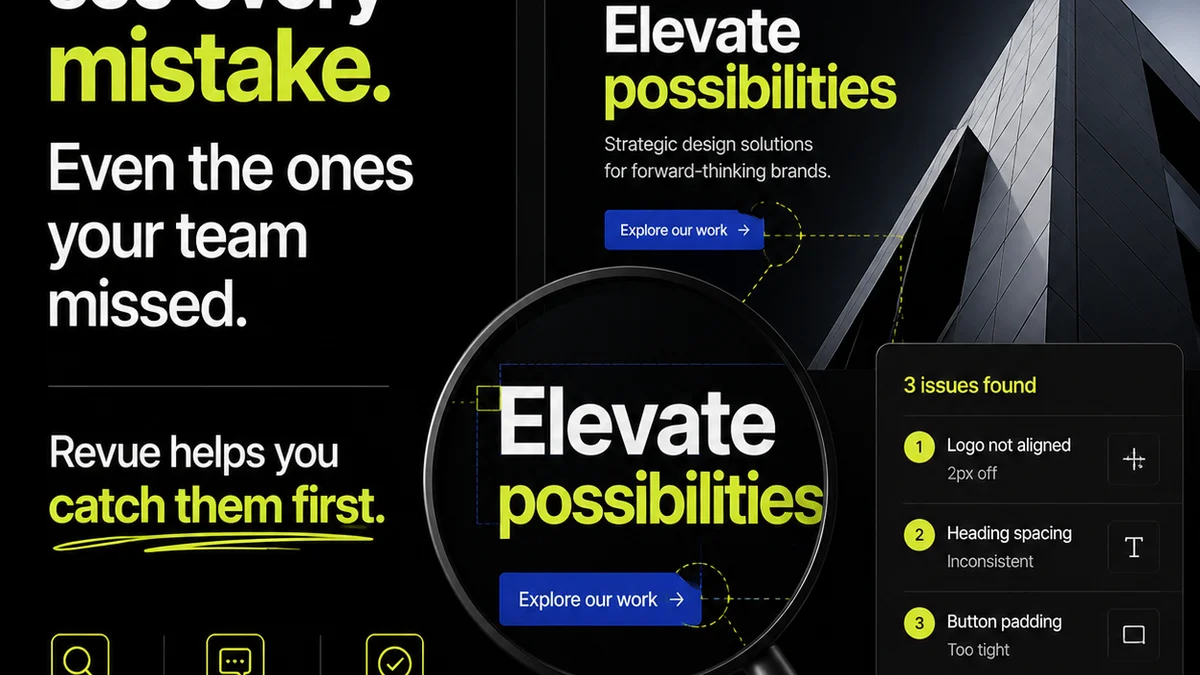
Revue centralizes client feedback, making it easy to collect, organize, and track comments directly on creative assets. No more hunting through endless email threads or disparate documents.
Its version control capabilities ensure everyone is reviewing the latest iteration, and its clear annotation tools mean feedback is precise and actionable. You gain visibility into the entire revision and approval lifecycle, understanding at a glance where each project stands.
This structured approach minimizes ambiguity, reduces back-and-forth, and accelerates the path to final approval, ensuring your team can focus on creating great work, not managing chaotic feedback.
Final Thought
A stakeholder review isn't a hurdle to overcome; it's an opportunity to ensure alignment and elevate the final product. By implementing a structured checklist and process, you transform a potential point of friction into a catalyst for clarity and success. How are you currently structuring your stakeholder reviews, and where are the biggest bottlenecks?
Frequently asked questions
What is the most crucial element of a stakeholder review process?
Clearly defining the project objectives and success metrics upfront is paramount. This provides a benchmark against which all feedback can be measured, preventing subjective opinions from derailing the project.
How many people should be involved in a stakeholder review?
Ideally, limit reviews to essential stakeholders and a single primary approver. Too many voices can lead to conflicting feedback and decision paralysis. Clearly define roles (approver, key stakeholder, informational) beforehand.
What's the best way to handle conflicting feedback from stakeholders?
Refer back to the project brief and objectives. If conflicts arise, the designated primary approver should make the final decision, prioritizing feedback that best aligns with the project's strategic goals.
How can I prevent scope creep during the review process?
Establish clear review cycles and deadlines. Communicate that feedback must align with the original brief. Any requests significantly outside the initial scope should be treated as a change order, requiring additional time and budget.
Why is a centralized feedback tool important for media projects?
Centralized tools consolidate all feedback in one place, provide version control, and allow for precise annotations. This eliminates confusion from scattered emails, ensures everyone is reviewing the correct version, and makes feedback actionable, significantly speeding up the revision process.