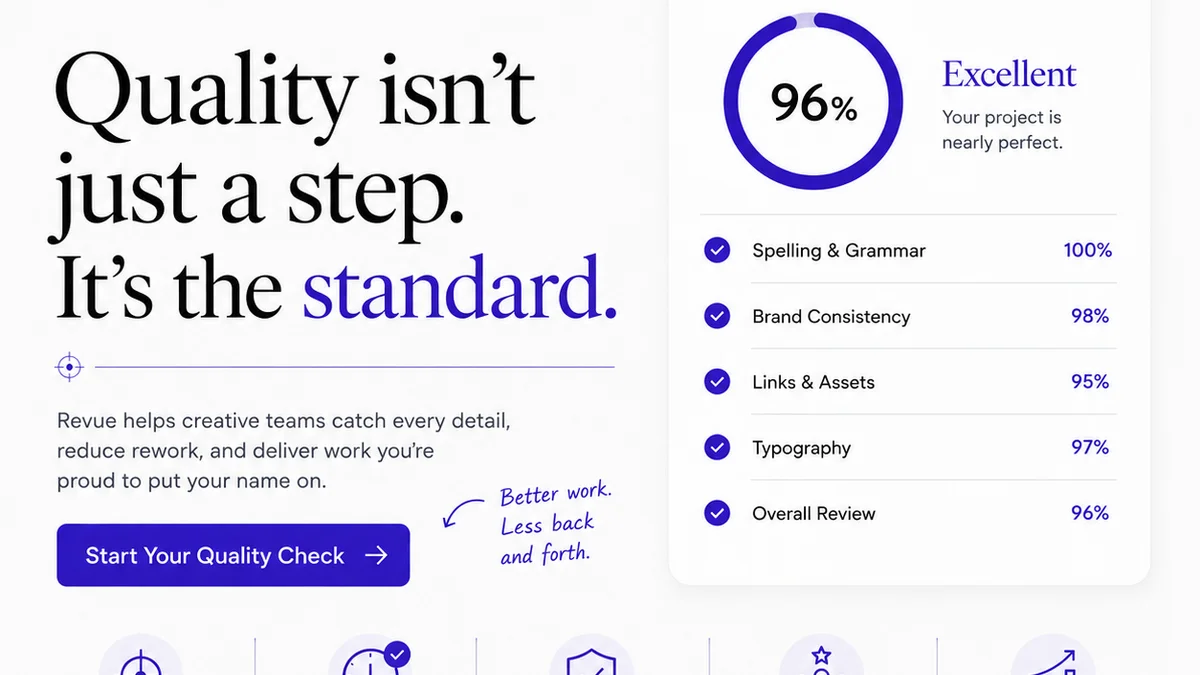
Everyone knows stakeholder review is a necessary evil. You get feedback, you make changes, you get approval. Rinse and repeat.
None of that is wrong. But it’s incomplete.
The hard truth? Treating stakeholder review as just another step in the process means you’re missing its real value. It's not a bottleneck; it’s a vital checkpoint for strategic alignment and creative excellence. When done right, it’s your best chance to ensure everyone is on the same page, reduce costly revisions, and deliver work that truly hits the mark.
1. The Assumption Trap: Feedback vs. Strategy
The biggest mistake agencies make is treating all feedback the same. A stakeholder’s comment about a color shade is different from their comment about the core message. One is aesthetic, the other strategic.
We often lump them together, leading to endless, aimless revisions.
This happens because we don’t clearly define the purpose of each review stage or the role of each stakeholder. Are they approving for brand consistency? For strategic alignment? For technical feasibility? For final sign-off?
Why This Matters
- Misaligned expectations lead to scope creep.
- Wasted time on revisions that don't move the needle.
- Frustrated clients and internal teams.
- Creative work that misses the strategic objective.
The goal isn't just to get a 'yes.' It's to use the review process to refine the work and confirm it meets the *original* objectives.
2. Defining Stakeholder Roles and Review Stages
Before you even start the creative work, map out who needs to review what, and when. This isn't just about listing names; it's about understanding their perspective and authority.
Think of it like a tiered system.
Tier 1: Strategic Approvers. These are the decision-makers who own the business objectives. Their feedback focuses on whether the creative solves the problem and aligns with the strategy. They have final say on the core concept.
Tier 2: Subject Matter Experts. These stakeholders provide input on specific areas they understand deeply – legal, technical, product details, brand guidelines. Their feedback is critical for accuracy and compliance, but usually not for the core creative direction.
Tier 3: General Input / FYI. These stakeholders might offer opinions or need to be kept informed, but their input shouldn't derail the project. Their role is often advisory, not authoritative.
Matching the right feedback to the right stakeholder at the right time is crucial for efficient stakeholder review.
Mapping the Stages
Each project will have different review stages, but common ones include:
- Concept Review: Does the core idea solve the problem? Is it strategically sound? (Focus: Strategic Approvers)
- Creative Development Review: Does the execution align with the approved concept? Are there any glaring issues? (Focus: Strategic Approvers, Subject Matter Experts)
- Pre-Production/Final Review: Is everything technically sound, legally compliant, and ready for launch? (Focus: Subject Matter Experts, Strategic Approvers for final sign-off)
Clearly defining these roles and stages prevents the wrong people from having the wrong influence at the wrong time.
3. The Power of Structured Feedback
Vague feedback is the enemy of efficient creative work. "I don't like it" or "Make it pop more" are useless.
You need actionable, specific feedback tied to the project's goals.
How do you get it? By guiding your stakeholders.
The Art of the Brief
Your initial creative brief is the foundation. If it’s weak, the feedback will be weak. Ensure it clearly outlines:
- Project objectives
- Target audience
- Key message(s)
- Mandatories and constraints
- Deliverables
- Success metrics
When stakeholders review creative, they should be referencing this brief. This keeps the conversation focused on objectives, not just preferences.
Feedback Forms and Guidelines
Don't rely on ad-hoc emails or comment threads. Implement structured feedback mechanisms.
This could be a standardized feedback form that asks specific questions:
- Does this creative meet Objective X? (Yes/No/Partially)
- Does it clearly communicate Message Y? (Yes/No/Partially)
- Are there any brand guideline violations?
- Are there any legal or compliance concerns?
- What is one specific change that would improve the clarity of the message?
Or, use a dedicated platform where comments can be annotated directly onto the creative asset. This contextual feedback is far more effective than a long email chain.
4. Managing Revisions Like a Pro
Once you have clear, actionable feedback, the revision process begins. This is where many agencies falter, getting stuck in an endless loop.
The key is to treat revisions as a refinement, not a complete overhaul, unless the feedback truly demands it.
The Revision Log
Keep a detailed log of all feedback received and changes made. This serves multiple purposes:
- Accountability: Tracks who asked for what.
- Clarity: Ensures no feedback is missed.
- Scope Management: Highlights if requested changes fall outside the original brief.
- Client Education: Demonstrates the effort involved in revisions.
A simple spreadsheet can work, but a dedicated tool offers more robust tracking and visibility.
The
Frequently asked questions
What is the most common mistake agencies make during stakeholder review?
The most common mistake is treating stakeholder review as a mere checkbox or administrative step. Agencies often fail to distinguish between strategic feedback and aesthetic preferences, leading to scope creep, endless revisions, and work that doesn't meet original objectives.
How can I ensure feedback is actionable?
Guide your stakeholders by using a clear creative brief that outlines objectives and constraints. Implement structured feedback forms or use annotation tools that prompt specific, goal-oriented comments rather than vague opinions. Always reference the brief when discussing feedback.
What's the difference between strategic and expert feedback?
Strategic feedback comes from decision-makers focused on business objectives and whether the creative solves the core problem. Expert feedback comes from subject matter specialists (e.g., legal, technical) focused on accuracy, compliance, and specific domain knowledge. Both are important but should be considered at the appropriate stage and by the right people.
How does a tool like Revue help with stakeholder review?
Revue helps centralize client feedback, making it visible and trackable. This prevents feedback from getting lost in emails or disparate documents. It streamlines the revision and approval process, providing clarity on changes and ensuring that all feedback is addressed against project goals, thus improving the quality check process.