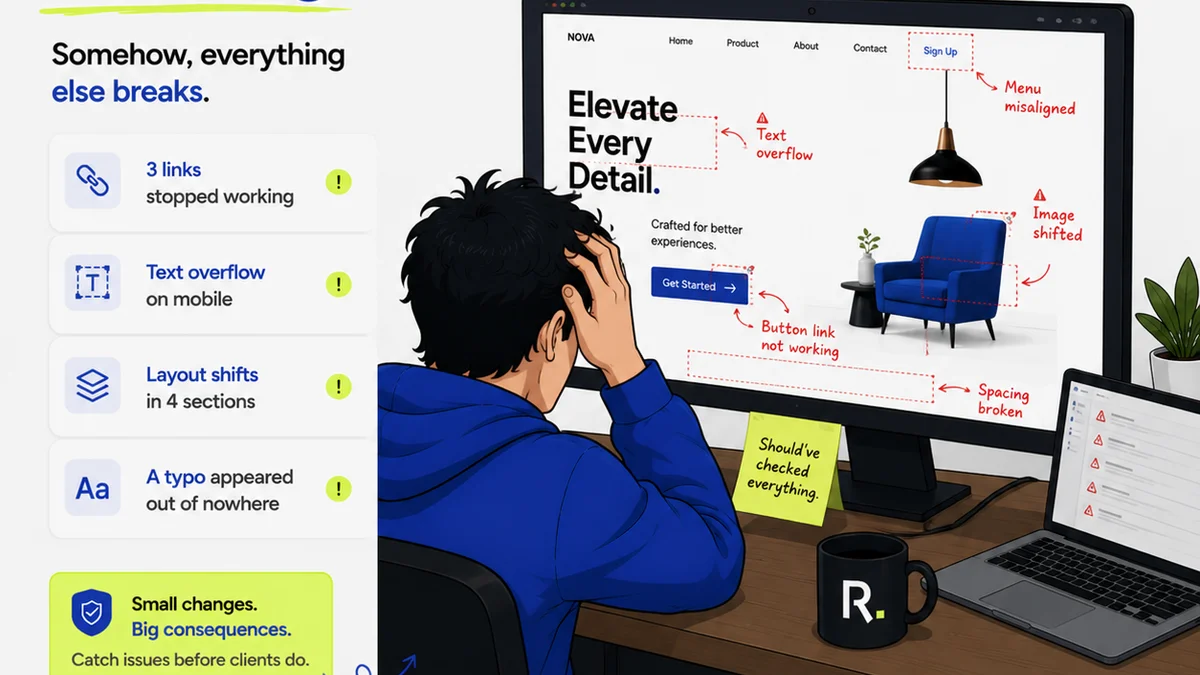
Everyone blames stakeholders for bad feedback. They say clients don't know what they want, they change their minds, or they just don't 'get it.' None of that is wrong. But it’s incomplete.
The hard truth is, most creative review problems aren't about the stakeholder. They're about your agency's broken process for handling them.
1. Treating Reviews as a Black Box
You send a design. Days later, you get a jumble of comments back. You try to decipher them. This is not a review process; it's a guessing game.
A good review process is transparent. Everyone knows what's being reviewed, why, and what kind of feedback is needed. It's not just about ticking a box; it's about informed collaboration.
The Symptoms of a Black Box
- Endless rounds of 'just one more thing' revisions.
- Frustration from both the creative team and the client.
- Unexpected feedback arriving long after the 'final' review.
- A lack of clear direction for the next steps.
This lack of transparency leads directly to wasted time and eroded trust.
2. Not Defining the 'Why' of the Review
What is this specific review *for*? Is it for a gut check? A technical sign-off? A strategic alignment? Most agencies skip this crucial step.
You need to tell stakeholders exactly what you need from them *at each stage*. A logo concept review needs different input than a final UI build review.
Setting clear objectives for each review:
- Keeps feedback focused and relevant.
- Saves time by preventing off-topic comments.
- Ensures you get the right kind of input when you need it most.
Without this clarity, you're asking for opinions when you need decisions.
3. Vague Briefing on Feedback Types
Stakeholders often don't know *how* to give good feedback. They mix subjective opinions with objective requirements. They offer solutions instead of problems.
Your job is to guide them. You need to establish clear parameters for feedback.
Common Feedback Pitfalls
- The 'Make it Pop' Request: Pure subjectivity, zero direction.
- The Solution Without the Problem: 'Change this button color' without explaining *why* the current color isn't working.
- Scope Creep disguised as Feedback: 'While we're here, can you also...'
You must train your clients on how to engage with your process. This isn't about being difficult; it's about efficiency.
4. No Defined Review Cadence or Deadlines
A review request goes out into the ether. Then silence. Then a polite follow-up. Then more silence. This is a common bottleneck.
Your agency needs to set clear expectations for turnaround times. And stakeholders need to understand their role in keeping the project on schedule.
Establish review deadlines with consequences. If feedback isn't provided by X date, the project timeline shifts, and the client may incur additional costs. This isn't punitive; it's practical project management.
5. Ignoring Feedback Structure
When feedback arrives as a massive, unstructured email or a chaotic video call transcript, it's a nightmare to process. It’s hard to see the forest for the trees.
Well-structured feedback is actionable feedback. Comments should be tied to specific elements, clearly articulated, and categorized if possible (e.g., UI, content, functionality).
The Power of Organized Feedback
- Clearer Action Items: Easily translate feedback into tasks.
- Reduced Misinterpretation: Less room for the creative team to guess what's meant.
- Improved Accountability: Tracks who said what and when.
Disorganized feedback creates confusion and delays. It’s a primary driver of revision hell.
6. Failing to Centralize and Track Feedback
Feedback gets scattered across emails, Slack messages, Google Docs, and informal chats. Important comments get lost. Different stakeholders give conflicting input.
This is where most agencies fail spectacularly. They lack a single source of truth for all project communication and feedback.
Without a centralized system, you're:
- Constantly chasing down information.
- at risk of missing critical feedback.
- Unable to provide a clear audit trail for approvals.
This chaos directly impacts your team's ability to execute efficiently and your ability to manage client expectations.
Where Revue Fits In
This is precisely why we built Revue. It’s designed to eliminate the chaos of stakeholder reviews.
Revue provides a single, centralized platform for all creative assets and client feedback. No more digging through email chains or Slack threads.
- Centralized Feedback: All comments live directly on the asset.
- Clear Revision History: Track every iteration and every piece of feedback.
- Streamlined Approvals: Get clear sign-offs without ambiguity.
- Quality Assurance Tools: Ensure everything is checked before it goes live.
Revue brings structure to what is often the most chaotic part of the creative process, ensuring your team can focus on creating great work, not managing messy communication.
7. Not Closing the Loop
You get feedback, you make changes, you send it back. But did you explicitly confirm that the stakeholder's concerns were addressed? Did you explain *how* they were addressed?
Closing the loop means more than just sending a revised file. It means confirming understanding and alignment.
Effective Loop-Closing Includes:
- Summarizing the changes made based on feedback.
- Highlighting how specific comments were resolved.
- Seeking explicit confirmation that the revised work meets the stated objectives.
This final step prevents misunderstandings and builds confidence that the project is moving forward correctly.
8. Failing to Educate Your Clients
You assume clients understand your agency's workflow. They don't. They don't know about your internal QA processes, your revision limits, or the nuances of creative development.
Proactive client education is key. Walk them through your process. Explain the purpose of each stage. Set expectations for their involvement and your deliverables.
When clients understand the 'why' behind your process, they become better partners. They respect the timelines, provide more constructive feedback, and trust your expertise.
Final Thought
Are your stakeholder reviews a bottleneck or a bridge? If they're a bottleneck, the problem likely isn't the stakeholders. It's your process. Refining how you manage feedback can transform your agency's efficiency and client relationships.
Frequently asked questions
What is the biggest mistake agencies make with stakeholder reviews?
The biggest mistake is treating reviews as a black box. Agencies fail to define the 'why' of the review, provide clear guidelines on the type of feedback needed, or structure the feedback process. This leads to confusion, wasted time, and frustration for both the agency and the client.
How can I get better feedback from stakeholders?
Educate your stakeholders on how to provide effective feedback. Clearly define the objective of each review stage, ask specific questions, and establish parameters for the type of input you need. Using a centralized platform like Revue can also help structure feedback and prevent it from becoming scattered and unmanageable.
What role does transparency play in stakeholder reviews?
Transparency is crucial. A transparent review process ensures everyone understands what is being reviewed, why, and what kind of input is expected. This clarity helps prevent misunderstandings, keeps feedback focused, and builds trust between the agency and the client.
How can a centralized platform improve stakeholder reviews?
A centralized platform like Revue offers a single source of truth for all feedback and assets. This eliminates scattered communication across emails and messages, provides a clear audit trail, streamlines revisions and approvals, and ensures that no critical feedback gets lost. It brings much-needed structure to a chaotic process.