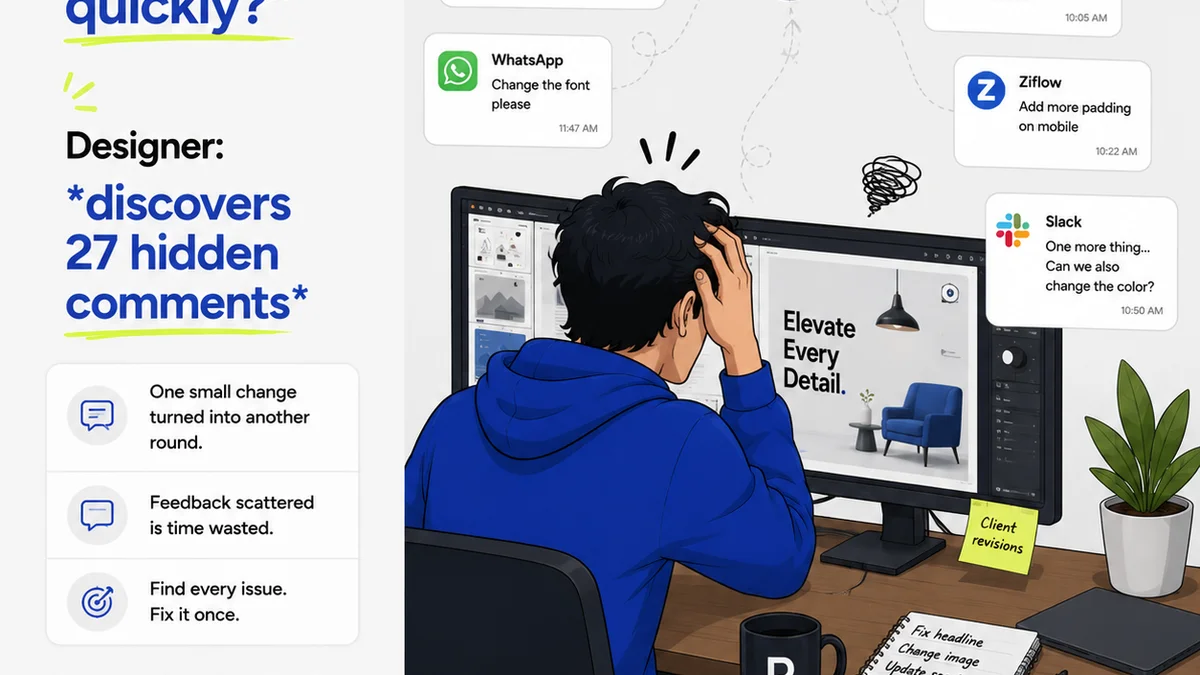
The Client Meeting QC Trap
You’ve just wrapped up a project. The final files are ready. You’re feeling good. Then you walk into the client meeting, ready for sign-off, and it happens. The client points out a typo on slide 17. A broken link in the footer. A logo that’s slightly off-center. Suddenly, your celebratory meeting turns into an impromptu, high-pressure revision session.
This isn't just awkward; it's a symptom of a deeper problem: your quality control (QC) process is happening too late. It’s happening in the client meeting, which is the worst possible place for it. It means you’re relying on the client to catch your mistakes, and that’s a losing game.
Why do so many teams fall into this trap? Often, it’s a lack of a formal, structured QC process. We’re busy. Deadlines loom. We might do a quick once-over, or rely on the last person to touch the file to catch anything obvious. But
Frequently asked questions
What is the biggest risk of relying on clients for QC?
Relying on clients for QC introduces unnecessary risk, erodes client trust, and can lead to project delays and increased costs. It also signals a lack of internal professionalism and attention to detail.
What are the key components of a good internal QC process?
A robust internal QC process typically includes multiple checks by different team members, a standardized checklist, automated tools for grammar and spelling, and a final review by a senior team member before client delivery.
How can a project management tool help with QC?
Project management tools can centralize feedback, track revisions, assign QC tasks, and maintain version control, ensuring that everyone is working with the latest approved assets and that no feedback falls through the cracks.
What's the difference between internal QC and client review?
Internal QC is a proactive, internal process designed to catch errors and ensure quality *before* the work is presented to the client. Client review is the client's opportunity to provide feedback on the work that has already passed internal QC.
How often should QC checklists be updated?
QC checklists should be reviewed and updated regularly, especially after project debriefs or when new types of deliverables or client requirements emerge. This ensures the checklist remains relevant and effective.