You might think UX design costs are straightforward: agencies quote hours, you pay the bill. That’s not entirely wrong. But it’s incomplete.
The hard truth is that UX design costs for biotech businesses in the US are highly variable. They depend on far more than just the agency's hourly rate. What you’re really paying for is the strategic thinking, research, and iterative process that leads to a successful digital product.
1. The True Scope of UX Design in Biotech
Biotech is a unique industry. Digital products here aren't just about aesthetics or ease of use; they can impact research, patient outcomes, regulatory compliance, and scientific discovery. This complexity inherently drives up the cost and value of good UX design.
Understanding the Stakes
Think about the digital tools used in biotech:
- Clinical trial management software
- Patient data portals
- Research and development platforms
- Genomic sequencing analysis tools
- Medical device interfaces
Errors in these systems aren't just inconvenient; they can be catastrophic. This means UX designers must prioritize:
- Uncompromising accuracy
- Robust data security
- Strict adherence to regulations (HIPAA, FDA guidelines)
- Intuitive interfaces for highly specialized users (scientists, clinicians, patients)
This level of rigor requires extensive research, validation, and testing, all of which contribute to the overall UX design cost.
2. Key Factors Influencing UX Design Costs
The price tag on a UX design project is a sum of many parts. Understanding these will help you budget more realistically.
Project Complexity and Scale
A simple patient-facing app will cost less than a comprehensive R&D platform for a global research institution. The more features, user roles, data integrations, and complex workflows involved, the higher the cost.
Research and Discovery Phase
This is non-negotiable for biotech. Thorough user research (interviews, surveys, persona development) and competitive analysis are critical. Skipping this phase is a false economy.
Costs here include:
- Recruiting participants (patients, clinicians, researchers)
- Incentives for participants
- Time for conducting interviews and analyzing data
- Synthesis of findings into actionable insights
Information Architecture (IA) and User Flows
Structuring complex data and defining how users navigate through intricate processes is a significant undertaking. Getting this right ensures users can find what they need efficiently and safely.
Wireframing and Prototyping
Creating low-fidelity wireframes and high-fidelity interactive prototypes allows for early testing and iteration. The number of screens and the complexity of interactions directly impact the time and cost.
User Interface (UI) Design
While distinct from UX, UI design is intrinsically linked. Developing a clean, compliant, and user-friendly interface that aligns with brand identity and regulatory requirements takes time and expertise.
Usability Testing and Iteration
Testing prototypes with actual target users is crucial. Identifying and fixing usability issues before development saves enormous costs down the line. Multiple rounds of testing and refinement are common.
Accessibility (WCAG Compliance)
Ensuring digital products are accessible to users with disabilities is not only a legal requirement (especially in healthcare) but also good practice. Adhering to standards like WCAG (Web Content Accessibility Guidelines) adds to the design effort.
Platform and Device Considerations
Designing for web, mobile (iOS/Android), or specialized hardware requires different approaches and adds to the scope.
Agency vs. Freelancer vs. In-house
The choice of provider significantly impacts cost. Agencies typically have higher overhead but offer a full team and structured processes. Freelancers can be more cost-effective but may lack specialized skills or scalability. In-house teams require salaries and benefits.
3. Typical Cost Ranges for Biotech UX Design Projects (US)
It's impossible to give a single number. However, we can provide ranges based on project type and typical agency engagement models in the US.
These are estimates and can vary widely based on the factors above.
Discovery & Strategy Engagements
These foundational projects might involve:
- User research (interviews, surveys)
- Competitive analysis
- Persona development
- User journey mapping
- Information architecture definition
Estimated Cost: $15,000 - $50,000+
UX/UI Design for a Specific Product Module or MVP
This includes wireframing, prototyping, user flows, and UI design for a core feature set or a Minimum Viable Product.
- Smaller, focused module: $25,000 - $75,000
- More complex MVP (e.g., patient portal): $50,000 - $150,000+
Comprehensive UX/UI Design for a Complex Platform
This covers end-to-end design for a large-scale application with multiple user types and extensive functionality (e.g., R&D platform, clinical trial management system).
Estimated Cost: $100,000 - $500,000+
Hourly Rates
Agencies in the US can charge anywhere from $100 to $300+ per hour for UX/UI design services, depending on their reputation, location, and specialization. Freelancers might range from $75 to $200+ per hour.
Remember, a higher hourly rate doesn't always mean a higher total project cost if the team is more efficient and experienced.
4. Budgeting Strategies for Biotech UX Projects
Effective budgeting requires foresight and a clear understanding of your project’s goals.
Prioritize Ruthlessly
What are the absolute must-have features for your initial launch? Focus your budget on validating and designing those core elements first. You can always iterate and add more later.
Invest in Research
The upfront cost of user research pays dividends by preventing costly re-work later. Understanding your users and their needs deeply is the bedrock of successful biotech software.
Phased Approach
Break down large projects into manageable phases. This allows for budget allocation, review, and course correction at key milestones. It also provides opportunities to demonstrate value and secure further funding.
Define Your Success Metrics
How will you measure the success of your UX design? Improved patient adherence? Faster research cycles? Reduced support calls? Clear metrics help justify the investment and guide the design process.
Get Detailed Proposals
Don't accept vague quotes. Ensure proposals clearly outline the scope, deliverables, timeline, and assumptions for each phase of the project.
5. Where Revue Fits In
Once the design is complete and development is underway, managing feedback and revisions becomes paramount. This is where a platform like Revue shines for biotech companies.
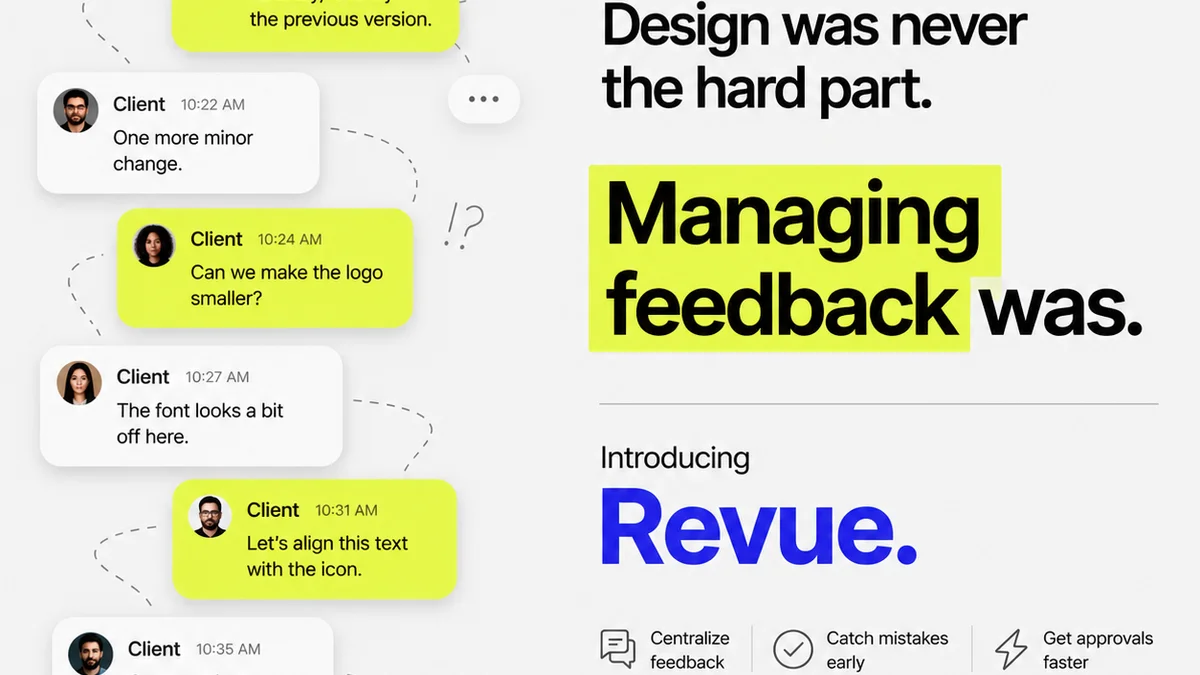
Centralizing client feedback on designs and development builds streamlines the entire process. Instead of scattered email chains or endless meetings, all comments are in one place, linked to specific versions or elements.
Visibility into revision history and approval status is critical, especially in regulated industries. Revue provides a clear audit trail, ensuring accountability and compliance.
Furthermore, running quality checks on creative assets and development builds becomes more efficient. Identifying inconsistencies or deviations from the approved design is faster, leading to a higher quality final product.
Revue helps ensure that the significant investment made in UX design isn't undermined by chaotic project management during the execution phase.
6. Final Thought
Investing in expert UX design for your biotech product isn't an expense; it's a strategic imperative. It directly influences user adoption, data integrity, operational efficiency, and ultimately, the success of your scientific or therapeutic endeavors.
Are you budgeting for UX based on the true complexity and impact it has on your business outcomes, or are you still treating it like a commodity service?
Frequently asked questions
What is the average cost of UX design for a biotech MVP in the US?
The cost for a Minimum Viable Product (MVP) in the US biotech sector can range significantly, typically from $50,000 to $150,000+, depending on the complexity, required research, and number of features. More specialized or data-intensive MVPs may exceed this range.
How do regulatory requirements affect UX design costs in biotech?
Regulatory requirements (like HIPAA or FDA guidelines) significantly increase UX design costs. Designers must ensure strict data security, privacy, accuracy, and accessibility, which necessitates more thorough research, rigorous testing, and detailed documentation, adding to the overall project scope and time.
Is it better to hire a UX agency or a freelancer for a biotech project?
For complex biotech projects, an agency often provides a more comprehensive team with diverse expertise (researchers, strategists, designers, testers) and established processes, which can be more efficient and ensure higher quality, despite a potentially higher hourly rate. Freelancers can be cost-effective for smaller, well-defined tasks but may lack the breadth of skills or scalability needed for intricate biotech applications.
How can I reduce UX design costs without sacrificing quality in biotech?
You can reduce costs by prioritizing core features for an MVP, investing heavily in upfront user research to avoid costly re-work, adopting a phased approach to development and design, and clearly defining project scope and success metrics. Effective project management and clear communication are also key.