Everyone talks about UX design ROI. They point to increased conversion rates, better engagement, and happier users. None of that is wrong. But it’s incomplete.
For creative agencies, the real ROI of UX design isn't just about the client's end-user. It's about the predictability, efficiency, and profitability of your own agency's operations. That's the hard truth most discussions skip.
1. The Myth of 'User-Centric' ROI
The common narrative focuses on the end-user. Better UX means more sales, higher retention, and a stronger brand for your client. This is valuable, absolutely. But it's a lagging indicator for *your* business.
You can have the most user-loved product in the world, but if your design process is chaotic, your timelines slip, and your costs spiral, your agency isn't seeing a positive ROI from that project. You're just doing good work for a client who might not pay for the overages.
The Real Client-Side Metrics
When clients talk ROI, they mean:
- Increased revenue or sales
- Reduced customer support costs
- Higher customer lifetime value
- Improved conversion rates
- Greater market share
These are the outcomes of good UX. But they are the *client's* ROI, not yours. Your agency's operational efficiency is the engine that delivers these results. And that's where your direct ROI lies.
2. Your Agency's Operational ROI from UX
Think about your agency's internal processes. Where does UX design directly impact your bottom line and your ability to deliver consistently?
It's in the reduction of wasted time, the clarity of communication, and the ability to manage client expectations and feedback effectively. This translates directly to:
- Faster project completion times
- Fewer costly revisions
- Reduced scope creep
- Improved team morale and reduced burnout
- Higher client satisfaction and retention (for *your* agency)
- Increased profitability per project
This is the operational ROI of good UX practices *within your agency*. It’s about building a sustainable, profitable business, not just delivering beautiful pixels.
The Cost of Ambiguity
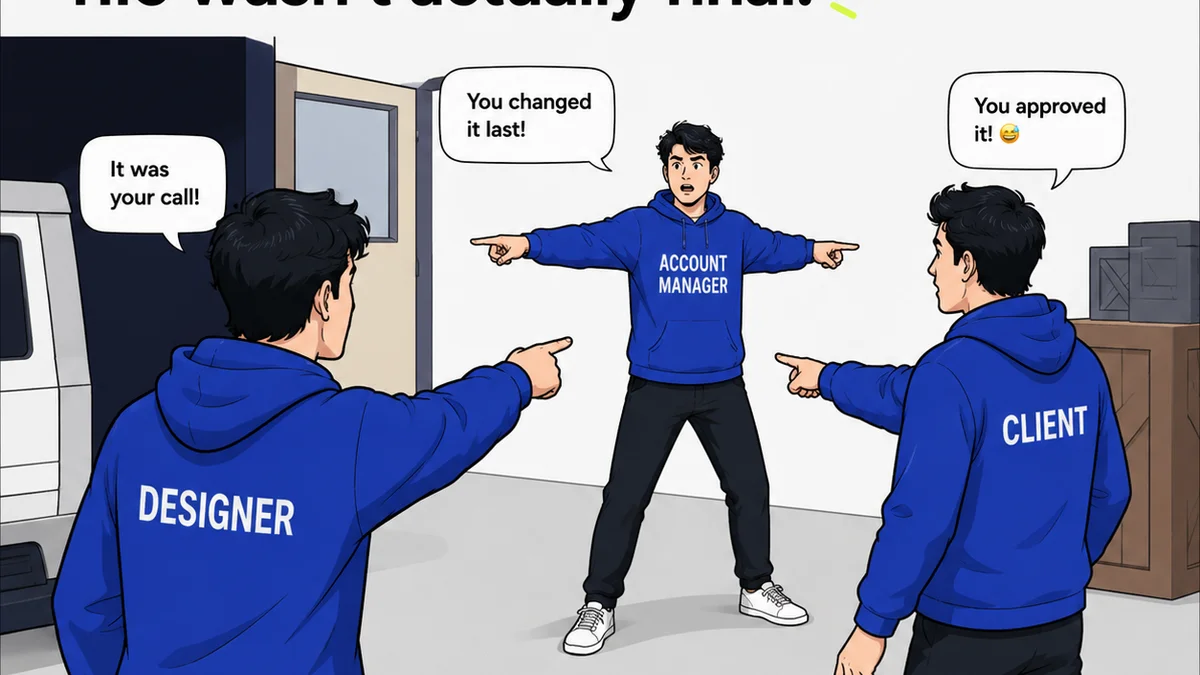
Consider the alternative: unclear requirements, endless back-and-forth feedback loops, and misinterpretations. Every hour spent deciphering vague client notes or redoing work because of a missed detail is money lost. It's hours you could have spent on the next profitable project.
Good UX design processes, from initial research to final handoff, minimize this ambiguity. They create a shared understanding and a clear path forward.
3. Quantifying Your Agency's UX ROI
How do you actually measure this operational ROI? It's not as abstract as it sounds. Focus on internal metrics that directly reflect efficiency and profitability.
Key Metrics to Track
- Revision Cycles: Track the number of revision rounds per project. A high number often indicates unclear initial UX strategy or poor feedback management.
- Time to Completion: Measure how long projects take from kickoff to final delivery. Streamlined UX processes should shorten this.
- Scope Creep: Monitor how often projects expand beyond the initial scope, and why. Unclear UX goals are a common culprit.
- Team Hours Billed vs. Actual: Compare estimated hours to actual hours spent. Significant overruns point to process inefficiencies, often rooted in design execution or feedback issues.
- Client Feedback Turnaround Time: How quickly do clients provide feedback? If it's slow, it might be a sign of overwhelming them or not providing clear points for review.
- Project Profitability: The ultimate measure. Are projects coming in on budget and on time, or are overages becoming the norm?
These aren't glamorous metrics like
Frequently asked questions
What's the difference between client-side UX ROI and agency-side UX ROI?
Client-side UX ROI focuses on outcomes for the client's business, like increased sales or reduced support costs. Agency-side UX ROI focuses on your agency's internal benefits, such as faster project delivery, fewer revisions, and improved profitability.
How can I improve my agency's UX design ROI?
Focus on streamlining your internal processes. Implement clear feedback loops, define project scope rigorously, use collaboration tools effectively, and standardize your design and review workflows to reduce ambiguity and wasted time.
Is tracking internal metrics really that important for UX ROI?
Absolutely. While client outcomes are the ultimate goal, tracking internal metrics like revision cycles, time to completion, and project profitability reveals the efficiency of your processes. Improving these directly boosts your agency's bottom line and capacity.
Can good UX design prevent scope creep?
Yes. A well-defined UX strategy, clear user flows, and thorough upfront research help establish a solid project foundation. This makes it easier to identify and manage requests that fall outside the original scope, preventing uncontrolled expansion.