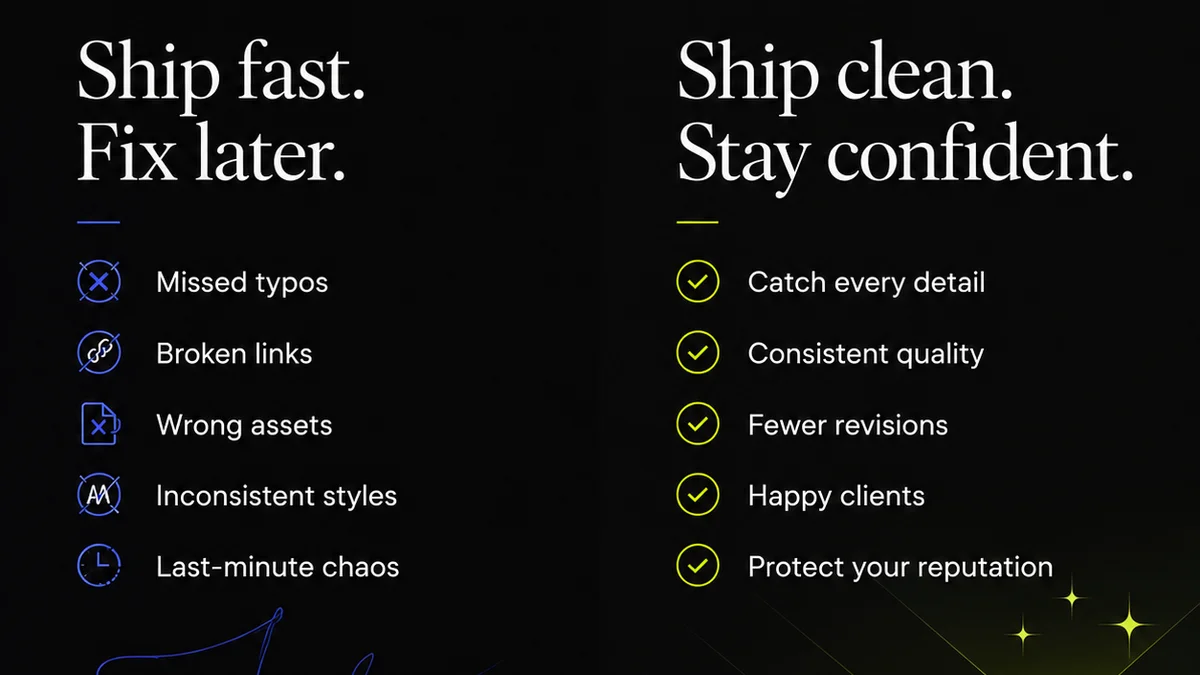
Everyone thinks they know what good visual feedback looks like. They imagine clear comments, precise annotations, and clients who magically understand exactly what needs to change. None of that is wrong. But it’s incomplete.
The hard truth? Most feedback is a mess. It’s subjective, contradictory, and often misses the core requirements. This leads to endless revisions, frustrated teams, and projects that drift further from the original brief.
A robust visual feedback checklist isn't just about catching typos. It's about systematically validating creative work against objective criteria before it ever reaches the client. It's the difference between guesswork and a process that guarantees quality.
1. The Assumption: Clients Know What They Want
This is where most agencies trip up. Clients hire you for your expertise. They expect you to translate their vague desires into concrete, effective creative solutions. They don't always have the language or the visual literacy to articulate precisely what's missing or what's working.
Your job isn't just to execute; it's to guide. And that guidance needs a framework.
The Deeper Truth: Clients Know How They *Feel*.
They can tell you if something feels
Frequently asked questions
What is a visual feedback checklist?
A visual feedback checklist is a structured set of criteria used to evaluate creative assets (like designs, videos, or websites) before they are sent for client approval. It ensures that all objective requirements, brand guidelines, and technical specifications are met, moving beyond subjective opinions.
Why is a visual feedback checklist important?
It standardizes the review process, reduces subjective and contradictory feedback, minimizes costly revisions, ensures brand consistency, and ultimately speeds up client approvals by providing clear, actionable feedback internally before client review.
Who should use a visual feedback checklist?
Any creative team or agency that produces visual assets for clients. This includes designers, art directors, project managers, account managers, and even clients themselves (for a structured internal review).
How can a checklist improve client communication?
By ensuring that the internal team has already validated the work against key criteria, the feedback you present to the client is more focused and constructive. It helps shift the conversation from subjective 'likes' to objective improvements tied to project goals.
Can a checklist help with accessibility checks?
Absolutely. Accessibility standards like WCAG (Web Content Accessibility Guidelines) can be integral parts of your visual feedback checklist. This includes checking color contrast, keyboard navigation, alt text, and other critical accessibility factors.