Everyone thinks the best visual identity services are about killer logos and slick brand guides. That’s part of it, sure. But it’s not the whole story. Not even close.
The hard truth is, exceptional visual identity work isn’t just about aesthetics. It's about strategic clarity, operational efficiency, and building systems that scale with a business. It’s about creating a visual language that resonates deeply and functions flawlessly across every touchpoint.
1. The Strategic Foundation: Beyond the Brief
Too many agencies treat brand identity as a purely creative exercise. They get a brief, maybe ask a few questions, and dive into mood boards. This is a mistake.
The best visual identity services start long before any sketching begins. They involve deep dives into:
- Market positioning and competitive landscape analysis.
- Target audience psychographics and behavioral insights.
- The client’s core business objectives and long-term vision.
- Existing brand equity and potential pitfalls.
This isn't just research; it's strategic interrogation. It uncovers the 'why' behind the 'what,' ensuring the visual identity serves a genuine business purpose, not just a fleeting creative whim.
Understanding the Client's Ecosystem
A great identity doesn’t exist in a vacuum. It must integrate seamlessly into the client’s existing operational reality. This means understanding:
- Their current marketing channels and how they're used.
- Their internal team’s capacity for managing new brand assets.
- Their technology stack and how visual assets will be deployed.
- Their budget and timeline realities.
Ignoring these factors leads to beautiful-but-impractical brand systems that quickly fall apart in the real world.
2. The Design Process: Crafting a System, Not Just Assets
A logo is just one element. The real magic of top-tier visual identity services lies in building a comprehensive, adaptable system.
This means developing:
- A robust typographic hierarchy.
- A considered and flexible color palette.
- Distinctive graphic elements and patterns.
- Clear guidelines for imagery and iconography.
- Voice and tone principles that align visually.
These aren't just add-ons; they are the building blocks that allow the brand to live and breathe consistently across countless applications.
The Power of Constraints
Ironically, the most creative brands often thrive under smart constraints. The best agencies define these boundaries early.
This involves establishing:
- Clear rules for logo usage (clear space, minimum size, acceptable variations).
- Guidelines for applying color and typography in different contexts.
- Parameters for using graphic elements without overwhelming the core message.
- A framework for generating new creative assets that feel on-brand.
This disciplined approach ensures coherence and prevents visual chaos, even as the brand expands.
3. The Deliverables: Clarity and Usability Above All
What good is a brilliant brand identity if the client can't actually use it? This is where many agencies fall short.
The best visual identity services deliver assets that are:
- Organized and logically structured.
- Provided in all necessary formats for diverse applications (print, web, social, etc.).
- Easy to access and understand.
Think beyond a static PDF. Modern deliverables often include:
- Interactive style guides.
- Templated design files for common collateral.
- Asset management systems or integrations.
- Training sessions for client teams.
The Brand Guidelines: A Living Document
A static PDF brand book is often outdated before it’s even delivered. The most effective guidelines are dynamic and actionable.
They should clearly articulate:
- The brand’s strategic foundation (mission, vision, values).
- The core visual elements and their correct application.
- Examples of both correct and incorrect usage.
- How to adapt the identity for new situations.
These aren't just rules; they are enablement tools for the client’s team.
4. The Implementation: Ensuring Long-Term Success
The agency’s job isn’t done when the files are handed over. True partners ensure the identity is adopted and thrives.
This might involve:
- Working with the client’s web development team to implement UI elements.
- Collaborating with marketing teams on launch campaigns.
- Providing ongoing support and consultation.
- Auditing existing brand touchpoints for consistency.
This commitment to implementation is what separates transactional engagements from true partnerships. It’s about embedding the brand’s visual DNA into the client’s operations.
Where Revue Fits In
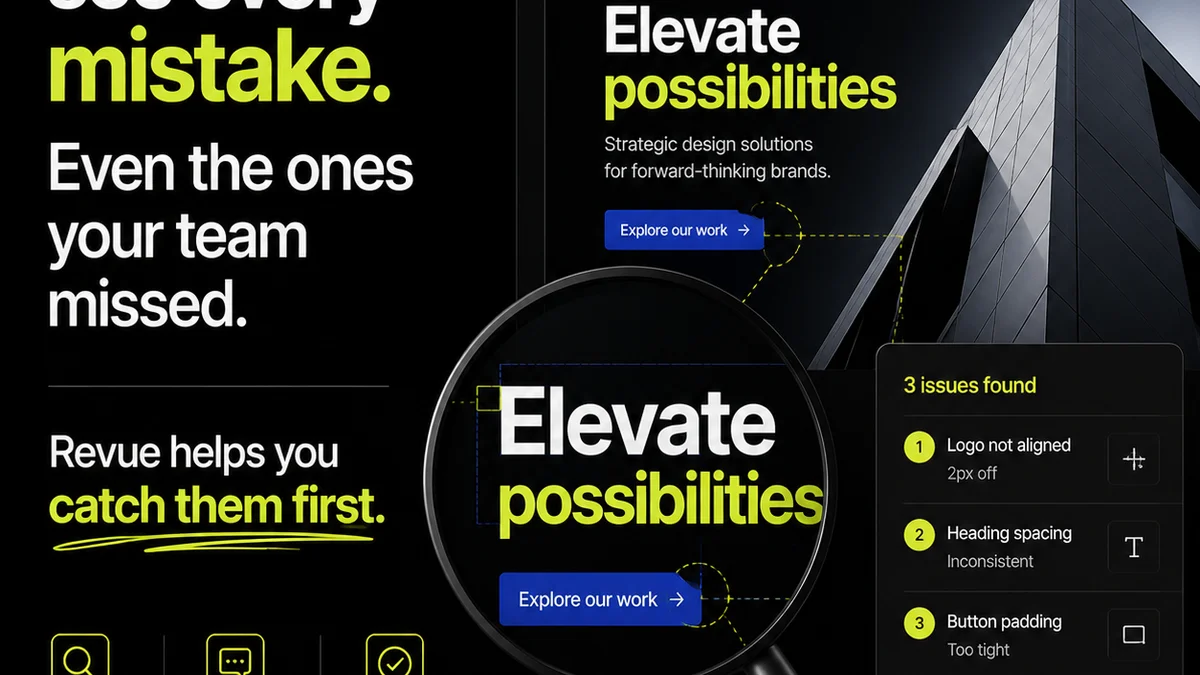
Managing a new brand identity, or any creative project, can quickly become chaotic without the right systems. This is precisely the problem Revue solves.
Imagine launching a new brand. You’ve got stakeholders needing to review logo variations, designers iterating on color palettes, and marketing teams needing final assets. Emails fly, feedback gets lost, versions get confused.
Revue provides a centralized hub for all this activity. Stakeholders can provide clear, contextual feedback directly on the visual assets. Revision history is transparent, making it easy to track changes and approvals.
This isn't just about convenience; it's about operationalizing your creative workflow. It ensures that the brilliant visual identity you painstakingly crafted isn't undermined by messy internal processes. It keeps quality high and timelines on track, from initial concept to final rollout and beyond.
Final Thought
Is your agency focused solely on the 'what' of visual identity—the logo, the colors, the look? Or are you mastering the 'how'—the strategy, the system, the seamless implementation?
The agencies that win aren't just designers; they're strategic operational partners. They build visual identities that don't just look good, but *work*—for the client, for their customers, and for the long haul.
Frequently asked questions
What is the difference between branding and visual identity?
Branding is the overall perception and emotional connection a customer has with a company. Visual identity is the tangible, designed elements (logo, colors, typography) that communicate that brand's essence.
How long does a visual identity project typically take?
Project timelines vary greatly depending on scope. A comprehensive visual identity project for a mid-sized company can range from 8-16 weeks, while smaller projects or refreshers might be shorter.
What are the key components of a visual identity system?
Key components typically include a logo, color palette, typography, imagery style, graphic elements, and guidelines for their consistent application.
Why is a style guide important for visual identity?
A style guide ensures consistency across all brand communications. It provides clear rules and examples for using the visual identity elements, preventing misuse and maintaining brand integrity.