You’ve probably heard that a website can cost anywhere from $500 to $50,000, or even more. That range isn't wrong. But it's wildly unhelpful.
The hard truth is that website design cost is a moving target. It depends entirely on what you need it to do. A digital brochure is one thing. A lead-generating, e-commerce powerhouse is another.
Let’s break down what actually drives the price tag for a professional website in the US.
1. The Scope of Work: What Are You Building?
This is the biggest lever. A simple, static website for a local plumber has vastly different requirements than a custom-built platform for a SaaS company.
Basic Informational Website
Think digital business card. A few pages: Home, About, Services, Contact. Maybe a blog. The focus is on presenting information clearly and professionally.
Costs are generally lower here because the functionality is limited. It’s about design, content presentation, and basic SEO setup.
E-commerce Website
Now we’re talking complexity. You need product catalogs, shopping carts, payment gateway integrations, shipping calculations, inventory management, and user accounts.
Each of these features adds development time and, therefore, cost. Security is also paramount, adding another layer of expense.
Custom Web Application
This is the deep end. Think custom dashboards, complex user portals, integrations with other software (CRMs, ERPs), and unique interactive features.
These projects require significant custom development, intricate database work, and rigorous testing. They are the most expensive but can offer the greatest ROI if built correctly.
2. Design & User Experience (UX) Complexity
Beyond just looking good, a website needs to be intuitive and guide users toward desired actions. This is UX design.
A cheap website often skimps here. You get a pretty facade, but a confusing user journey. This kills conversions.
Custom Branding & Visuals
Does the site need a completely new brand identity? Custom illustrations? Unique animations? These are high-value, time-intensive design elements.
Stock photos and templates can cut costs, but custom design elevates your brand and sets you apart. It’s an investment in perception.
Information Architecture (IA) & User Flows
How will users navigate? What paths should they take to find information or complete a purchase? Mapping this out requires strategic thinking and user research.
Complex sites with many user roles or intricate workflows demand more IA effort.
Accessibility (WCAG Compliance)
Designing for accessibility isn't just good practice; it's often a legal requirement. Ensuring your site is usable by people with disabilities (e.g., visually impaired users using screen readers) adds specific design and development considerations.
Adhering to Web Content Accessibility Guidelines (WCAG) standards adds to the project scope and cost, but it’s crucial for inclusivity and avoiding legal issues.
3. Content Creation & Management
A beautiful website with no content is useless. Who is writing and providing the text, images, and videos?
Copywriting
SEO-optimized, persuasive copy takes time. Professional copywriters understand how to speak to your audience and drive action. This is often underestimated.
If you’re providing all the copy yourself, be realistic about the time commitment and quality.
Photography & Videography
High-quality, custom photography or videography can significantly boost a website’s appeal and trustworthiness. This is a separate cost, often handled by specialists.
Content Management System (CMS) Setup
Will you need a CMS like WordPress, Drupal, or a headless option? The choice impacts initial setup, ongoing maintenance, and ease of content updates for your team.
More complex CMS configurations or custom integrations add to the initial build cost.
4. Development & Technology Stack
This is where the code comes in. The complexity here directly impacts the build time and cost.
Custom Development vs. CMS/Frameworks
Building entirely from scratch is the most expensive. Using established CMS platforms (like WordPress) or frameworks (like React, Vue, or Angular) can speed up development and reduce costs, but custom integrations still add significant time.
Third-Party Integrations
Connecting your website to other tools—CRMs, email marketing platforms, accounting software—requires developer effort. Each integration adds complexity and cost.
Performance Optimization
A fast-loading website is critical for user experience and SEO. Optimization involves technical tweaks, image compression, and efficient coding. This is often an afterthought on low-budget projects.
Security Measures
SSL certificates, regular security audits, firewalls, and secure coding practices are essential. Neglecting security can lead to devastating data breaches.
5. Ongoing Maintenance & Support
Launching a website isn't the end; it's the beginning. Websites need regular care.
Updates & Patching
CMS platforms, plugins, and themes need constant updating to fix bugs and patch security vulnerabilities. This is non-negotiable.
Hosting & Domain Fees
These are recurring costs. Hosting quality can impact site speed and reliability. Higher-tier hosting for more demanding sites costs more.
Content Updates & SEO
Regularly adding new content and performing SEO audits keeps your site fresh and visible. This requires ongoing time and resources.
Performance Monitoring
Keeping an eye on site speed, uptime, and errors helps catch issues before they impact users.
6. Agency vs. Freelancer vs. DIY
The choice of who builds your website significantly impacts cost and quality.
DIY (Website Builders)
Platforms like Wix or Squarespace are cheap upfront. They’re suitable for very simple sites with limited needs. However, customization is restricted, and scaling can be problematic.
Freelancers
Costs vary wildly based on experience and location. You can find affordable freelancers, but managing multiple specialists (designer, developer, copywriter) can be time-consuming. Quality can be inconsistent.
Agencies
Generally the most expensive option. Agencies offer a full-service, team-based approach with project management, quality assurance, and diverse expertise. This usually results in a higher quality, more robust outcome.
You pay for the expertise, the process, and the reliability.
7. Location & Market Rates
Web design costs aren't uniform across the US. Agencies and freelancers in major tech hubs (like San Francisco or New York) often charge higher rates than those in less expensive regions.
This reflects the cost of living, talent pool, and demand in those markets.
Where Revue Fits In
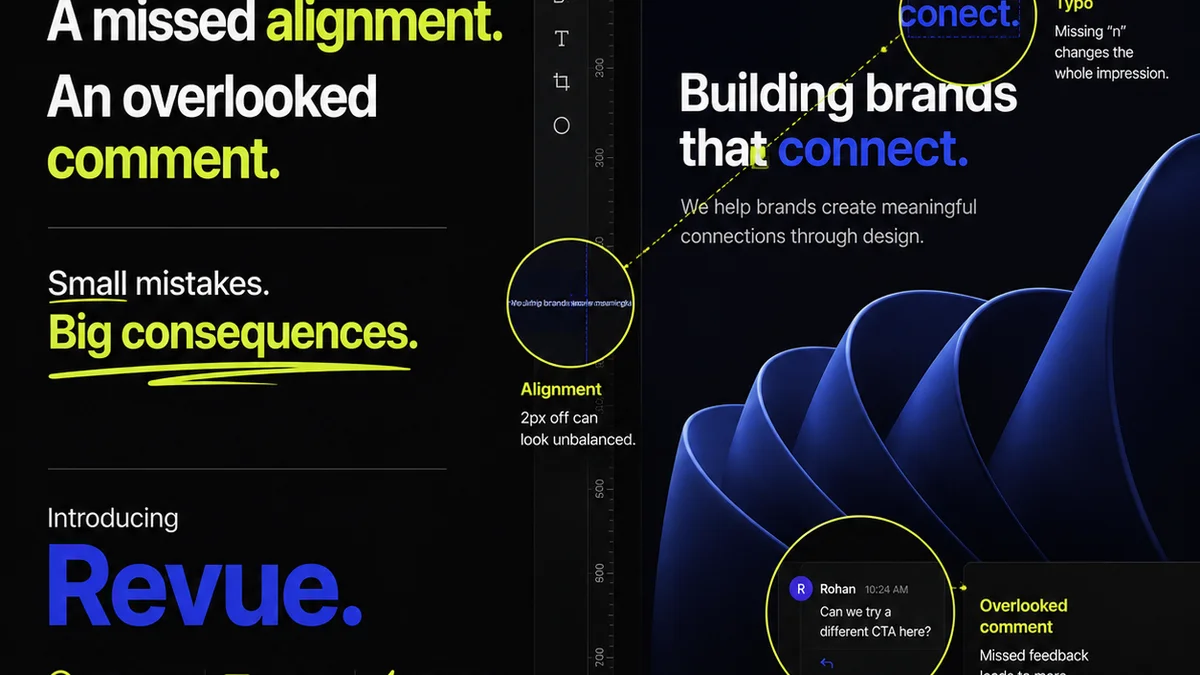
Regardless of your website's complexity or cost, managing the feedback and approval process can become chaotic. This is where Revue steps in.
Centralizing client feedback means fewer emails lost in inboxes and no more
Frequently asked questions
What is the average cost of a website for a small business?
For a small business needing a professional, informational website with 5-10 pages, you can expect costs ranging from $3,000 to $10,000. This typically includes custom design, content integration, basic SEO, and a user-friendly CMS.
How much does an e-commerce website cost?
An e-commerce website can range from $5,000 for a simpler setup on platforms like Shopify to $25,000+ for a fully custom solution with advanced features, integrations, and robust security.
Why is custom web development so expensive?
Custom web development is expensive because it involves unique programming tailored to specific business needs, complex integrations, intricate database management, and extensive testing. It requires specialized skills and significant developer hours.
Are website maintenance costs significant?
Yes, ongoing maintenance costs can add up. Budget anywhere from $50 to $500+ per month, depending on the complexity of your site, hosting needs, and the level of support required for updates, security, and performance monitoring.