Everyone talks about website design. Clients want it to look good. Designers want it to be innovative. But the real question for agency owners and creative directors is: what’s the return on investment (ROI)?
You might think ROI is just about conversion rates. Or maybe lead generation. None of that is wrong. But it’s incomplete.
The hard truth is that website design ROI is a multifaceted metric. It’s not just about the shiny end product. It’s about the entire process, the client relationship, and the long-term business impact.
1. The Flawed Metrics Agencies Rely On
Agencies often point to vanity metrics. Things like page views, bounce rate, or time on site. These are easy to track. They look good on a report. But do they actually translate to client success? Rarely.
A high bounce rate could mean the user found what they needed instantly. Or it could mean the page was irrelevant. Time on site can indicate engagement. Or it can mean a user is lost and confused.
These numbers lack context. They don’t tell the full story of how the design is performing against business goals.
The Real Cost of Bad Data
Relying on surface-level metrics means you’re flying blind. You can’t identify what’s working and what’s not.
This leads to wasted effort. It means you can’t confidently advise clients on future iterations. And it erodes trust when the results don’t match expectations.
2. Defining True Website Design ROI
Website design ROI is the measurable economic benefit derived from the investment in designing and developing a website. It’s about connecting design choices to tangible business outcomes.
This goes beyond just aesthetics. It encompasses:
- Increased revenue
- Reduced operational costs
- Improved customer acquisition
- Enhanced customer retention
- Stronger brand perception
- Better operational efficiency
When you frame ROI this way, the design isn't just a cost center. It becomes a strategic asset.
Shifting the Conversation
Instead of asking, “Does the client like the colors?”, ask, “How will this color palette influence user behavior and conversion?”
Instead of focusing on the number of pages, ask, “Does the information architecture effectively guide users to their goals, reducing support calls?”
This requires a deeper understanding of the client’s business. And a commitment to tracking metrics that matter.
3. Key Performance Indicators (KPIs) That Actually Measure ROI
To measure website design ROI effectively, you need to track the right KPIs. These should align directly with the client’s business objectives.
Conversion-Related KPIs
- Conversion Rate: The percentage of visitors who complete a desired action (purchase, form submission, download).
- Cost Per Acquisition (CPA): The total cost of acquiring a new customer through the website.
- Average Order Value (AOV): The average amount spent per order. A good design can encourage larger purchases.
- Lead Quality Score: If the website generates leads, how likely are they to convert into paying customers?
Efficiency and Cost-Related KPIs
- Reduction in Support Tickets: A clear, intuitive design can answer user questions proactively.
- Task Completion Rate: For specific user journeys (e.g., finding product info, completing checkout), what percentage of users succeed?
- Website Load Time: Faster sites improve user experience and SEO, indirectly impacting ROI. A site speed can directly affect conversion.
Brand and Engagement KPIs
- Brand Mentions and Sentiment: How does the website contribute to overall brand perception?
- Customer Lifetime Value (CLV): Does the website experience encourage repeat business?
- Net Promoter Score (NPS): How likely are users to recommend the brand based on their website experience?
These KPIs provide a much clearer picture than simple traffic numbers.
4. The Hidden Costs of Poor Design Decisions
We often focus on the cost of *good* design. But the cost of *bad* design is far more insidious.
It’s not just about a project going over budget. It’s about the ongoing damage to the client’s business.
Operational Drag
- Endless Revision Cycles: Unclear feedback loops and poor communication lead to scope creep and wasted hours.
- Increased Support Load: Confusing navigation or missing information forces users to contact support, driving up costs.
- Low User Adoption: If the website is difficult to use, customers won't engage, leading to missed opportunities.
- SEO Penalties: Poor user experience signals (high bounce rates, low time on site) can negatively impact search rankings.
Lost Revenue Opportunities
- Abandoned Carts: A clunky checkout process is a primary reason for lost sales.
- Missed Lead Generation: Confusing forms or calls-to-action mean potential customers leave without inquiring.
- Damaged Brand Reputation: A poorly designed, unprofessional website can deter potential customers and partners.
- Failure to Compete: If your website is inferior to competitors', customers will go elsewhere.
These aren't just abstract problems. They directly impact the bottom line.
5. Calculating Website Design ROI: A Practical Approach
Calculating ROI involves comparing the gains from the website investment against its costs.
The formula is simple: ROI = (Net Profit from Investment - Cost of Investment) / Cost of Investment
The challenge lies in accurately identifying both sides of the equation.
Quantifying the Benefits
This is where tracking your chosen KPIs becomes crucial. For example:
- Increased Sales: If a website redesign led to a 10% increase in online sales, calculate the profit generated from those additional sales.
- Reduced Costs: If a new FAQ section reduced support calls by 20%, calculate the savings based on the average cost per support interaction.
- Improved Lead Generation: If the new design increased qualified leads by 15%, estimate the revenue generated from those leads based on historical conversion rates.
You need to attribute these gains directly to the website design. This often involves A/B testing or comparing pre- and post-launch data.
Accounting for Costs
The cost of investment isn't just the agency fee. It includes:
- Design and development fees
- Content creation
- Hosting and maintenance
- Marketing and advertising to drive traffic
- Internal resources spent managing the project
Be thorough. Overlooking costs inflates your perceived ROI.
Setting Realistic Expectations
ROI won't appear overnight. It takes time for a new design to gain traction and for users to adapt.
Set clear, measurable goals with your clients upfront. Agree on the KPIs you will track and the timeframe for evaluation.
6. Where Revue Fits In
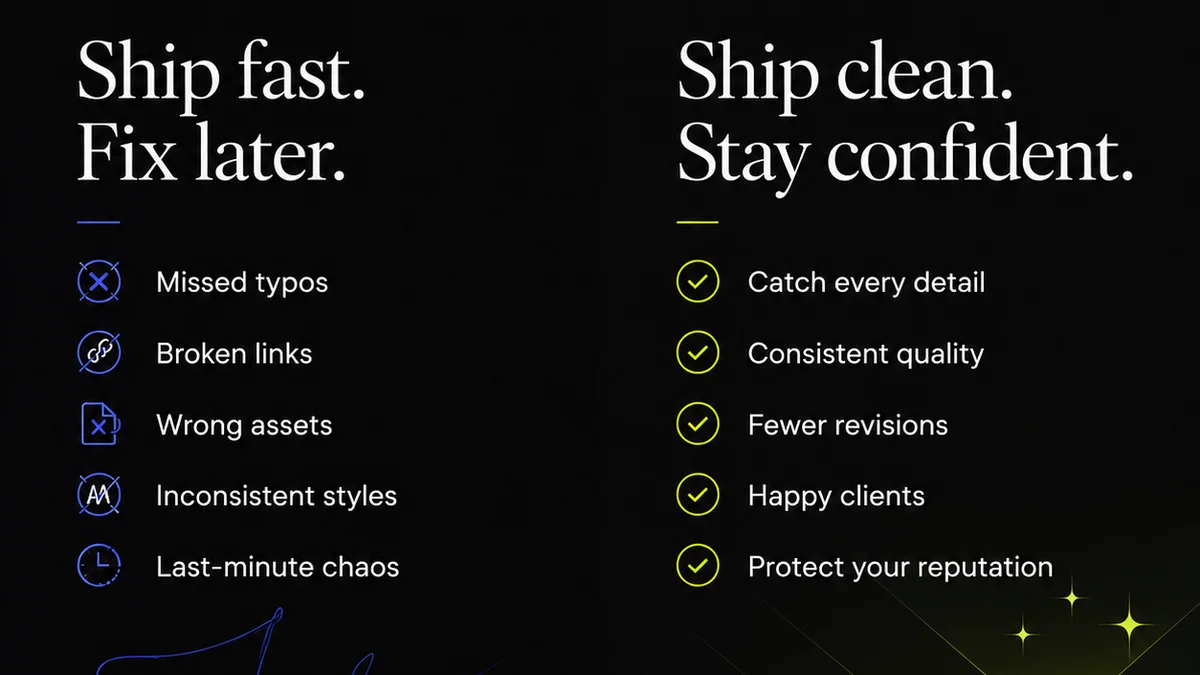
Managing the website design process efficiently is key to maximizing ROI. Delays, miscommunication, and unclear feedback cycles inflate costs and delay benefits.
Revue helps streamline the entire creative workflow, directly impacting your ability to deliver projects on time and on budget.
- Centralized Client Feedback: Eliminate scattered email threads and endless Slack messages. All client comments live directly on the creative asset, reducing confusion and speeding up revisions.
- Clear Revision and Approval Tracking: Maintain a definitive record of every change and approval. This visibility prevents scope creep and ensures everyone is on the same page.
- Quality Control Checkpoints: Integrate final review and approval stages seamlessly. Ensure designs meet client requirements and your agency’s standards before launch.
By improving process efficiency, Revue helps you reduce project costs and accelerate the time-to-value for your clients’ website investments. This directly contributes to a stronger, more demonstrable ROI.
7. Final Thought
Is your agency focused on delivering pretty websites, or profitable ones?
The distinction is critical. By shifting your focus from vanity metrics to measurable business outcomes, and by optimizing your internal processes, you can transform website design from a perceived expense into a powerful revenue generator for your clients—and a clear value proposition for your agency.
Frequently asked questions
What is the difference between website aesthetics and website ROI?
Website aesthetics refer to the visual appeal and look of a website. Website ROI (Return on Investment) measures the financial benefit gained from the investment in designing and developing that website, connecting design decisions to tangible business outcomes like increased revenue or reduced costs.
How can I prove the ROI of a website redesign to a client?
To prove ROI, you must first agree on specific, measurable business goals with the client (e.g., increase sales by X%, reduce support calls by Y%). Then, track relevant KPIs before and after the redesign. Quantify the financial impact of improvements in these KPIs and compare it against the total project cost.
What are the most important KPIs for measuring website design ROI?
The most important KPIs depend on the client's goals, but generally include conversion rates, cost per acquisition, average order value, lead quality, reduction in support tickets, task completion rates, and customer lifetime value. Focus on metrics that directly impact revenue or reduce operational costs.
Can a website design have a negative ROI?
Yes, a website design can have a negative ROI if the costs associated with its design, development, and maintenance outweigh the measurable financial benefits it generates. This can happen due to poor planning, inefficient processes, unclear objectives, or a design that fails to meet business goals.