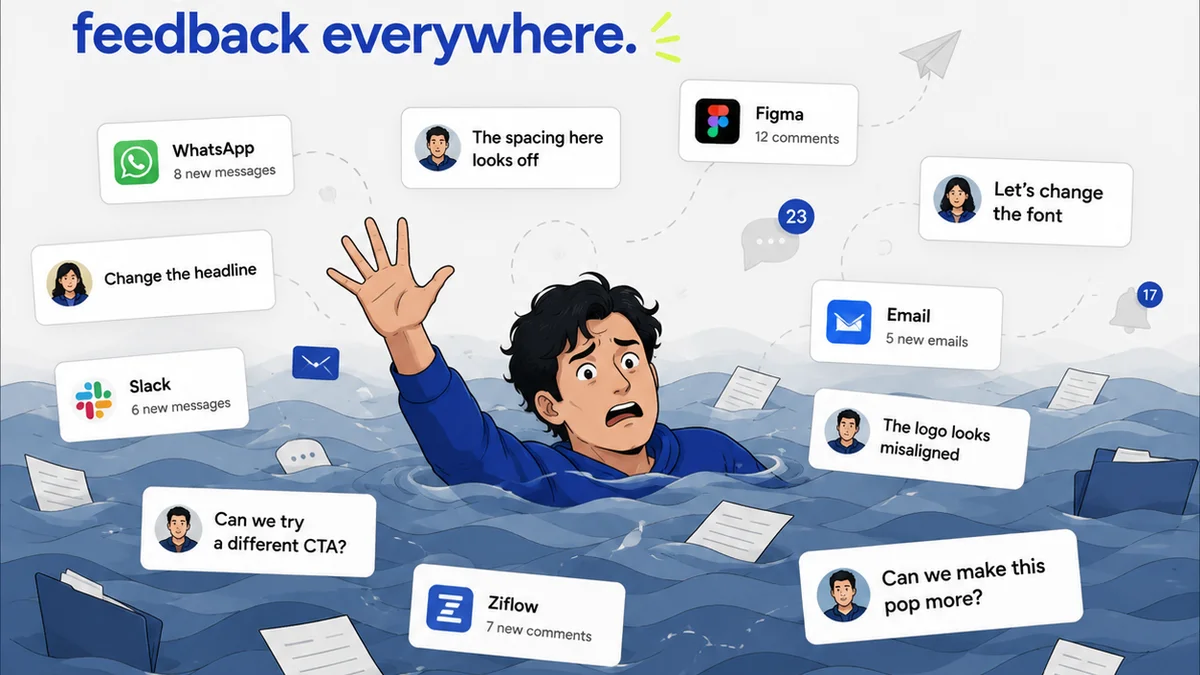
Everyone talks about getting client feedback. It’s table stakes for any agency or in-house team. You set up a process, you send a link, you wait for comments.
And often, you get… something. A mess of conflicting notes, vague suggestions, or outright demands that derail the original brief.
None of that is wrong. But it’s incomplete.
The hard truth? Your client review process is probably costing you more time, money, and creative energy than you realize. It’s not just about collecting comments; it’s about steering the conversation, managing expectations, and ensuring the final output actually solves the problem.
Let’s move past the basics and into the advanced territory.
1. The Pre-Review Briefing: Setting Expectations Before Feedback Starts
Most teams wait until the creative is done to talk about feedback. Big mistake. The real work starts before the first pixel is approved.
Assumption: Clients know what good feedback looks like.
Reality: Clients are experts in their business, not necessarily in creative critique. They need guidance.
The Strategic Kick-off
Before any work begins, schedule a dedicated session – not just a quick email – to align on:
- The core objective of the creative piece.
- The target audience and their likely perception.
- Key performance indicators (KPIs) for success.
- The *type* of feedback you’re looking for at each stage (e.g., conceptual, aesthetic, functional).
- What’s *in scope* for this iteration versus what’s a change request.
This isn't about getting sign-off on the brief; it's about ensuring everyone understands the *why* behind the *what*.
Define the 'Done'
What does success look like? Clearly articulate the criteria for approval. This isn't about aesthetics alone. Does it meet the brief? Does it drive the desired action? Is it technically sound?
Document these criteria. Refer back to them. This becomes your objective measuring stick, not subjective preference.
2. Structured Feedback Loops: From Chaos to Clarity
The common approach is a free-for-all comment section. This breeds confusion and endless back-and-forth.
Assumption: All feedback is created equal.
Reality: Feedback needs context, prioritization, and a clear path to action.
The Decision-Maker Matrix
Who actually has the final say? Identify key stakeholders and their roles in the review process early on. Not everyone needs to weigh in on every detail.
Consider assigning different levels of input:
- Approver: Has final sign-off authority.
- Consultant: Provides input, but their comments are not binding.
- Observer: Needs to be aware, but doesn't provide feedback.
This prevents the
Frequently asked questions
How can I get better quality feedback from clients?
Start with a strategic pre-review briefing to align on objectives and the type of feedback needed. Clearly define the criteria for 'done' and ensure only designated approvers provide final sign-off.
What's the biggest mistake agencies make with client reviews?
Allowing a free-for-all feedback environment where conflicting opinions and vague comments lead to endless revisions and scope creep. Not clearly identifying decision-makers is also a common pitfall.
How can technology help with client reviews?
Tools like Revue can centralize feedback, provide clear version history, and streamline the approval process, reducing miscommunication and saving time.
What if a client's feedback contradicts the brief?
Refer back to the pre-briefing documentation and the agreed-upon objectives. Frame the discussion around how the feedback aligns (or doesn't align) with the project's goals and KPIs.