Everyone knows a good brief is important. You’ve heard it a million times. A clear brief means clear work, happy clients, and on-time delivery. None of that is wrong. But it’s incomplete.
The real truth? A good brief is just the starting line. The advanced game is played in how you *manage* the entire request lifecycle. From the moment a client even *thinks* about needing something, to the final sign-off. That’s where operational excellence lives. And where agencies make or break their profit margins.
1. The Myth of the 'One-Shot' Brief
We like to imagine a perfect world. The client has a fully formed idea. They articulate it perfectly in a document. You get it, you execute it, boom. Done.
That world doesn't exist.
Creative requests are rarely a single event. They’re a messy, iterative process. They start with vague notions, evolve through conversations, get refined by internal debate, and are often reshaped by client feedback that might not even be about the core request itself.
The Real Request Lifecycle
Think about it:
- The Spark: A client has a *feeling* or a *problem*. It’s not a brief yet. It’s barely an idea.
- The Initial Ping: A quick email, a Slack message: “Hey, thinking we might need a banner ad for this thing…”
- The Informal Chat: A call where the idea gets fleshed out, but with a lot of “ums” and “ahs.”
- The Formal Brief: Finally, a document. But it’s often based on the *previous* stage, not the *current* one.
- Internal Scoping: Your team tries to interpret the brief. This is where the first cracks can appear.
- The Draft: Work begins.
- Feedback Rounds: The real fun begins.
- Revisions & Iterations: Back and forth.
- Final Approval: Hopefully.
Most agencies focus their energy on that one “Formal Brief” document. They polish it, obsess over it. They treat it like the final destination, not just a waypoint.
2. Decoding the Unspoken: Reading Between the Lines
Clients don’t always know what they *really* need. They know what they *think* they need, or what they *can articulate*. Your job, as the expert, is to bridge that gap.
This requires active listening and strategic questioning, not just passive reception of a document.
What Clients *Really* Mean
When a client says:
- “Make it pop more.”
- “I don’t like the font.”
- “Can we try a different color?”
- “This doesn’t feel right.”
They are rarely talking about the literal elements. They’re signaling something deeper.
- “Make it pop more” could mean: “This isn’t conveying the urgency/excitement I feel about this product launch.”
- “I don’t like the font” could mean: “This feels too corporate/too playful for the audience we’re targeting.”
- “Can we try a different color?” could mean: “This palette doesn’t align with our updated brand guidelines or the competitor’s dominant color.”
- “This doesn’t feel right” could mean: “I’m not convinced this creative solution actually solves the business problem we discussed.”
The advanced agency doesn't just take these comments at face value. They probe. They ask:
- “What specifically about this feels off? What emotion are we trying to evoke?”
- “When you say ‘pop,’ what specific outcome are we aiming for?”
- “How does this color choice align with our target demographic’s perception?”
This is where true collaboration happens. It’s not about being a yes-man. It’s about being a strategic partner who guides the client to the *best* solution, not just the one they initially asked for.
3. The Hidden Costs of Ambiguity
Ambiguity isn't just annoying; it's expensive. Every unclear request, every misunderstood instruction, every vague piece of feedback costs you time and money.
Time spent deciphering emails. Time spent on revisions that miss the mark. Time spent in meetings re-explaining what was already said. This erodes your margins faster than almost anything else.
The Domino Effect of a Bad Request
Imagine this:
- Vague Request: Client asks for a “social media campaign” without defining goals or audience.
- Internal Assumption: Your team designs something based on their best guess.
- First Feedback: “This isn’t what we wanted.”
- Revision 1: You redesign based on new, slightly clearer (but still imperfect) input.
- Second Feedback: “Still not quite there. Can we make the CTA bigger?”
- Revision 2: You adjust the CTA.
- Third Feedback: “Actually, we decided to pivot the product messaging. Can we start over?”
You’ve just spent hours, maybe days, on work that’s essentially worthless. Your team is frustrated. The client is frustrated. Profitability takes a nosedive.
This isn’t a rare occurrence. It’s a systemic issue in agencies that haven’t formalized their request and feedback processes.
4. Building a Request Engine, Not Just a Brief Template
Your goal shouldn't be just to *get* a brief. It should be to build a predictable, efficient system for handling *all* creative requests.
This means moving beyond static Word docs and email chains.
Key Components of a Request Engine:
- Standardized Intake Forms: Not just a brief template, but a dynamic form that guides the client through necessary information *before* they even start writing. This pre-qualifies the request.
- Centralized Communication Hub: A single source of truth for all conversations related to a project. No more digging through old emails.
- Clear Workflow Stages: Defining what happens at each step – from initial request to final approval. Who is responsible? What are the expected turnarounds?
- Version Control & History: Easy access to previous versions and feedback, so you can track the evolution of the creative.
- Defined Approval Gates: Making it clear when and how a client needs to formally approve work.
This isn't about adding bureaucracy. It's about adding clarity and control.
5. Where Revue Fits In
Managing the entire creative request lifecycle is complex. It requires tools that simplify communication, streamline workflows, and provide visibility at every stage.
This is exactly what Revue is built for.
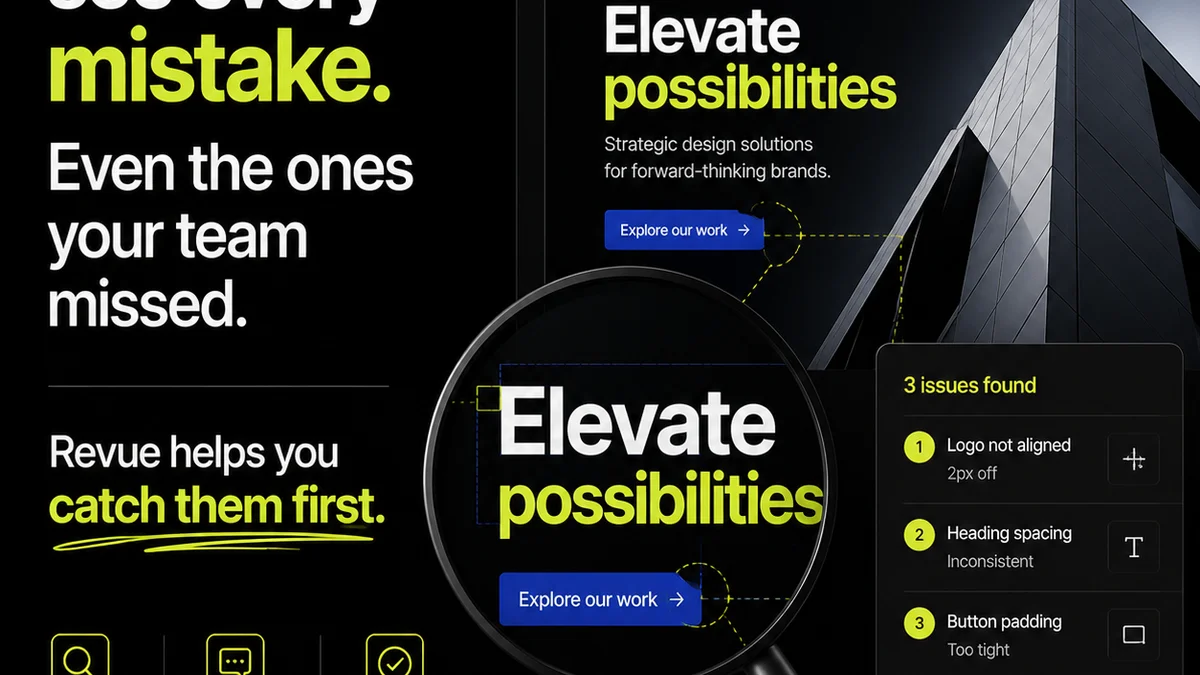
Instead of scattered emails and endless Slack threads, Revue provides a centralized platform where clients can submit requests, provide feedback directly on creative assets, and approve final work. Every version, every comment, every decision is logged and visible.
This means:
- Clearer Intake: Use structured forms to gather all necessary info upfront.
- Streamlined Feedback: Clients annotate directly on proofs, eliminating confusing email chains.
- Visible Revisions: Track the history of changes and understand exactly what was requested and delivered.
- Effortless Approvals: Formal sign-offs happen within the platform, creating an auditable trail.
Revue transforms the chaotic request process into a manageable, transparent workflow. It helps your team spend less time chasing information and more time creating brilliant work.
6. Final Thought
The brief is a document. The request is a process. Which one are you optimizing for?
If you’re still treating creative requests as just another piece of paper to be filled out, you’re leaving money on the table. You’re inviting inefficiency. You’re building a system designed for frustration, not for flow.
The agencies that thrive are the ones that understand this. They’ve built robust systems around the entire request lifecycle. They’ve moved beyond the “good brief” mindset to embrace the “brilliant process” reality.
What’s one small change you can make today to improve your agency’s creative request process?
Frequently asked questions
What's the difference between a creative brief and a creative request?
A creative brief is a document that outlines a specific project's goals, audience, and deliverables. A creative request is the entire process, from the initial idea or problem the client has, through communication, briefing, execution, feedback, and approval. The brief is a part of the request process.
How can I make client feedback more constructive?
Encourage clients to focus on the strategic goals of the project rather than just aesthetic preferences. Ask clarifying questions about *why* they dislike something or what they aim to achieve. Using a tool like Revue allows for annotated feedback directly on creative assets, which is often clearer than vague email comments.
What are the biggest hidden costs of poor creative requests?
The biggest hidden costs are wasted time and resources. This includes time spent deciphering unclear instructions, performing unnecessary revisions, attending extra meetings, and dealing with team frustration. These inefficiencies directly erode profit margins.
How can a centralized platform like Revue help with creative requests?
A centralized platform consolidates all project communication, feedback, and approvals in one place. This eliminates scattered emails and Slack messages, provides a clear history of decisions, ensures everyone is working from the latest information, and streamlines the entire process from request to final sign-off.