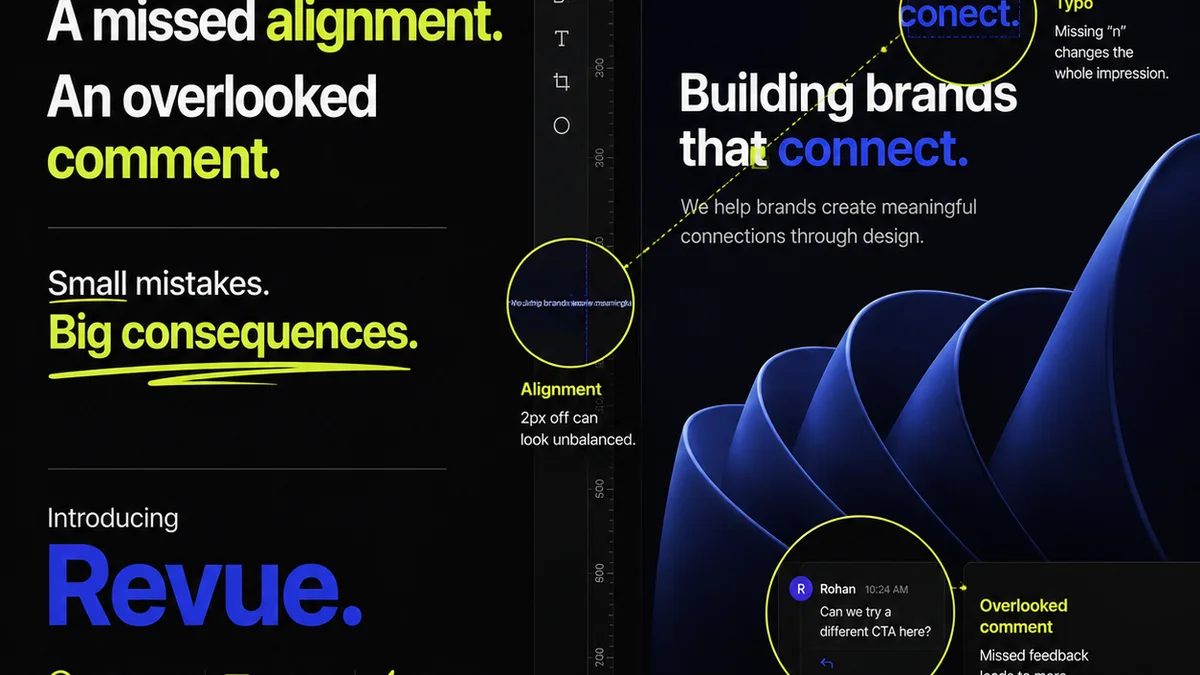
Everyone talks about design productivity. They mention keyboard shortcuts, faster software, and maybe a standing desk. None of that is wrong. But it’s incomplete.
The real bottleneck isn’t your speed with a mouse. It’s your process. Specifically, how you manage feedback, revisions, and approvals.
1. The Myth of the Solo Genius
We like to imagine the designer locked away, emerging with a masterpiece. That’s a romantic notion, but rarely the operational reality for agencies or in-house teams.
Design is inherently collaborative. It involves clients, stakeholders, account managers, and other creatives. Each adds a layer of communication and potential friction.
This friction is where productivity dies. Not in the act of designing, but in the chaos surrounding it.
The Feedback Loop Breakdown
Think about your typical feedback process. Emails flying back and forth. Comments scattered across PDFs, Slack messages, and even verbal conversations. It’s a mess.
- Clients miss crucial feedback buried in long email threads.
- Designers waste hours hunting for the latest version or the correct comment.
- Approvals get delayed because no one is sure what’s been signed off.
- Small, easily fixable issues snowball into major problems due to miscommunication.
This isn’t about blame. It’s about a broken system.
2. Operationalizing Creativity: The Hard Truth
Creativity isn’t a mystical force that defies logic. It’s a skill that thrives within a well-oiled machine.
The hardest truth? Your design productivity is directly proportional to your workflow’s efficiency. Not your individual speed.
This means systematically identifying and eliminating the operational drags that slow down your creative output.
Streamlining the Unseen Work
There’s a vast amount of work that happens *around* the actual design. This is where most agencies and teams lose significant time and energy.
- Onboarding new clients: Setting expectations, gathering assets, understanding brand guidelines.
- Managing feedback: Collecting, consolidating, and clarifying input from multiple sources.
- Handling revisions: Tracking changes, ensuring consistency, and avoiding scope creep.
- Seeking approvals: Getting clear sign-off without endless back-and-forth.
- Quality control: Ensuring the final output meets all requirements before delivery.
If these steps are ad-hoc, you’re not being productive. You’re just busy.
3. The Feedback Deluge and How to Stop It
Client feedback is essential, but it’s often the biggest productivity killer. It’s rarely delivered in a structured, actionable way.
The assumption is that clients know how to give feedback. They don’t. And expecting them to is a mistake.
Turning Chaos into Clarity
You need a system to capture, organize, and act on feedback efficiently. This means moving away from email and spreadsheets.
- Centralized Commenting: A single source of truth for all feedback on a specific asset.
- Visual Annotation: The ability to pinpoint comments directly on the design itself.
- Version Control: Clearly distinguishing between different iterations and their associated feedback.
- Actionable Tasks: Turning feedback into clear, assignable to-dos for the design team.
This isn’t about making clients’ lives harder. It’s about making the entire process smoother for everyone.
4. The Revision Revision: Beyond Just Making Changes
Revisions aren't just about applying edits. They're about managing the evolution of a design based on input. Without a clear process, this becomes a black hole.
The assumption is that revisions are straightforward. Often, they are anything but.
The Anatomy of an Efficient Revision Cycle
An efficient revision process requires clear boundaries and visibility.
- Scope Management: Clearly defining what revisions are included and what constitutes a new request.
- Progress Tracking: Knowing exactly where you are in the revision process for each asset.
- Stakeholder Alignment: Ensuring everyone involved understands the changes being made and why.
- Approval Gating: Using clear sign-offs at each stage to prevent rework.
This structured approach prevents the dreaded
Frequently asked questions
What's the biggest misconception about design productivity?
The biggest misconception is that it's solely about individual speed or using faster tools. True design productivity stems from an efficient, streamlined workflow that minimizes friction in communication, feedback, and approvals.
How can agencies improve their feedback process?
Agencies can improve feedback by implementing a centralized system for comments and visual annotations. This ensures all input is captured in one place, is easy to track, and directly linked to the design asset, reducing miscommunication and wasted time.
What is the 'hard truth' about creative operations?
The hard truth is that creativity thrives within operational excellence. Your team's creative output is directly limited by the efficiency of your workflow. Identifying and eliminating operational bottlenecks is key to unlocking higher productivity.
How does version control impact productivity?
Effective version control prevents confusion and rework. By clearly distinguishing between design iterations and their associated feedback, teams can ensure they're always working on the latest version and that previous decisions are respected, saving significant time.