Everyone thinks packaging design is about aesthetics. About making a box look good on the shelf. That’s part of it, sure. But it’s the shallow end of the pool.
The hard truth? Great packaging is an operational system. It’s about managing complexity, ensuring consistency, and streamlining a chaotic process from brief to production. Aesthetics are the outcome, not the engine.
1. The Illusion of Creative Freedom
We love to talk about ‘breaking the mold’ and ‘disruptive design.’ And yes, creativity is key. But for agencies and in-house teams, true creative impact comes from working *within* constraints, not ignoring them.
What are these constraints? Think about:
- Production limitations: Can this actually be manufactured affordably and at scale?
- Supply chain realities: How does it ship? What are the dimensional weight costs?
- Retailer requirements: Specific dielines, color profiles, compliance labels.
- Brand consistency: Does it align with *all* other brand touchpoints, not just the product itself?
- Sustainability goals: Material choices, recyclability, carbon footprint.
Ignoring these isn’t being edgy; it’s being unprofessional. It leads to expensive revisions, missed deadlines, and ultimately, a design that fails before it even hits the shelf.
From Concept to Code
The real magic happens when design thinking meets technical execution. It’s not enough to sketch a beautiful carton. You need to consider:
- Structural integrity: How will it hold up? Will it protect the product?
- Material science: What substrate provides the best balance of cost, durability, and environmental impact?
- Printing processes: Offset, flexo, digital – each has unique capabilities and cost implications.
- Finishing techniques: Foils, varnishes, embossing – do they add value or just cost?
This requires a deep collaboration between designers, structural engineers, and production managers. It’s a dialogue, not a dictate.
2. The Feedback Labyrinth
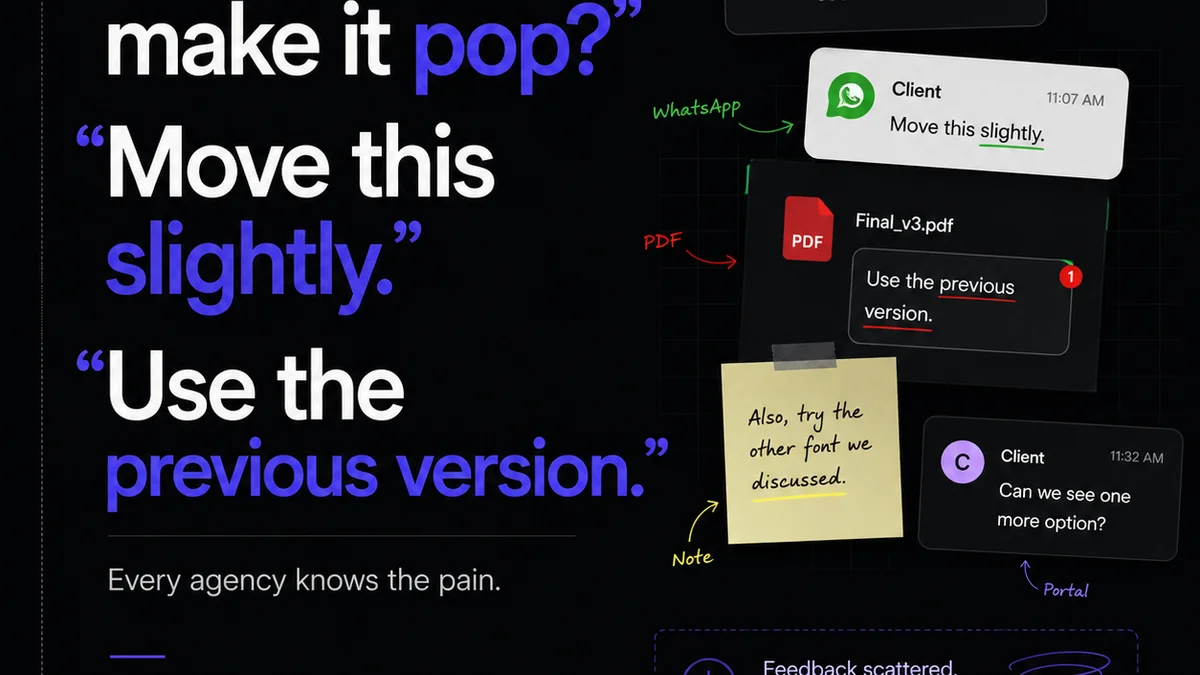
Client feedback. It’s the bane of many a creative professional’s existence. We often treat it as a necessary evil, a series of subjective opinions to be navigated or appeased.
But here’s the contrarian take: If your feedback process is a mess, your *design system* is probably also a mess.
Poor feedback loops are symptoms of deeper issues:
- Lack of clear briefs: Vague objectives lead to vague feedback.
- Undefined stakeholders: Too many cooks, all with different tastes.
- No structured review process: Ad-hoc comments from random people.
- No version control: Endless
Frequently asked questions
What's the biggest mistake teams make in packaging design?
Focusing solely on aesthetics without considering production, supply chain, and retailer requirements. This often leads to costly revisions and designs that can't be executed effectively.
How can agencies manage client feedback more effectively for packaging projects?
Implement a structured feedback process with clear review stages, defined stakeholders, and a centralized platform for comments and approvals. This minimizes confusion and ensures all feedback is actionable.
Why is structural design as important as graphic design in packaging?
Structural design ensures the package is functional, protective, and manufacturable. It impacts cost, shipping efficiency, and user experience, making it critical for the overall success of the packaging.
How does packaging design tie into broader brand strategy?
Packaging is a primary brand touchpoint. It must visually communicate brand values, appeal to the target audience, and maintain consistency with other brand communications to reinforce brand identity.