Everyone talks about digital. Websites, social media, apps – it’s all about pixels and screens. Print and publishing? That’s old news, right? Something clients only ask for when they’re stuck in the past.
None of that is wrong. But it’s incomplete.
The deeper truth is that print and publishing still represent a massive chunk of creative work. And for agencies that nail it, it’s a lucrative, high-impact business. The difference between barely surviving these projects and thriving? It’s not about knowing Photoshop or InDesign better than the next person. It’s about mastering the operational workflow.
1. Embracing the Physical Asset
Digital assets are ephemeral. A PDF can be tweaked endlessly. A print piece, however, has a tangible reality. Once it’s at the printer, changes become costly and time-consuming.
This physicality changes everything.
The Client Assumption: “It’s just a brochure/magazine/report.”
Clients often underestimate the complexity. They see the final output but not the journey. They don’t grasp the lead times, the print specifications, the potential pitfalls.
The Agency Reality: Every physical piece is a project with hard deadlines and zero room for error.
This means your process needs to be robust. You can’t afford to be sloppy.
- Understanding paper stocks and weights.
- Navigating printer capabilities and limitations.
- Managing color profiles for accurate reproduction.
- Factoring in bindery, finishing, and shipping.
These aren’t minor details; they are critical path items.
2. The Art of Spec and Brief Clarity
Digital briefs can be fluid. A campaign can pivot on a dime. Print projects require upfront definition. The more precise the specification, the smoother the execution.
This starts with the brief.
The Client Assumption: “Just make it look good, like the last one but with new photos.”
This is the opposite of helpful. It’s a recipe for scope creep and frustration.
The Agency Reality: A detailed specification sheet is non-negotiable.
This includes:
- Exact dimensions.
- Page count (or spread count for brochures/magazines).
- Paper type, weight, and finish (e.g., matte, gloss, uncoated).
- Ink specifications (e.g., CMYK, spot colors, special finishes like foil or embossing).
- Binding method (e.g., perfect bound, saddle-stitched, spiral).
- Trim size and bleed requirements.
- Delivery timeline, including printer proof approvals.
If the client can’t provide this, it’s your job to guide them. This is a service, but it’s also a shield against misinterpretation.
3. Version Control: The Unsung Hero
In digital, version 1.0, 1.1, 1.2 is common. In print, it’s usually just FINAL. And that’s a dangerous simplification.
Think about a multi-page annual report or a complex magazine issue. There are dozens, maybe hundreds, of individual elements that need to be correct.
The Client Assumption: “We’ll just tell you what to change.”
They don’t realize that a small change on page 5 could have ripple effects on page layout, image placement, or even pagination if it affects the total page count.
The Agency Reality: Rigorous version control is paramount.
This means:
- Clear naming conventions for files and drafts.
- Centralized storage where everyone works from the latest version.
- A formal sign-off process for each revision stage.
- Detailed change logs that track every modification, who made it, and why.
You need a system that prevents accidental overwrites and ensures the final artwork sent to print is *exactly* what was approved.
4. The Proofing Gauntlet
Digital proofs (PDFs) are a necessary step, but they are not the final word. Color shifts, paper texture, and print quality are only truly assessed with physical proofs.
This is where many projects go off the rails.
The Client Assumption: “The PDF looks fine. Send it to print.”
This assumption ignores the limitations of screen calibration and the nuances of ink on paper.
The Agency Reality: Physical proofs are essential, and managing them is an art.
Leading agencies understand this and build it into their timelines and budgets:
- Digital proofs: For layout, content, and basic color checks.
- Soft proofs: On-screen simulations that attempt to mimic paper and ink. Useful, but not definitive.
- Hard proofs (e.g., contract proofs): Professionally printed, color-calibrated proofs that give a very accurate representation. These are crucial for final sign-off on color and overall appearance.
- Press checks: Attending the actual print run to ensure quality and consistency. This is often reserved for high-volume or critical projects.
Each step adds time and cost. But skipping them is a gamble with potentially disastrous consequences for client satisfaction and your agency’s reputation.
5. Collaboration Beyond the Studio
Print and publishing workflows involve more than just your internal team. You’re dealing with printers, paper suppliers, binders, and potentially external copywriters or photographers.
This extended network needs to be managed.
The Client Assumption: “You handle all that. Just make sure it gets done.”
They delegate, but they still expect perfection without understanding the coordination required.
The Agency Reality: You are the conductor of an orchestra.
Effective communication and clear delegation are key:
- Establish trusted relationships with reliable vendors.
- Clearly communicate project requirements and deadlines to all parties.
- Set up a central hub for all communications and file sharing.
- Have backup plans for critical vendors.
A single point of contact for each external party streamlines the process and minimizes miscommunication.
Where Revue Fits In
Managing these complex print and publishing workflows, with their inherent need for precision and multiple stakeholder approvals, can be a nightmare without the right tools.
This is where Revue shines.
Revue provides a centralized platform to manage client feedback, track revisions, and gain clear visibility into the approval process. For print projects, this means:
- Consolidated Feedback: All comments, annotations, and stakeholder input on PDFs, mockups, or even specific page spreads are in one place. No more digging through endless email chains.
- Revision Tracking: Easily see what changes were requested, by whom, and when. This creates an irrefutable audit trail, essential for dispute resolution and quality control.
- Clear Approval Gates: Define specific stages for review and approval. Stakeholders can sign off on specific versions, ensuring everyone is aligned before the project moves to the next critical step, like sending to the printer.
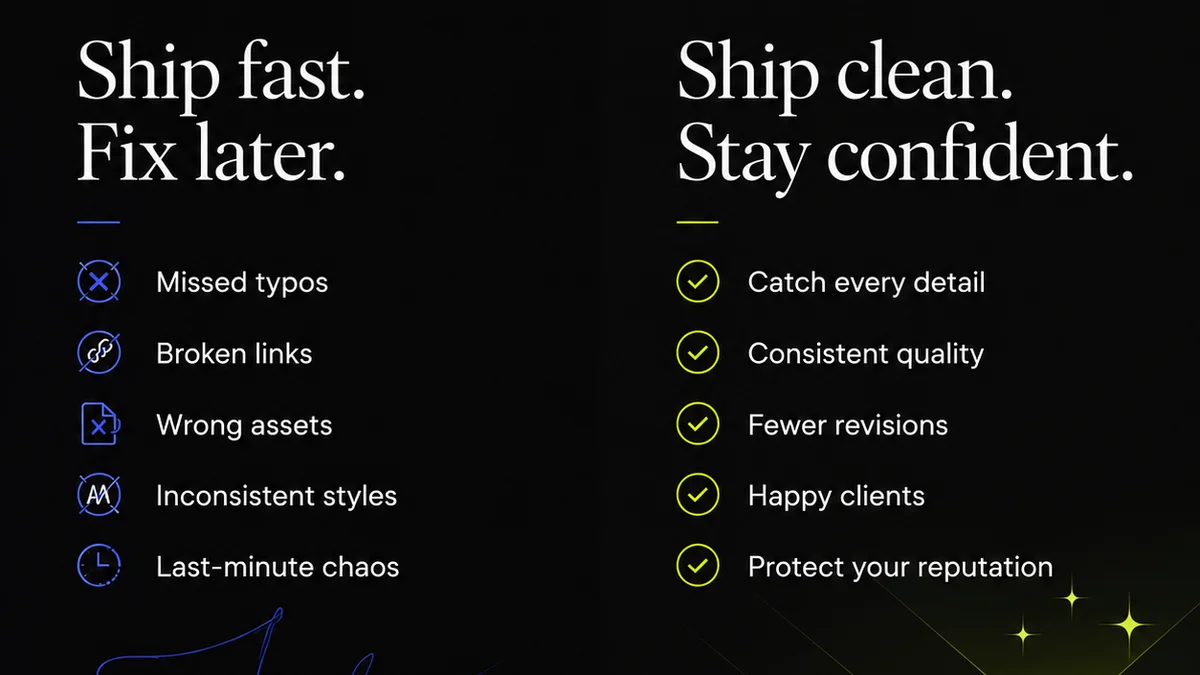
- Quality Control: By having a clear history of feedback and approvals, you can ensure that the final output matches the agreed-upon specifications, reducing errors and costly reprints.
Revue doesn’t magically make print production easier, but it brings order to the chaos of feedback and approvals, which is often the most challenging part of the process.
Final Thought
Digital is dominant, yes. But print and publishing are far from dead. They represent significant revenue and client satisfaction opportunities for agencies that approach them with operational discipline.
The question isn’t whether you should handle print work. It’s whether you’re set up to handle it profitably and without the stress that comes from a lack of process.
Frequently asked questions
What are the biggest challenges in print and publishing projects for agencies?
The biggest challenges often stem from underestimating the complexity of physical production, managing client expectations around tangible deliverables, dealing with strict lead times, and the high cost of errors once files are sent to print.
How can agencies ensure accurate color reproduction in print?
Accurate color reproduction relies on using correct color profiles (like CMYK), calibrating monitors, providing detailed specifications to printers, and critically, using professional hard proofs for final sign-off before the main print run.
What is the role of proofs in print production?
Proofs are essential checkpoints. Digital proofs check layout and content. Hard proofs (like contract proofs) are crucial for verifying color accuracy and overall appearance before mass production. Press checks during the print run ensure ongoing quality.
How does a tool like Revue help with print projects?
Revue centralizes client feedback, tracks revisions with an audit trail, and manages approvals. This clarity reduces miscommunication, prevents errors, and ensures that all stakeholders are aligned on the final design before it goes to print, saving time and money.