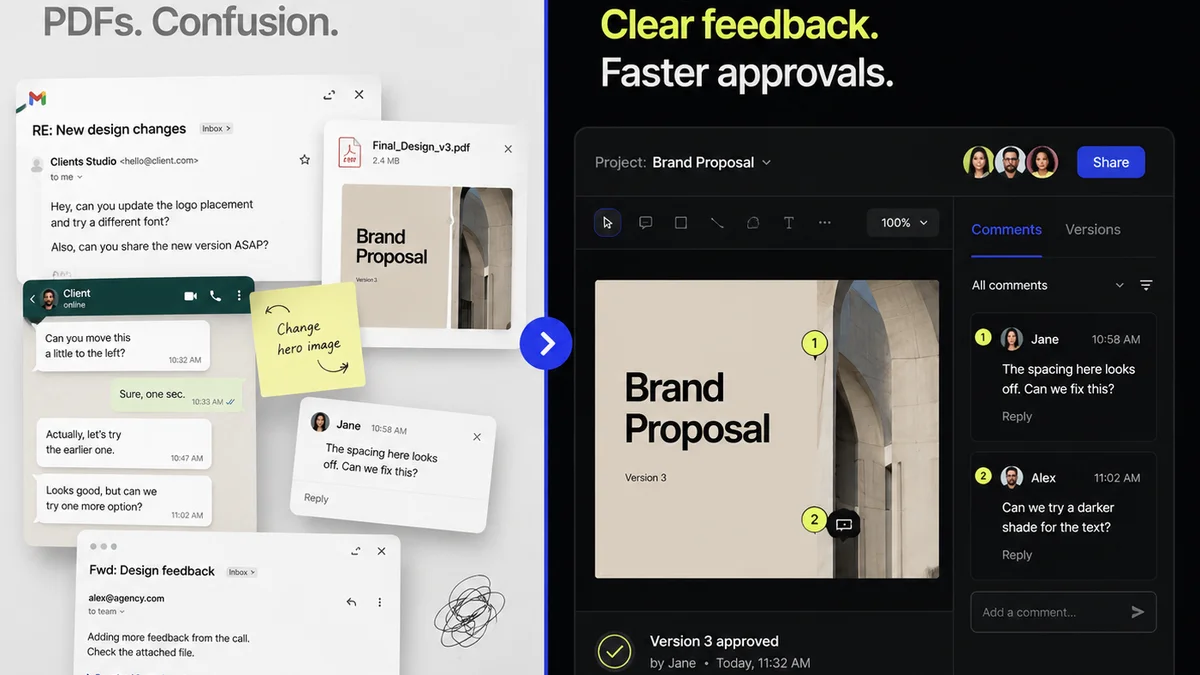
Everyone talks about productivity in agencies. More hours logged, more projects pushed through, more deliverables shipped. It’s the standard metric for success, right?
None of that is wrong. But it’s incomplete.
The hard truth is that focusing solely on productivity blinds you to the real engine of agency growth: quality.
Chasing sheer output without a focus on excellence is like building a race car that can go faster and faster, but never bothers with alignment or aerodynamics. You might be moving, but you’re not winning.
1. The Productivity Trap: More Isn't Always Better
Agencies are built on billable hours. It’s the lifeblood. So, it’s natural to focus on maximizing those hours. More projects, more clients, more output equals more revenue. It’s a simple equation.
But this equation is flawed.
What happens when those hours are spent on rushed work? Or work that misses the mark? Or work that requires endless, frustrating revisions because the first pass was… well, not great?
You end up with:
- Burned-out teams churning out mediocre work.
- Clients who are unhappy, not because of speed, but because of results.
- Scope creep disguised as
Frequently asked questions
Why is focusing on productivity alone a problem for agencies?
Focusing solely on productivity, or billable hours, can lead to rushed work, lower quality output, client dissatisfaction, and team burnout. It prioritizes output over impact and excellence.
How can agencies measure creative quality?
Measure quality by client satisfaction scores, the number of revision rounds required (fewer is better), adherence to brief objectives, awards or recognition, and internal team feedback on the work's execution and strategic fit.
What is the relationship between quality and profitability?
High quality leads to higher client retention, fewer costly revisions, stronger referrals, and a better agency reputation. This translates to more sustainable and often higher profitability than simply chasing more billable hours.
How does client feedback fit into measuring quality?
Client feedback is crucial. Centralizing and analyzing feedback helps identify patterns in what constitutes 'good' work for that client, and where quality might be slipping. It turns subjective opinions into actionable data.