Everyone thinks a smooth client approval workflow is about clear briefs and happy clients. None of that is wrong. But it’s incomplete.
The hard truth? Your approval process is only as good as your system for managing feedback and revisions. If that system is messy, your projects will always be messy.
1. The Email Black Hole is Real
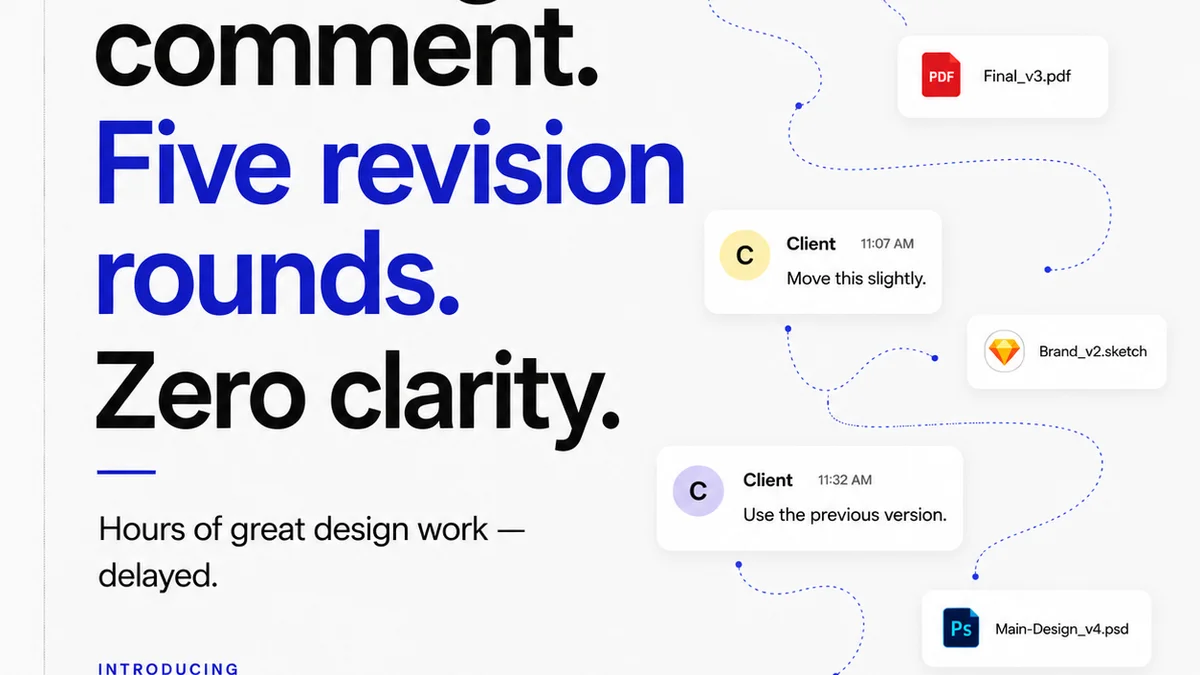
You’ve been there. A client sends feedback via email. Then another email. Then a Slack message. Maybe a voice note. It’s scattered, unorganized, and impossible to track.
This isn’t just frustrating; it’s a direct threat to your project timeline and budget.
The Symptoms of a Broken System
- Endless back-and-forth emails to clarify who said what.
- Lost feedback buried in overflowing inboxes.
- Revision rounds that go on forever because the original intent is unclear.
- Disputes over scope creep because feedback wasn’t formally logged.
- Team members working off outdated versions.
Your team wastes hours just trying to find the latest feedback. That’s billable time evaporating.
2. Version Control is Not Optional
Think of every project as a living document. Each revision is a new iteration. Without strict version control, you’re essentially flying blind.
“Just send me the latest PDF” is a dangerous request.
Why It Matters
- Ensures everyone, client and team, is looking at the same asset.
- Provides a clear audit trail of changes.
- Prevents accidental overwrites or the use of old files.
- Simplifies rollback if a new direction doesn't work.
This isn't just about file names like `final_final_v3.pdf`. It's about a systematic approach to managing iterations.
3. Feedback Needs Structure, Not Just Volume
Clients often don’t know how to give good feedback. It’s not their job; it’s yours to guide them. Dumping a raw creative asset and expecting perfect, actionable notes is a recipe for disaster.
Your job is to make it easy for them to give *useful* feedback.
Creating Actionable Feedback Loops
- Centralize all communication: One place for feedback, not scattered across channels.
- Use annotation tools: Allow clients to pinpoint exactly what they want changed on the asset itself.
- Define feedback stages: Clearly outline when and how feedback should be provided.
- Set clear expectations: Educate clients on what constitutes constructive feedback versus subjective preference.
- Require sign-off at milestones: Formal approval gates prevent endless tinkering.
This structure turns vague comments into concrete tasks.
4. The Hidden Cost of Unclear Approvals
Every hour spent deciphering feedback, chasing down approvals, or redoing work due to miscommunication is an hour you can’t bill for, or an hour that eats into your profit margin.
This directly impacts your agency’s bottom line.
The Financial Drain
- Extended project timelines.
- Increased labor costs for rework.
- Client dissatisfaction leading to lost future business.
- Team burnout from constant firefighting.
A streamlined approval process isn't just about efficiency; it's about profitability.
5. Where Revue Fits In
Managing client feedback and approvals is a core challenge for creative agencies. This is precisely why Revue was built.
Revue provides a single source of truth for all your creative assets and client interactions.
How Revue Streamlines Your Workflow
- Centralized Feedback: All client comments and annotations live in one place, directly on the creative asset. No more hunting through emails.
- Version Control: Track every revision and iteration clearly. Your team and clients always see the latest, approved version.
- Revision Visibility: See the history of changes, who approved what, and when. This transparency eliminates disputes and clarifies scope.
- Streamlined Approvals: Formalize the sign-off process, ensuring all feedback has been addressed before final approval.
- Quality Assurance: Use Revue’s structured workflow to ensure all client requirements are met before delivery.
Revue transforms a chaotic process into a controlled, efficient operation.
6. Final Thought
Are you managing your approval workflow, or is it managing you? The difference lies in the systems you put in place. Don’t let the noise of scattered feedback drown out the clarity of a well-managed process. It’s time to take control.
Frequently asked questions
What is the biggest challenge in agency approval workflows?
The biggest challenge is managing scattered feedback across multiple channels like email, Slack, and calls. This leads to confusion, lost comments, and extended revision cycles.
How can I make client feedback more actionable?
Provide clients with structured ways to give feedback, such as annotation tools on the asset itself. Clearly define feedback stages and expectations for constructive comments.
Why is version control important for approvals?
Version control ensures everyone is working with and approving the latest version of an asset. It provides an audit trail, prevents errors, and simplifies tracking changes.
How does a centralized system improve approvals?
A centralized system like Revue consolidates all feedback, revisions, and approvals in one place. This eliminates confusion, speeds up decision-making, and provides clear visibility for both the agency and the client.