Everyone thinks the magic happens in the creative studio. That the client says, “We need a campaign,” and then brilliant ideas just… appear. It’s a nice story. But it’s not the whole story. It’s certainly not the operational truth.
The real differentiator for top agencies isn’t just talent. It’s process. Specifically, how they handle the initial creative request: the brief, the context, the constraints.
Most agencies treat requests like a hot potato. They get tossed around, misunderstood, and often lead to scope creep and frustrated clients. The best agencies, however, have built robust systems around them. They don’t just *receive* requests; they *manage* them.
1. The Brief Isn’t Just a Document. It’s a Foundation.
A creative brief is the bedrock of any project. But too often, it’s treated as a formality. A box to tick before the real work begins.
This leads to assumptions. It leads to guesswork. It leads to projects that miss the mark entirely.
The hard truth? A weak brief guarantees a weak outcome. Period.
The Anatomy of a Powerful Brief
What makes a brief truly effective? It’s more than just bullet points:
- Clear Objectives: What does success look like? Quantifiable if possible.
- Target Audience Deep Dive: Who are we *really* talking to? Beyond demographics.
- Key Message: What is the single most important thing the audience should take away?
- Mandatories & Constraints: Brand guidelines, legal requirements, budget, timeline. No surprises later.
- Tone of Voice: How should the creative *feel*?
- Deliverables: Exactly what is needed, in what formats, and by when.
Think of the brief as a blueprint. If the blueprint is shaky, the building will be too.
2. The Briefing Session: More Than Just a Hand-off
Many agencies see the briefing meeting as a necessary evil. A quick call to get the basic facts and then get back to the “real work.”
This is a critical mistake.
The briefing session is your first, and often best, opportunity to uncover hidden needs, clarify ambiguities, and build alignment. It’s a collaborative discovery phase.
Don’t just listen. Ask probing questions.
Turning a Meeting into a Diagnostic
Here’s how to elevate your briefing calls:
- Prepare Questions in Advance: Based on the initial brief, anticipate areas that need more detail.
- Listen Actively: Pay attention not just to what is said, but what *isn’t* said. What are the underlying business problems?
- Challenge Assumptions (Gently): If a client’s request seems off-base, explore why. “Help me understand why X is the priority here.”
- Define Success Together: Reiterate the objectives and get explicit buy-in.
- Document Everything: Use the meeting to refine the brief. Send a summary immediately after.
The goal isn’t to get the brief signed off. It’s to ensure everyone is starting from the same, crystal-clear understanding.
3. The ‘No Surprises’ Rule: Proactive Scope Management
Scope creep is the silent killer of agency profitability and client relationships. And it almost always starts with a poorly managed initial request.
Clients don’t intentionally try to expand scope. They discover new needs, they have new ideas, or they simply didn’t articulate everything upfront.
Your job is to anticipate this.
A clearly defined scope, agreed upon early, is your best defense.
Building in Guardrails
How do you prevent scope creep before it starts?
- Phased Approvals: Break down large projects into manageable phases with clear deliverables and sign-offs at each stage.
- Change Request Process: Have a defined, simple process for handling requests that fall outside the original scope. This usually involves a quick assessment of impact and a separate quote.
- Regular Check-ins: Keep communication lines open. Small, frequent updates can catch potential scope issues before they become big problems.
- Clear Deliverable List: Explicitly state what IS included and, sometimes, what IS NOT included in the project scope.
This isn’t about being difficult. It’s about professionalism and protecting both your agency and the client from misunderstandings that lead to resentment.
4. The Brief as a Living Document
A static brief, filed away after the first meeting, is a missed opportunity. The best agencies use the brief as a reference point throughout the project lifecycle.
When a question arises, when a revision is requested, when a decision needs to be made – consult the brief.
Does this align with our original goals?
Leveraging the Brief in Execution
Here’s how to keep the brief relevant:
- Centralized Access: Ensure the brief is easily accessible to the entire project team.
- Reference in Feedback: When providing or receiving feedback, always tie it back to the brief’s objectives. “This revision moves us closer to the target audience goal outlined in section 2.”
- Decision-Making Tool: Use the brief to resolve internal debates or client disagreements.
- Post-Project Review: Compare the final outcome against the initial brief. What worked? What could have been clearer?
The brief isn’t just for the start; it’s a compass for the entire journey.
5. Technology as an Enabler, Not a Crutch
You can have the best process in the world, but if your tools are holding you back, you’ll struggle.
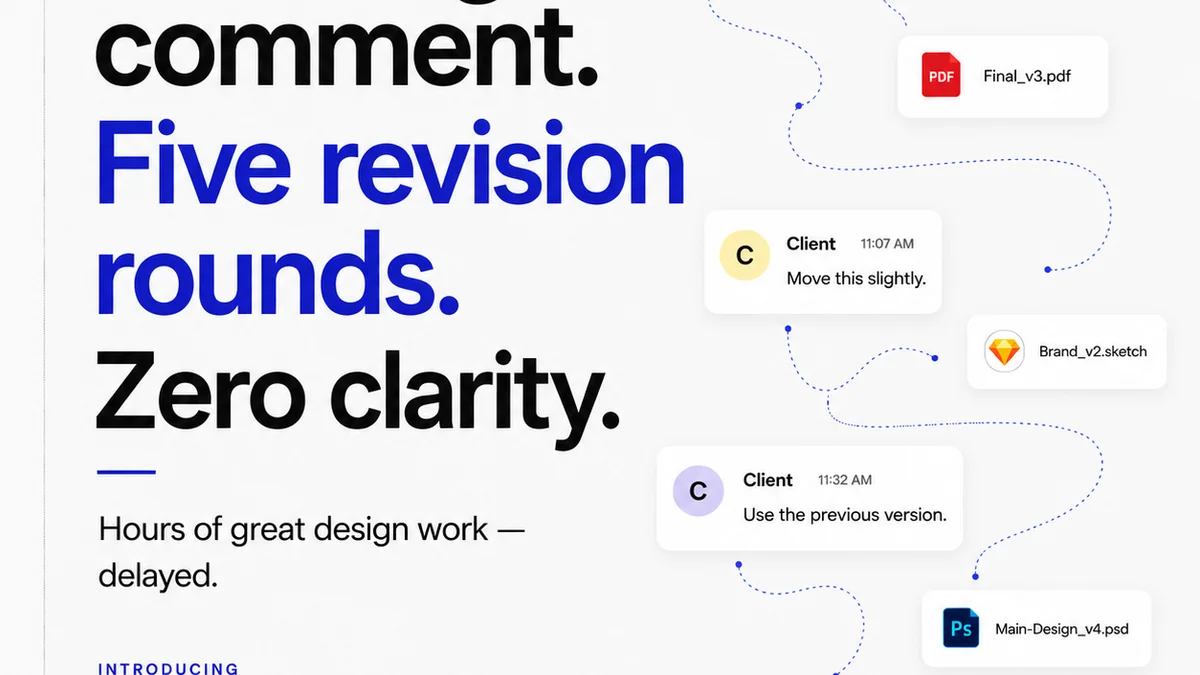
Many agencies rely on a patchwork of email, spreadsheets, and chat messages to manage requests and feedback. This inevitably leads to lost information, version control nightmares, and a lack of clarity.
Technology should streamline, not complicate.
Where Revue Fits In
Revue is built to solve these exact operational challenges. It provides a single source of truth for your creative projects, from the initial request to the final approval.
Instead of sifting through endless email threads, you can:
- Centralize Creative Requests: House all project briefs and related documentation in one accessible place.
- Streamline Feedback: Gather consolidated, contextual feedback directly on the creative assets, eliminating ambiguity.
- Manage Revisions and Approvals: Track every iteration and get clear sign-offs, ensuring everyone is aligned.
- Maintain Project Visibility: Provide a clear audit trail of decisions and approvals, reducing disputes and scope creep.
Revue helps you move beyond the chaos of scattered communication and build a predictable, efficient workflow around your creative requests.
Final Thought
The difference between an agency that thrives and one that merely survives often comes down to operational discipline. It’s not about having the most talented individuals, but about having the most effective systems.
How much time do you spend chasing down information about creative requests? How often do projects go off track due to unclear briefs or scope creep?
The answers might surprise you. And they might be the key to unlocking your agency’s next level of efficiency and profitability.
Frequently asked questions
What's the biggest mistake agencies make with creative requests?
Treating the creative brief as a formality rather than a foundational document and a tool for deep alignment. This leads to guesswork, scope creep, and missed objectives.
How can I ensure a creative brief is effective?
A strong brief needs clear objectives, a deep understanding of the target audience, a single key message, defined mandatories, clear tone of voice, and precise deliverables. It should be a collaborative document, not just a client handout.
What is the best way to prevent scope creep from creative requests?
Proactive scope management is key. This includes clear initial scope definition, phased approvals, a defined change request process, regular check-ins, and explicitly stating what is and isn't included in the project.
How often should the creative brief be referenced during a project?
The brief should be a living document. It should be consulted regularly, especially when providing or receiving feedback, making decisions, and resolving disagreements, to ensure the project stays aligned with original goals.