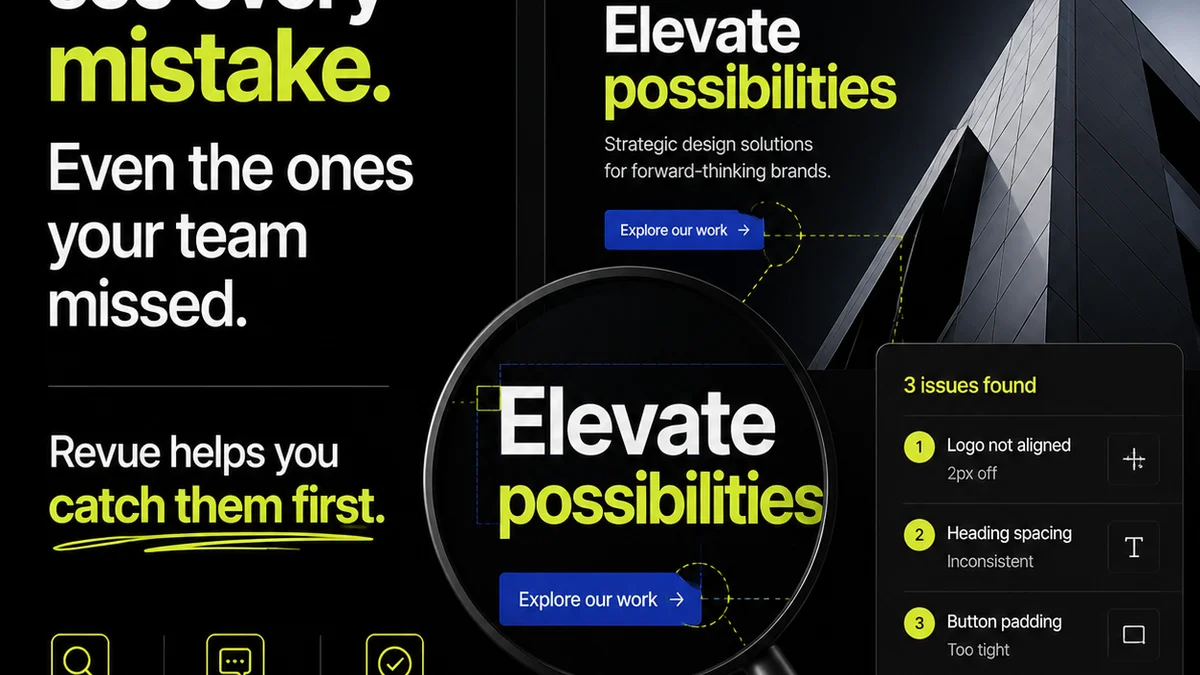
You probably think your design process is airtight. Client briefs are clear, feedback loops are efficient, and revisions are managed with a smile. And maybe, just maybe, you deliver a stunning final product every single time. That’s the ideal, right?
None of that is wrong. But it’s incomplete.
The hard truth is that even the most streamlined agency can slip up. A last-minute change, a misunderstood comment, a rogue pixel – they all happen. And when they land in front of the client, they don't just look like mistakes. They look like your agency isn't paying attention. They look like you don't care about the quality of your own work.
That’s why a final internal review of every single design asset before it goes to the client isn't just a good idea. It’s non-negotiable.
1. The Illusion of Client-Driven Perfection
Many agencies operate on a principle of “client is always right.” The client signs off, the work is delivered, and any issues are chalked up to the client’s vision. This sounds customer-centric. It sounds like good business.
But it’s a dangerous shortcut.
When you abdicate responsibility for the final quality check to the client, you’re setting yourself up for:
- Endless, unnecessary revision cycles.
- Frustrated clients who feel they have to do your job for you.
- A reputation for sloppiness, not excellence.
- Internal teams bogged down by
Frequently asked questions
Why is a final internal design review important before client delivery?
A final internal review acts as a crucial quality control step, catching errors, inconsistencies, or missed details before they reach the client. This prevents unnecessary revisions, saves time and resources, and protects your agency's reputation for delivering polished, professional work.
How can agencies implement a more effective internal design review process?
Establish a clear checklist for reviews, designate a specific person or small team to conduct them, allocate sufficient time in the project schedule, and use a centralized platform for feedback to ensure nothing gets lost. Standardize the review process across all projects.
What are the common pitfalls of skipping the internal review step?
Skipping this step often leads to minor errors being discovered by the client, resulting in extra rounds of revisions. This can erode client trust, increase project costs, delay timelines, and damage your agency's perceived professionalism and attention to detail.
Can an internal review slow down project delivery?
When done correctly, an internal review should *accelerate* delivery by catching issues early. It prevents the much larger delays caused by client-found errors and subsequent rework. Think of it as a quick, preventative check rather than a bottleneck.