Everyone talks about agency management. They talk about hiring the right people, managing client relationships, and hitting deadlines. None of that is wrong. But it’s incomplete.
The hard truth? You can have the best talent and the most demanding clients, but without a solid, repeatable process, your agency is just a collection of talented individuals reacting to chaos. True agency management isn't about putting out fires; it's about building a fireproof structure.
1. The Myth of the 'Organic' Agency
Many agency leaders believe that great work and happy clients just 'happen.' They think creativity can't be codified. That processes stifle innovation.
This is a dangerous assumption.
An organic agency might feel agile in the short term. But it’s a house built on sand. When the next big project hits, or a key team member leaves, the whole structure wobbles.
The Illusion of Flexibility
Flexibility is essential. But true flexibility comes from a foundation of predictable, reliable systems. Think of a jazz band. They improvise constantly, but they all understand the underlying chord progressions and rhythms. That shared structure allows for brilliant, spontaneous solos.
Your agency needs that same underlying structure.
- Unclear project scope
- Rushed timelines
- Budget overruns
- Client dissatisfaction
- Team burnout
These aren't the hallmarks of creativity; they are the symptoms of a missing process.
2. Defining Your Agency's Operating System
What is a process, really? It’s your agency's unique way of doing things. It’s the documented, repeatable steps your team takes to deliver value, from initial client brief to final deliverable.
Think of it as your agency's operating system.
This isn't about creating rigid bureaucracy. It’s about establishing clarity and consistency.
The Core Components of an Agency OS
Every agency OS needs several key components:
- Client Onboarding: How do you take a new client from handshake to active project? What documents, meetings, and approvals are required?
- Project Initiation: Once a project is signed, how is it kicked off internally? Who is assigned, what are the initial deliverables, and what are the communication protocols?
- Creative Briefing: How do you ensure every creative brief is comprehensive, clear, and actionable?
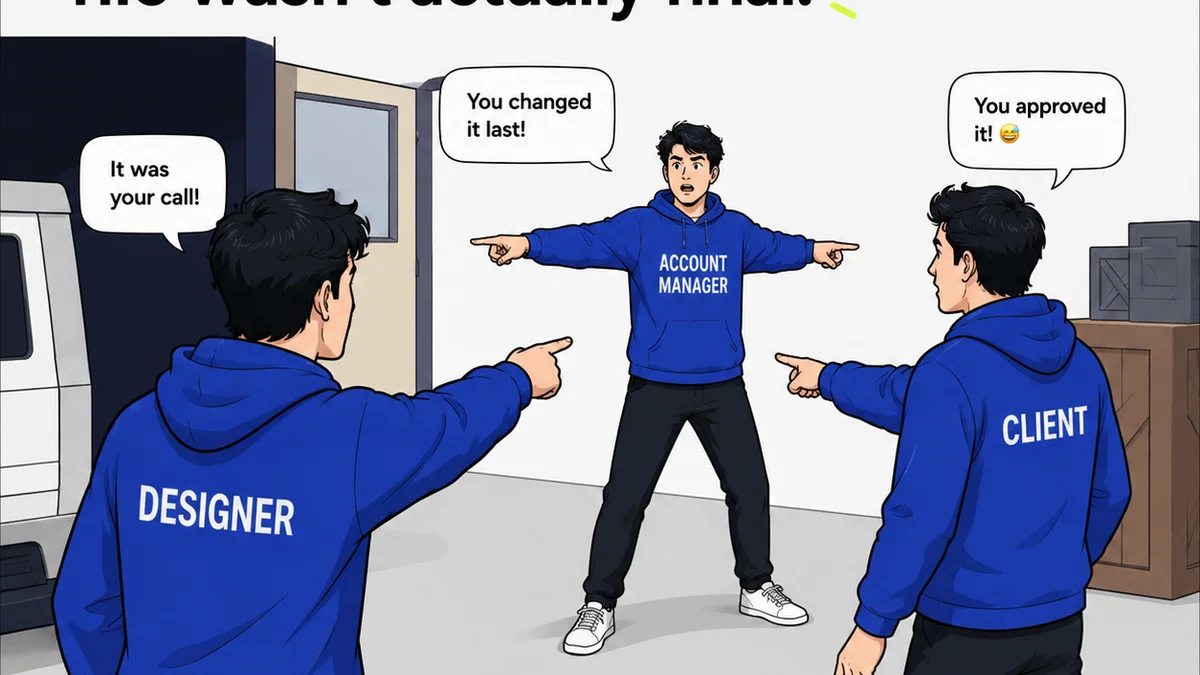
- Feedback & Revision Cycles: This is where most agencies break. How is feedback gathered, consolidated, communicated, and actioned? How many rounds are standard?
- Approvals: How are final approvals obtained? Who has the authority? What constitutes a formal sign-off?
- Project Handoff & Archiving: How are completed projects delivered to the client and archived internally for future reference?
Each of these areas needs a defined workflow.
3. Documenting Your Workflows: The Unsexy but Essential Step
You can't build a process if you don't know how you actually work. Or how you *want* to work.
This means documenting everything. Yes, everything.
Start by mapping out your current state. Talk to your team. Watch how tasks are *really* done, not how they're supposed to be done.
Mapping the Journey
Use flowcharts, process maps, or even simple checklists. The tool matters less than the clarity it provides.
- Identify bottlenecks: Where do projects get stuck?
- Spot redundancies: Are people doing the same work multiple times?
- Clarify roles: Who is responsible for each step?
- Define handoffs: How does work move from one person or team to the next?
This mapping exercise will reveal gaps you never knew existed. It’s often uncomfortable, but it’s critical.
Creating Standard Operating Procedures (SOPs)
Once mapped, document the ideal state. These are your SOPs.
SOPs should be:
- Clear and Concise: Easy to understand for anyone on the team.
- Actionable: Directly tell people what to do.
- Accessible: Easy for the team to find when they need them.
- Living Documents: Updated regularly as your agency evolves.
Don't aim for perfection out of the gate. Aim for clarity. You can refine later.
4. Implementing and Iterating Your Agency Process
Documentation is just the start. Implementation is where the rubber meets the road.
This requires buy-in from your entire team.
Explain *why* the process is important. Frame it not as added work, but as a way to reduce stress, improve quality, and free up time for more strategic or creative tasks.
Training and Reinforcement
Train your team on the new SOPs. Role-play scenarios. Provide ongoing support.
Expect resistance. Some team members will cling to old habits. Gently, but firmly, reinforce the new process.
- Lead by example: As a leader, you must follow the process.
- Regular reviews: Schedule periodic team meetings to discuss what's working and what's not.
- Feedback loops: Encourage team members to suggest improvements.
Your agency's OS will never be perfect. It needs constant tuning.
The Power of Iteration
Treat your process like a product. Gather feedback, analyze performance, and release updates. What worked last year might not work today.
The market shifts, client needs change, and your team grows. Your processes must adapt.
5. Where Revue Fits In
Managing feedback and approvals is notoriously difficult. It’s a common bottleneck that can derail even the best projects.
This is precisely why we built Revue.
Revue acts as a central nervous system for your creative workflow. It’s not just about storing files; it’s about streamlining the entire review and approval process.
- Centralized Feedback: All client comments, team annotations, and stakeholder input live in one place, attached directly to the creative asset. No more sifting through endless email chains or Slack messages.
- Clear Revision Tracking: See exactly what feedback has been addressed, what's pending, and who is responsible. Every version is tracked, providing an irrefutable audit trail.
- Streamlined Approvals: Formal sign-offs are no longer a guessing game. Define approval stages and get clear, recorded approvals, reducing ambiguity and speeding up final delivery.
- Quality Control Checkpoints: Use Revue to ensure all feedback has been incorporated and approved before a project moves to its next stage, preventing errors from slipping through.
By providing this structured environment for feedback and approvals, Revue helps solidify your agency’s operating system, making your entire workflow more predictable and efficient.
6. Final Thought
Building a robust process isn't about stifling creativity. It's about creating the fertile ground where creativity can flourish predictably and profitably.
It’s the difference between an agency that survives and an agency that thrives.
What’s the single biggest process breakdown in your agency right now? And what are you doing about it?
Frequently asked questions
What's the difference between managing tasks and managing an agency?
Managing tasks is about handling individual assignments. Managing an agency is about building systems and processes that enable the entire team to consistently deliver high-quality work, manage client expectations, and achieve business goals efficiently. It's the difference between being a firefighter and an architect.
How do I start documenting my agency's processes?
Start by mapping out your current workflows, even the messy ones. Talk to your team, observe how tasks are actually done, and identify bottlenecks or redundancies. Then, document the ideal, repeatable steps for each core agency function, creating Standard Operating Procedures (SOPs).
Will implementing processes make my agency less creative?
No, quite the opposite. A well-defined process provides structure and clarity, removing the friction and chaos that can stifle creativity. It frees up your team's mental energy from administrative tasks and guesswork, allowing them to focus on innovative problem-solving and creative execution.
How often should agency processes be updated?
Agency processes should be treated as living documents. Plan for regular reviews, perhaps quarterly or bi-annually, to assess their effectiveness. Adapt them as your agency grows, client needs change, or new tools and technologies become available. Continuous iteration is key.