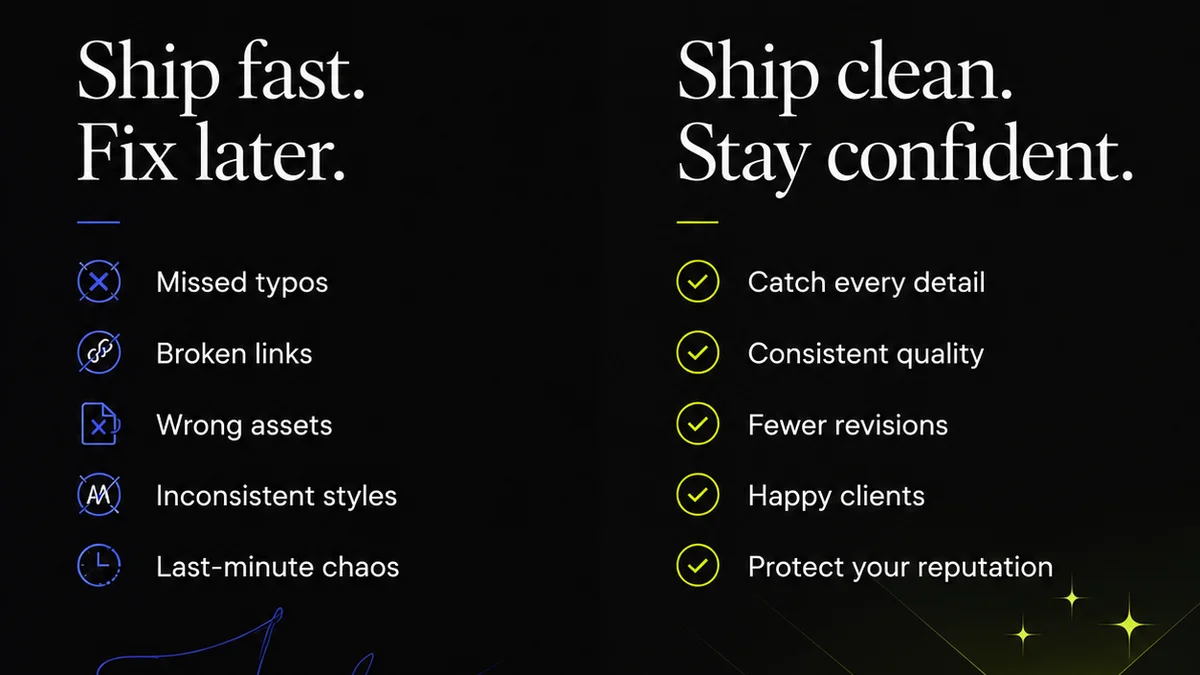
Everyone talks about quality. The best agencies don't just talk about it; they build it into their DNA. They understand that quality isn't a happy accident. It's a deliberate process.
You might think quality management is about endless checklists and nitpicking every pixel. None of that is wrong. But it’s incomplete.
The real truth? Quality management in a creative agency is about systematizing excellence. It’s about creating predictable, repeatable outcomes that delight clients and protect your bottom line.
1. Defining Quality: Beyond Client Satisfaction
Client satisfaction is the goal, sure. But it’s not the definition of quality management. A client might be happy with a mediocre outcome if they don't know better. Or they might be unhappy with a brilliant outcome because of miscommunication.
Quality management starts with defining what excellence looks like for your agency and your clients, across every project type.
What Constitutes
Frequently asked questions
What is the difference between quality assurance and quality control in an agency?
Quality assurance (QA) is about building quality into the process from the start, preventing defects. Quality control (QC) is about inspecting the output to identify and fix defects before delivery. Both are crucial for agencies.
How can a small agency implement quality management?
Start small. Define clear standards for your most common deliverables. Implement a simple review process for every project. Document lessons learned. Use tools to streamline feedback and approvals.
Is quality management just about avoiding mistakes?
No, it’s much more. It's about consistently delivering work that meets or exceeds client expectations, on time and on budget. It’s about building trust and a reputation for excellence.
How does client feedback fit into quality management?
Client feedback is a critical input. Effective quality management systems ensure feedback is collected, understood, and acted upon efficiently, without derailing the project or compromising the core vision.