Everyone talks about Standard Operating Procedures (SOPs). They’re often presented as the magic bullet for agency efficiency and profitability. Get your SOPs right, and everything clicks into place.
None of that is wrong. But it’s incomplete.
The hard truth is that SOPs aren't a set-it-and-forget-it document. They’re living systems that require constant attention. And the most common mistake? Treating them like rigid rulebooks instead of flexible frameworks.
This guide is about building SOPs that actually work. Not just for compliance, but for real operational improvement. We’ll cut through the noise and focus on practical application for creative agencies.
1. The Real Purpose of Agency SOPs
Too often, SOPs are seen as a way to control employees or ensure tasks are done *exactly* the same way every time. That’s a narrow view.
Effective SOPs are about:
- Clarity: Ensuring everyone understands *why* a process exists and *how* it should be executed.
- Consistency: Reducing variation in output and client experience.
- Scalability: Building repeatable processes that allow for growth without chaos.
- Knowledge Transfer: Making sure critical information isn't lost when people leave or move roles.
- Risk Mitigation: Minimizing errors, ensuring compliance, and protecting the agency.
- Efficiency: Streamlining workflows to save time and resources.
Think of SOPs as the DNA of your agency’s operations. They define how things get done, but they also need to be adaptable to new environments.
Why 'One Size Fits All' SOPs Fail
Creative work is inherently variable. A rigid SOP that dictates every single step for every single project will stifle creativity and become impossible to follow.
This leads to:
- SOPs that are ignored.
- Frustrated staff who feel micromanaged.
- Processes that don’t account for unique project needs.
The goal isn't robotic execution; it’s intelligent, repeatable excellence.
2. Identifying Processes to Document
Where do you start? Look for the pain points. What’s causing friction, errors, or delays?
Common areas include:
- Client onboarding
- Project kickoff meetings
- Briefing and discovery
- Internal creative reviews
- Client feedback and revisions
- File management and archiving
- Billing and invoicing
- New hire onboarding
- Quality assurance checks
Start with one or two critical processes. Don’t try to document everything at once. Pick the areas that have the biggest impact on your bottom line or client satisfaction.
The 'Chaos' Audit
Walk through your agency’s daily operations. Ask yourself:
- What tasks are frequently misunderstood?
- Where do mistakes happen most often?
- Which processes take longer than they should?
- What information is hard to find?
- What do new hires struggle with the most?
The answers point directly to where SOPs are most needed.
3. Developing Your First Agency SOPs
Once you’ve identified a process, break it down. This is where the real work begins.
Map the Workflow
Visually map out every step of the process. Who does what? When do they do it? What tools are involved? What are the inputs and outputs for each step?
Use flowcharts, mind maps, or even just a detailed outline. The key is to capture the reality of the workflow, not an idealized version.
Define Roles and Responsibilities
Clearly state who is responsible for each step. Use RACI (Responsible, Accountable, Consulted, Informed) charts if the process is complex.
This avoids confusion and ensures accountability.
Write Clear, Concise Steps
Use simple language. Avoid jargon and technical terms unless they are standard within your agency and clearly defined.
Use action verbs. Start each step with a verb.
Keep steps short. Aim for one action per step.
Include Decision Points and Contingencies
What happens if a client feedback round goes over the allotted time? What if a key team member is sick? Your SOPs should address common exceptions and decision points.
Specify Tools and Resources
Link to templates, checklists, or relevant software. Make it easy for people to find what they need.
Establish Metrics for Success
How will you know if the SOP is working? Define measurable outcomes. This could be reduced error rates, faster turnaround times, or improved client satisfaction scores.
4. Implementing and Iterating SOPs
Creating an SOP is only half the battle. Getting people to use it and making sure it stays relevant is the other half.
Communicate and Train
Don’t just email out a new document. Hold training sessions. Explain the *why* behind the SOP. Get buy-in from the team.
Show them how it makes their job easier and improves the agency’s performance.
Make Them Accessible
SOPs should be easy to find. A shared drive, a dedicated wiki, or a project management tool are good options.
If your team has to hunt for the SOP, they won’t use it.
Gather Feedback Regularly
This is crucial. Processes change. Tools evolve. Your team will find better ways to do things.
Schedule regular reviews (quarterly or semi-annually) to collect feedback. Ask:
- Is this SOP still accurate?
- Is it easy to follow?
- What could be improved?
- Are there any steps that are redundant or unnecessary?
Update and Revise
Based on feedback and changing agency needs, update your SOPs. Don’t let them become outdated and irrelevant.
A living SOP is a useful SOP.
5. Where Revue Fits In
Managing creative workflows and client feedback is complex. It’s easy for processes to break down without clear systems.
Revue is built to bring order to this chaos, directly supporting your agency’s Standard Operating Procedures.
Centralized Client Feedback
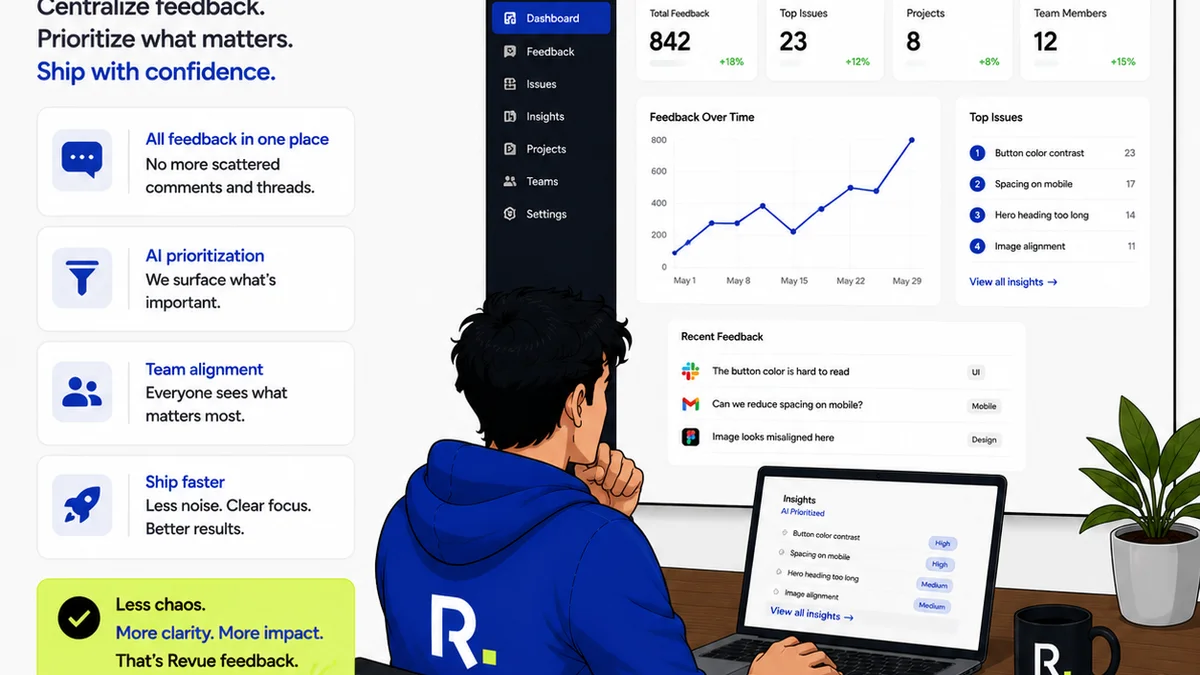
Instead of scattered emails and ambiguous Slack messages, Revue provides a single source of truth for all client feedback. Your SOPs can mandate that all feedback *must* be logged in Revue, ensuring nothing gets lost and everyone works from the same version.
Revision and Approval Visibility
Track every revision round, every approval, and every stakeholder’s input. This transparency is essential for your SOPs related to project management and client communication. It provides an auditable trail and clarifies responsibilities.
Streamlined Quality Checks
Use Revue to implement your quality assurance SOPs. Ensure that creative assets go through defined review stages before final delivery. The platform helps enforce these steps, reducing the likelihood of errors slipping through.
By integrating Revue into your SOPs, you’re not just adopting new software; you’re reinforcing best practices and operational discipline.
6. Common Pitfalls to Avoid
Even with the best intentions, SOP implementation can go wrong.
- Over-documentation: Trying to document every minute detail.
- Under-documentation: Not providing enough detail for clarity.
- Lack of Buy-in: Not involving the team in the process.
- Infrequent Updates: Letting SOPs become stale.
- Poor Accessibility: Making documents hard to find.
- Ignoring Feedback: Not listening to the people who use the SOPs daily.
- Treating SOPs as Rigid Rules: Not allowing for necessary flexibility.
Avoid these traps by focusing on clarity, collaboration, and continuous improvement.
Final Thought
Standard Operating Procedures are not a bureaucratic burden; they are the scaffolding that allows creativity to flourish at scale. They provide the structure so your team can focus on delivering exceptional work, consistently.
Are your SOPs helping your agency move faster and smarter, or are they just gathering digital dust?
Frequently asked questions
What is the primary goal of an agency SOP?
The primary goal of an agency SOP is to establish clear, consistent, and repeatable processes that improve efficiency, reduce errors, ensure quality, and facilitate scalability and knowledge transfer within the agency.
How do I choose which processes to document first?
Start by identifying your agency's biggest pain points. Look for processes that are frequently misunderstood, prone to errors, cause delays, or are difficult for new hires to grasp. Focusing on these critical areas will yield the most immediate benefits.
How often should agency SOPs be updated?
Agency SOPs should be reviewed and updated regularly, ideally quarterly or semi-annually. Processes, tools, and team needs evolve, so it's crucial to ensure your SOPs remain accurate, relevant, and effective.
Can SOPs stifle creativity in a creative agency?
They can, if implemented incorrectly. Rigid, overly detailed SOPs can stifle creativity. The goal is to create flexible frameworks that guide essential processes and reduce administrative overhead, freeing up creative teams to focus on innovative work, rather than dictating creative output.
How does a tool like Revue help with SOP implementation?
Revue helps by centralizing client feedback, providing visibility into revision and approval cycles, and streamlining quality checks. This allows agencies to integrate their SOPs directly into their daily workflow, ensuring feedback is captured, revisions are managed, and quality standards are met consistently.