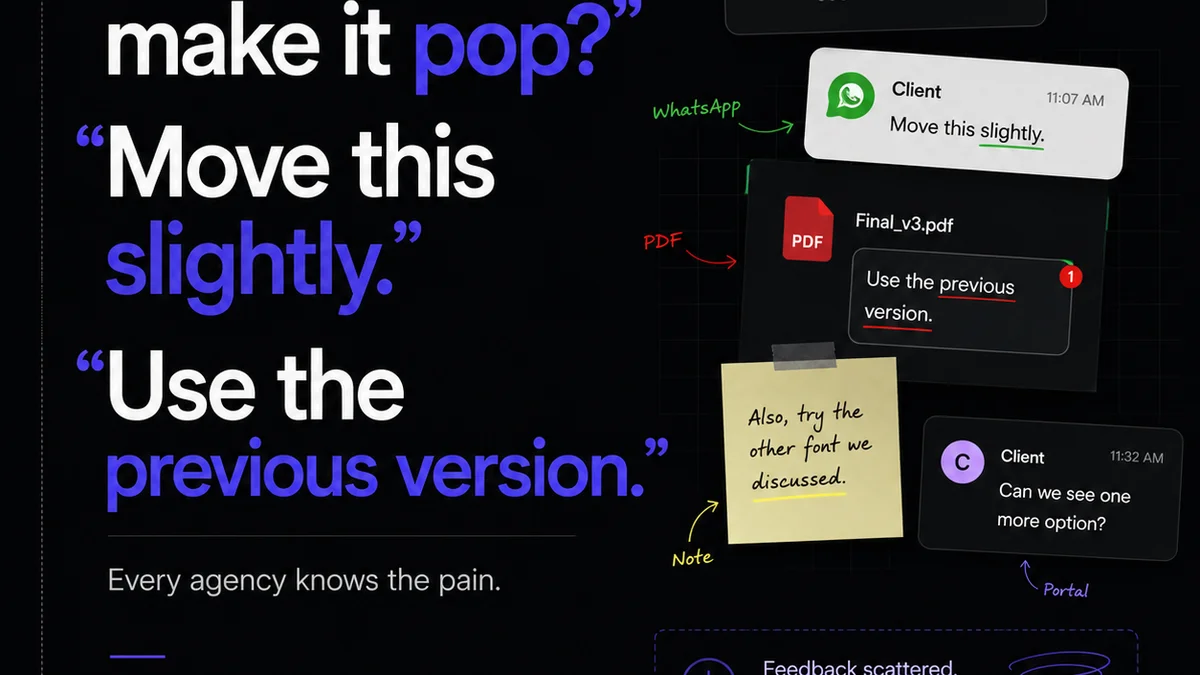
You probably think Standard Operating Procedures (SOPs) are for buttoned-up corporate giants. Heavy, bureaucratic, and utterly irrelevant to the creative chaos of an agency. Right?
None of that is wrong. But it’s incomplete.
The hard truth is, if you want to scale your agency beyond a handful of people, if you want to deliver consistently great work without burning out your team or yourself, you need SOPs. They aren't about stifling creativity; they're about creating the runway for it to fly.
1. The Myth of the "Creative Genius" Workflow
We like to romanticize the lone genius, the maverick who pulls brilliance out of thin air with no process. It makes for good stories, maybe. It’s terrible business practice.
The reality? Even the most brilliant creatives thrive on structure. They just might not admit it.
What looks like chaos from the outside is often just an unarticulated process. Your star designer has a specific way they like files handed off. Your project manager has a mental checklist for client onboarding. Your copywriter has a template for initial briefs.
The problem isn't the lack of process. It's the lack of documentation.
The Hidden Costs of Ad-Hoc Workflows
- Missed deadlines because no one knew who was doing what next.
- Inconsistent quality that damages client trust.
- Team members constantly asking the same questions, interrupting focus.
- Difficulties onboarding new hires who struggle to understand your unique (and undocumented) way of working.
- Wasted time reinventing the wheel on repetitive tasks.
- Your own time spent putting out fires instead of strategic growth.
These aren't minor inconveniences. They are profit drains.
2. SOPs: The Engine of Scalability
Think of SOPs as the blueprints for your agency’s operations. They define how work gets done, consistently and efficiently.
This isn't about rigid, soul-crushing rules. It's about clarity. It's about removing friction.
When you have documented procedures, you:
- Reduce Errors: Clear steps mean fewer mistakes.
- Improve Efficiency: Everyone knows the fastest, most effective way to do a task.
- Ensure Consistency: Every client gets the same high standard of service and delivery.
- Streamline Onboarding: New hires get up to speed faster with clear guides.
- Empower Your Team: They can operate with confidence, knowing the playbook.
- Enable Growth: You can add team members or clients without the entire system collapsing.
An SOP isn't just a document; it's a commitment to operational excellence.
3. What Makes a Good SOP?
Forget dense, jargon-filled manuals. Effective SOPs are clear, concise, and actionable.
They should be:
- Specific: Clearly outline the exact steps involved.
- Understandable: Written in plain language, avoiding ambiguity.
- Accessible: Easy for the relevant team members to find and use.
- Visual (where possible): Use flowcharts, screenshots, or even short videos.
- Up-to-date: Regularly reviewed and revised as processes evolve.
- Owned: Assigned to specific individuals or teams for maintenance.
Key Areas for Agency SOPs
Start with the core functions of your agency. Where does work flow? Where are the common bottlenecks?
Client Onboarding
- Initial contact and qualification process.
- Proposal and contract generation.
- Kick-off meeting agenda and required information.
- Setting up project management tools and communication channels.
Project Management
- Brief intake and clarification.
- Task assignment and tracking.
- Milestone definition and management.
- Budget tracking and reporting.
- Scope creep management.
Creative Briefing
- Template for creative briefs.
- Process for client brief review and approval.
- Internal briefing process for the creative team.
Feedback and Revisions
- How feedback is collected (centralized is key!).
- Process for consolidating and interpreting feedback.
- Number of revision rounds included.
- Escalation process for difficult feedback.
Quality Assurance (QA)
- Checklists for different deliverables (web, print, video, etc.).
- Final review and sign-off procedures.
- Pre-launch/pre-delivery checks.
Financial Processes
- Invoicing schedule and procedures.
- Expense reporting and approval.
- Timesheet submission and review.
Team Communication
- Internal meeting cadences and agendas.
- Preferred communication channels for different types of information.
- Documentation standards for project assets.
4. Building Your SOPs: A Practical Approach
Don't try to document everything overnight. It's a marathon, not a sprint.
Start small. Identify the most critical or problematic process in your agency right now.
Step 1: Identify the Process. Pick one area, like client feedback. What’s the current, messy reality?
Step 2: Map the Current State. Write down, step-by-step, how it’s *actually* done now. Involve the people who do the work.
Step 3: Identify Pain Points. Where do things go wrong? What takes too long? What causes confusion?
Step 4: Design the Ideal State. Based on the pain points, how *should* this process work? Make it as simple and efficient as possible.
Step 5: Document the Ideal State. Write the SOP. Use clear language, visuals, checklists.
Step 6: Train Your Team. Don't just send the document. Walk them through it. Explain the *why*.
Step 7: Implement and Monitor. Put the SOP into practice. See how it works. Gather feedback.
Step 8: Refine. Adjust the SOP based on real-world usage. This is an ongoing cycle.
Iterate. Improve. Repeat.
5. Where Revue Fits In
Managing feedback, revisions, and approvals is a prime candidate for SOPs. It’s often a chaotic, time-consuming part of agency life.
This is precisely where Revue excels.
By centralizing client feedback in one place, you create a single source of truth. No more hunting through endless email threads or Slack messages.
Revue’s clear annotation tools mean feedback is specific and actionable, reducing misinterpretation. Version control ensures everyone is looking at the latest iteration.
The structured workflow within Revue inherently supports your SOPs for feedback. When your SOP states, “All feedback must be logged in Revue with clear annotations,” Revue makes that step easy and trackable.
This isn't just about making one part of your process smoother. It's about building the infrastructure that allows your SOPs to function effectively across the entire agency.
6. Final Thought
Are SOPs the enemy of creativity? Or are they the unacknowledged enablers of consistent, high-quality creative output at scale?
If you’re still relying on tribal knowledge and hoping for the best, what’s the real cost to your agency’s growth and your own sanity?
Frequently asked questions
What exactly is an SOP for a creative agency?
An SOP for a creative agency is a documented set of step-by-step instructions that outlines how to perform a specific, recurring task or process. It ensures consistency, efficiency, and quality in areas like client onboarding, project management, feedback collection, and final delivery.
Aren't SOPs too bureaucratic for a creative environment?
That's a common misconception. Well-designed SOPs aren't rigid rules; they're clarity frameworks. They remove ambiguity and friction, freeing up creative energy by ensuring foundational tasks are handled efficiently and consistently, rather than stifling innovation.
How do I start creating SOPs without getting overwhelmed?
Start small. Identify your most critical or problematic process (e.g., client feedback). Map out the current messy state, then design and document the ideal, simplified state. Train your team, implement, monitor, and refine. Iterate rather than aiming for perfection immediately.
What are the biggest benefits of having agency SOPs?
The key benefits include reduced errors, improved efficiency, consistent quality, streamlined onboarding for new hires, empowered teams, and crucially, the ability to scale your agency reliably without sacrificing quality or increasing chaos.