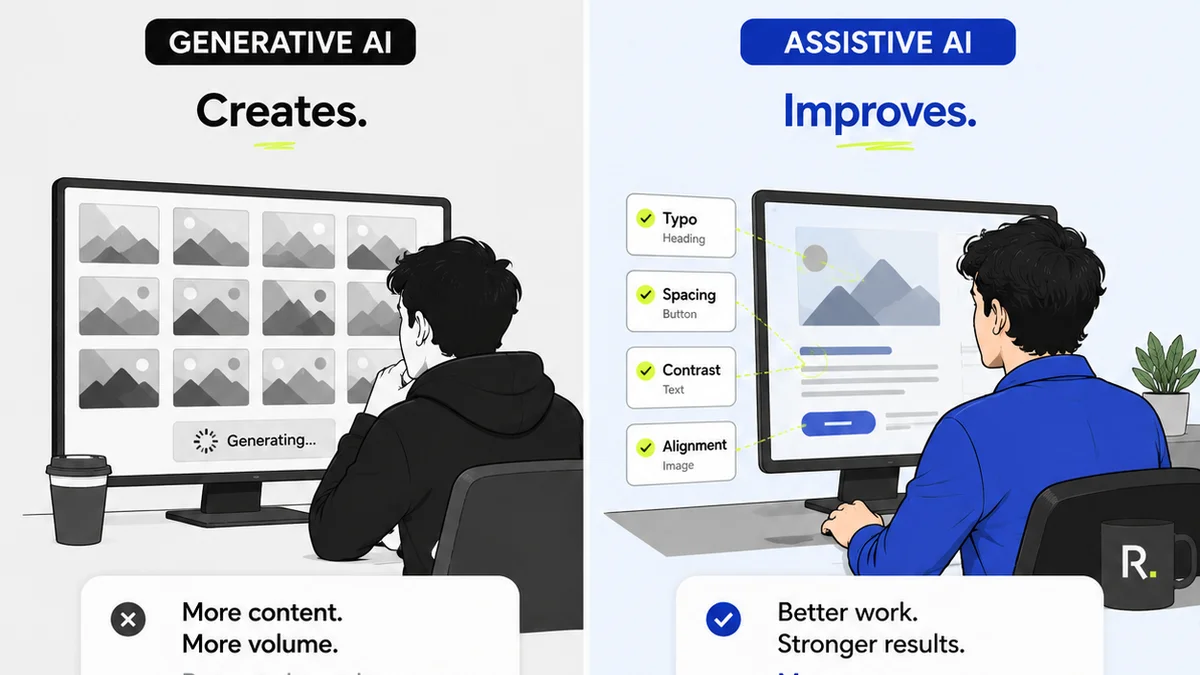
Everyone’s talking about AI in creative workflows. They say it’s going to automate everything, from concept generation to final sign-off. That AI will replace designers, copywriters, and even account managers.
None of that is wrong. But it’s incomplete.
The real story of AI in artwork approval isn't about automation replacing humans. It's about augmentation – tools that enhance human judgment, speed up tedious tasks, and provide insights we couldn't get before.
This is the hard truth: AI isn't here to take your job. It's here to make your job better, faster, and smarter. But only if you understand how to leverage it strategically.
1. AI's Role in Visual Quality Assurance
Think about the last time a client rejected a piece of creative work for a minor, almost invisible flaw. A slightly misaligned logo. A pixel out of place. A font that’s *almost* right but not quite.
These aren't subjective creative differences. These are objective errors that slip through the cracks in manual review processes.
AI-powered tools are emerging that can scan artwork for these precise issues. They can:
- Detect color deviations from brand guidelines.
- Identify inconsistencies in typography and spacing.
- Flag low-resolution images or incorrect file formats.
- Check for adherence to accessibility standards, like contrast ratios.
This isn't about AI making creative decisions. It's about AI acting as a tireless, hyper-vigilant QA inspector, catching the small stuff so your team can focus on the big picture.
The Efficiency Gain
Imagine cutting down review cycles by days, simply because the AI caught the obvious errors before a human even had to look.
This frees up your creative directors and account managers to focus on strategic feedback, client relationships, and the truly subjective creative elements that require human intuition.
2. Streamlining Feedback and Revisions
Client feedback is the lifeblood of agency work. It’s also a notorious bottleneck.
Emails get lost. Comments are buried in PDFs. Version control becomes a nightmare. Sound familiar?
AI is starting to tackle this chaos, not by eliminating feedback, but by organizing and analyzing it.
AI-Powered Feedback Analysis
New tools can process large volumes of feedback, identifying:
- Recurring themes and sentiments across different reviewers.
- Potential contradictions in feedback from the same client.
- Urgent action items versus minor suggestions.
- The overall sentiment of feedback (positive, negative, neutral).
This allows teams to quickly synthesize feedback, prioritize revisions, and present a more cohesive response to the client.
Predictive Revision Needs
Some advanced AI models can even predict the likelihood of certain types of revisions based on historical project data. This helps agencies proactively address potential issues and manage client expectations more effectively.
3. Enhancing Client Communication
The approval process isn't just about the work; it's about the conversation around it.
Misunderstandings about feedback, scope creep, and unclear expectations lead to friction.
AI can act as a neutral, data-driven mediator.
Automated Reporting
AI can generate automated reports summarizing review status, outstanding feedback, and upcoming deadlines. This transparency keeps everyone on the same page.
It reduces the need for constant manual status updates, saving everyone time.
Sentiment Analysis for Client Relations
By analyzing client communication, AI can provide insights into client satisfaction levels. This allows account managers to anticipate needs and address concerns before they escalate.
It's about using data to strengthen, not replace, client relationships.
4. The Future: AI as a Creative Partner
Beyond QA and feedback management, AI is beginning to play a role in the creative process itself. Generative AI tools can assist with:
- Brainstorming initial concepts and mood boards.
- Generating variations of existing designs.
- Suggesting copy alternatives.
- Automating repetitive design tasks like resizing assets.
This doesn't mean AI is creating award-winning campaigns on its own. It means human creatives have powerful new assistants.
Think of it like a super-powered intern. It can do a lot of grunt work, generate lots of raw material, and offer novel perspectives. But it still needs direction, curation, and the final creative spark from a human.
Ethical Considerations and Bias
As AI becomes more integrated, we must also consider the ethical implications. AI models are trained on existing data, which can contain biases. It's crucial to be aware of this and actively work to mitigate bias in AI-generated outputs.
This requires human oversight and a commitment to fairness.
Where Revue Fits In
The introduction of AI into artwork approval doesn't negate the need for robust workflow management. In fact, it amplifies it.
AI tools generate data, insights, and potential efficiencies. But without a centralized system to manage the overall process, this potential can be lost.
Revue is built for this evolving landscape. It provides:
- Centralized Feedback Hub: All client comments, annotations, and approvals live in one place, regardless of whether they originated from a human or an AI-assisted tool.
- Clear Revision Tracking: Easily see what feedback has been addressed, what's pending, and who is responsible. This clarity is essential when integrating AI-generated suggestions.
- Version Control Visibility: Never lose track of approved versions or the iterations that led to them. AI might suggest changes, but Revue ensures you know exactly what was approved and when.
- Quality Assurance Checkpoints: Formalize your review process, integrating AI-powered checks alongside human oversight to ensure nothing slips through.
AI tools can enhance the *content* of feedback and the *speed* of certain checks. Revue ensures the *process* remains organized, transparent, and manageable.
Final Thought
AI is not a magic bullet. It’s a powerful tool that, when wielded correctly, can revolutionize how agencies handle artwork approval.
The agencies that thrive will be those that embrace AI not as a replacement for human talent, but as an amplifier of it.
Are you ready to move beyond the hype and harness the real power of AI in your creative workflow?
Frequently asked questions
Can AI replace human reviewers in artwork approval?
AI can automate certain quality assurance checks and analyze feedback, but it cannot replace human judgment for subjective creative decisions, strategic input, or client relationship management. AI acts as an assistant, not a replacement.
How can AI help with client feedback?
AI can analyze large volumes of feedback to identify recurring themes, contradictions, and sentiment. This helps agencies synthesize feedback more efficiently, prioritize revisions, and communicate more effectively with clients.
What are the benefits of using AI for artwork QA?
AI can perform objective checks for visual consistency, brand guideline adherence, accessibility standards, and minor errors that might be missed by human reviewers. This speeds up the QA process and reduces the likelihood of costly mistakes.
How does AI fit into existing creative workflows?
AI tools can integrate with existing workflows by automating specific tasks within the approval process. However, a centralized platform like Revue is crucial for managing the overall workflow, ensuring transparency, and tracking revisions effectively.