Everyone’s talking about AI. ChatGPT writes copy, Midjourney makes art. It’s easy to assume AI’s role in creative agencies is all about generating assets faster. That’s not wrong. But it’s incomplete.
The real revolution AI brings to DesignOps isn't about faster asset creation. It’s about taming the operational beast.
DesignOps is the plumbing behind the creative magic. It’s about making sure projects run smoothly, feedback is clear, and the team isn’t drowning in busywork. AI is starting to automate the tedious parts of that plumbing, freeing up creatives to do what they do best.
1. The Myth of the AI-Powered Creative Genius
The headline is always about AI as a co-pilot for creativity. And sure, AI tools can brainstorm concepts, generate variations, or even draft initial designs. This is exciting. It promises to cut down on the time spent on early-stage ideation and exploration.
But what happens after the AI spits out a hundred options? What about the feedback loop? The revisions? The approvals?
This is where the operational bottleneck appears. You can generate ideas in minutes, but managing the refinement process can still take days or weeks. The speed of generation highlights the slowness of management.
The Real Bottleneck Isn't Creation, It's Curation and Communication
Think about your typical project. An AI might generate a dozen logo concepts. Great. Now what?
- Who collects and organizes those concepts?
- How is feedback gathered from the client and internal stakeholders?
- How are conflicting opinions resolved?
- How are revisions tracked and assigned?
- How do you ensure the final approved asset meets all technical specifications?
These are DesignOps questions. And they are the areas where AI is poised to make a much more profound, albeit less flashy, impact.
2. AI as the Great Clarifier of Chaos
The core of DesignOps is bringing order to the creative process. This means standardizing workflows, optimizing resource allocation, and ensuring clear communication. AI is starting to tackle these challenges head-on.
Automating Feedback Synthesis
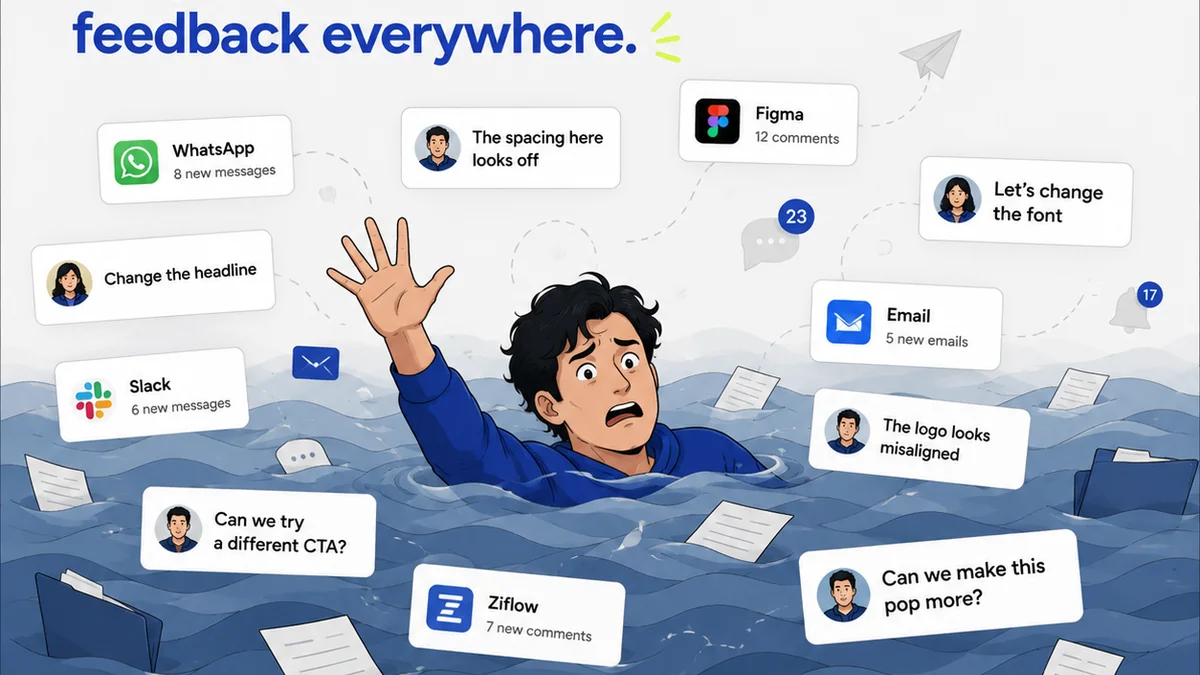
Client feedback is notoriously messy. It’s often vague, contradictory, or buried in email threads and chat logs. Manually sifting through this to extract actionable insights is a significant drain on creative directors and project managers.
Imagine an AI that can:
- Ingest feedback from multiple sources (email, Slack, project management tools, even recorded calls).
- Identify key themes and action items.
- Flag conflicting comments.
- Summarize the overall sentiment.
This isn’t science fiction. Tools are emerging that can process natural language feedback and present it in a digestible format. This dramatically reduces the time spent deciphering what the client *actually* wants.
Intelligent Revision Tracking
Revision rounds are a necessary evil. But tracking which version is which, what changed, and who approved what can quickly become a nightmare. Version control issues are a classic DesignOps headache.
AI can help by:
- Analyzing design files to identify changes between versions.
- Linking specific feedback points to particular revisions.
- Flagging potential scope creep based on the nature of requested changes.
- Automating the creation of revision summaries for clients.
This reduces the manual effort of tracking, ensures accountability, and provides a clear audit trail.
Predictive Resource Allocation
Understaffing leads to burnout. Overstaffing leads to wasted overhead. Optimizing team capacity is a perpetual DesignOps challenge.
AI can analyze historical project data, team member skills, and current project pipelines to:
- Predict future resource needs with greater accuracy.
- Identify potential bottlenecks before they occur.
- Suggest optimal team assignments based on project requirements and individual strengths.
This moves resource planning from a reactive guesswork to a proactive, data-driven process.
3. Streamlining Quality Assurance
Ensuring every deliverable meets brand guidelines, technical specs, and client requirements is critical. Manual QA is time-consuming and prone to human error.
AI is stepping in to automate checks for:
- Brand consistency: Checking color palettes, typography, logo usage.
- Technical specifications: Verifying file formats, dimensions, resolution, and accessibility standards (e.g., contrast ratios).
- Content accuracy: Spotting typos or grammatical errors that might slip through human review.
- Template adherence: Ensuring designs conform to pre-defined templates for consistency across campaigns.
This doesn’t replace the final human eye, but it catches the low-hanging fruit, freeing up QA specialists to focus on more complex, nuanced checks.
4. Enhancing Client Collaboration
Misunderstandings with clients are a primary cause of project delays and dissatisfaction. AI can act as a neutral, objective intermediary.
Automated Status Reporting
Instead of manually compiling status updates, AI can pull data from project management tools, design files, and communication logs to generate real-time, accurate reports. This keeps clients informed with minimal effort from the agency team.
Proactive Risk Identification
By analyzing project progress, communication sentiment, and historical data, AI can flag projects at risk of delay or budget overrun. This allows project managers to intervene early, manage client expectations, and course-correct before issues escalate.
5. Where Revue Fits In
The promise of AI is to automate and optimize. But even with AI-powered generation and analysis, the fundamental need for a centralized, clear system for managing feedback, revisions, and approvals remains. This is precisely where a tool like Revue shines.
While AI might help *synthesize* feedback, Revue provides the structured environment to *collect, organize, and act* on it. It centralizes client communication around specific assets, ensuring nothing gets lost in translation or buried in email chains.
With Revue, you can:
- Centralize feedback: All comments and annotations live directly on the creative asset, providing immediate context.
- Manage revisions visually: Track every iteration clearly, making it easy to see what’s changed and what’s next.
- Streamline approvals: Get clear sign-off on each stage, reducing ambiguity and potential disputes.
- Maintain quality: Ensure all stakeholders are working from the latest, approved versions, and that final assets meet all requirements before delivery.
AI tools can augment the creative and analytical process. Revue provides the operational backbone that ensures those augmented outputs are managed efficiently and effectively through the entire project lifecycle.
Final Thought
AI is not a magic wand that will eliminate the complexities of creative operations overnight. Its true power for DesignOps lies in its ability to augment human capabilities, automate the mundane, and bring clarity to chaos.
Are we ready to integrate these tools not just into our creative workflows, but into the very fabric of how we manage projects, teams, and client relationships?
Frequently asked questions
What is DesignOps?
DesignOps (Design Operations) is the orchestration and optimization of people, processes, and tools to amplify design's value and impact at scale. It focuses on the operational aspects of design teams to ensure efficiency, consistency, and quality in creative output.
How does AI help with client feedback?
AI can help by ingesting feedback from various sources, identifying key themes, flagging contradictions, and summarizing overall sentiment. This reduces the manual effort required to decipher client comments and extract actionable insights.
Can AI replace designers?
AI is more likely to augment than replace designers. While AI can automate tasks like initial concept generation or repetitive checks, human creativity, strategic thinking, and nuanced judgment remain crucial. AI's primary impact on design teams is through improving operational efficiency.
What are the operational benefits of AI in a creative agency?
Operational benefits include automating tedious tasks like feedback synthesis and revision tracking, improving resource allocation through predictive analysis, streamlining quality assurance checks, and enhancing client communication through automated reporting and risk identification.