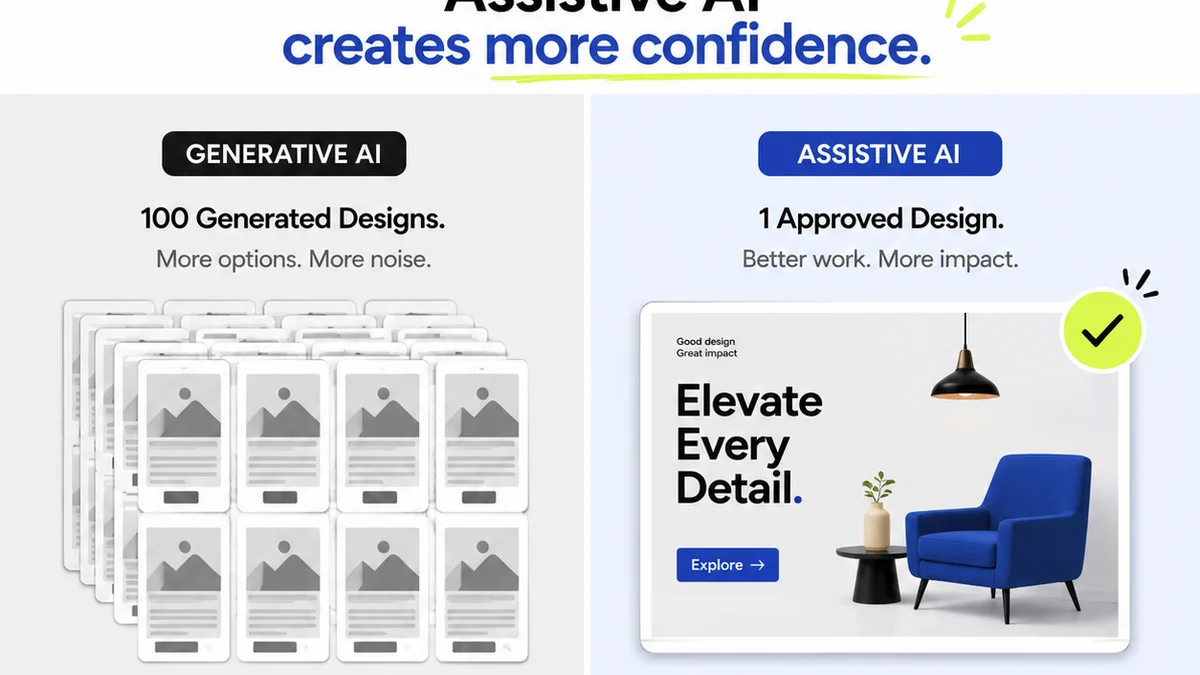
Everyone’s talking about AI in marketing. They’re hyping up the chatbots, the hyper-personalized ads, the predictive analytics. And none of that is wrong. But it’s incomplete.
The real revolution isn't just in *what* we market, but *how* we operate. AI is quietly, and sometimes not so quietly, rewriting the rulebook for marketing operations. It’s moving beyond the flashy customer-facing tools to fundamentally change the engine room of your marketing department.
The hard truth? If you’re only thinking about AI’s impact on campaign content, you’re missing the operational tsunami that’s already here.
1. The Myth of Effortless AI Integration
There's a common assumption that adopting AI tools is as simple as plugging in a new piece of software. You buy the tool, you integrate it, and suddenly your marketing operations are smarter, faster, and more efficient. Right?
Wrong.
The Reality: Data Chaos and Workflow Rework
AI thrives on data. And most marketing departments are drowning in data silos, inconsistent formats, and outright garbage. Before AI can work its magic, you have to clean, structure, and connect your data. This isn't a minor IT task; it's a foundational operational overhaul.
Furthermore, AI tools often don't fit neatly into existing workflows. They demand new processes, new roles, and new ways of thinking. Expecting AI to simply slot into your current system is like expecting a Formula 1 engine to run on regular unleaded fuel. It needs a whole new chassis, a new pit crew, and a new track.
- Fragmented data sources (CRM, analytics, ad platforms, CMS).
- Inconsistent data tagging and categorization.
- Lack of data governance policies.
- Resistance to process changes from team members.
- Underestimating the need for specialized AI/data skills.
The operational burden of integrating AI isn't in the software itself, but in preparing your entire ecosystem to *support* that software. This means investing heavily in data hygiene and workflow re-engineering *before* you even turn on the AI.
2. Beyond Automation: AI as an Operational Co-Pilot
Many see AI primarily as a tool for automation. It’s about replacing repetitive tasks, freeing up human marketers for more strategic work. And yes, AI is excellent at automating things like:
- Basic content generation (drafts, social posts).
- Audience segmentation based on predefined rules.
- Performance reporting summaries.
- A/B test setup and execution.
- Scheduling and basic campaign deployment.
But this view is too narrow. It focuses on AI as a replacement worker, not as an intelligent partner.
The Shift: Augmenting Human Decision-Making
The real operational power of AI lies in its ability to augment human judgment and decision-making. It can process vast amounts of information, identify patterns invisible to the human eye, and offer insights that lead to better strategic choices. Think of AI not as an intern who does grunt work, but as a senior strategist who can analyze every market signal simultaneously.
This requires a different operational mindset:
- Proactive Insight Generation: Instead of asking AI to report on what happened, you train it to identify *why* it happened and *what might happen next*.
- Risk Assessment: AI can flag potential campaign risks (e.g., negative sentiment spikes, budget anomalies) before they become major problems.
- Resource Optimization: AI can suggest the most effective allocation of budget and resources across channels based on real-time performance and predicted outcomes.
- Personalization at Scale: Moving beyond simple segmentation to dynamic, individual-level content and offer adjustments.
This isn't about making marketers redundant; it's about making them exponentially more effective. It shifts operations from reactive execution to proactive, data-informed strategy.
3. The Evolving Role of the Marketing Operations Professional
When AI starts handling tasks previously done by humans, the immediate thought is job displacement. For marketing operations, specifically, this might seem like a looming threat.
That’s the simplistic take.
The New Skillset: Orchestration and Oversight
AI doesn't eliminate the need for marketing operations professionals; it elevates their role. The focus shifts from manual execution and tool management to strategic oversight, system orchestration, and ethical AI governance.
The marketing ops leader of the future isn't just managing a CRM; they're orchestrating a complex ecosystem of AI-powered tools, ensuring data integrity, and interpreting AI-generated insights for strategic action. They become the conductors of an AI-augmented orchestra.
Key operational shifts include:
- AI System Architecture: Designing and maintaining the integrated AI tech stack.
- Prompt Engineering & AI Training: Guiding AI models to produce desired outputs and continuously refining their performance.
- Data Strategy & Governance: Ensuring data quality, privacy, and ethical use across all AI applications.
- Performance Interpretation: Translating complex AI outputs into actionable business intelligence.
- Change Management: Guiding the marketing team through the adoption of new AI-driven processes.
The operational challenge is no longer about having enough hands to do the work, but about having the right minds to direct the AI, manage the data, and ensure the entire system works cohesively and ethically.
4. Measuring AI's Operational ROI: Beyond Vanity Metrics
How do you measure the success of AI in marketing operations? Many teams fall into the trap of looking at easily quantifiable, but ultimately superficial, metrics.
They look at the wrong things.
The Real Metrics: Efficiency, Agility, and Strategic Impact
The true ROI of AI in marketing operations isn't just about saving a few hours on reporting. It’s about fundamental improvements in how the marketing function operates and contributes to business goals.
Consider these operational metrics:
- Cycle Time Reduction: How much faster can you launch a campaign, get feedback, and iterate? AI can dramatically shorten these cycles.
- Resource Allocation Efficiency: Are you spending marketing dollars in the most effective way possible? AI-driven insights can optimize this.
- Team Agility: How quickly can your team pivot strategies or adapt to market changes? AI provides the data and insights to enable this agility.
- Reduction in Rework: By improving upfront strategy and alignment, AI can reduce costly revisions and wasted effort.
- Improved Decision Velocity: How quickly can you move from data to a strategic decision and action?
Measuring AI's impact requires looking at the operational friction it removes and the strategic capabilities it unlocks. It’s about the speed, accuracy, and intelligence of your entire marketing engine.
Where Revue Fits In
AI is transforming how marketing teams strategize, execute, and optimize. But even with AI driving insights and automation, the core challenge of managing the creative process remains. Centralizing feedback, managing revisions, and ensuring final quality are still critical operational bottlenecks.
This is where Revue becomes indispensable. While AI might help generate creative concepts or analyze campaign performance, Revue provides the operational structure to manage the creative assets themselves.
Think about it:
- Centralized Feedback: AI can analyze sentiment, but humans still need to provide nuanced feedback on creative direction. Revue ensures that feedback, from clients and internal teams, is collected in one place, tied directly to the creative asset. No more hunting through emails or Slack threads.
- Revision and Approval Visibility: AI can predict outcomes, but it can’t track the back-and-forth of approvals. Revue offers a clear, auditable trail of every revision, every approval, and every stakeholder’s input, streamlining the entire workflow.
- Quality Assurance: AI can check for brand guideline adherence on a technical level, but Revue supports the final human quality check. It ensures that all feedback has been addressed, that approvals are signed off, and that the final output meets all requirements before going live.
AI enhances the strategic and analytical layers of marketing. Revue shores up the operational execution of the creative process, ensuring that the brilliant ideas, amplified by AI, are brought to life efficiently and effectively.
Final Thought
AI is not a magic wand that instantly solves marketing operations problems. It's a powerful, complex set of tools that demands strategic implementation, robust data infrastructure, and a significant shift in how teams operate and are managed.
The agencies and in-house teams that thrive in this new era won't be the ones who simply adopt the latest AI chatbot. They'll be the ones who master the operational shifts required to harness AI’s true power: augmenting human intelligence, streamlining complex workflows, and making faster, smarter decisions.
Are you building an AI-ready operational framework, or just chasing the latest AI shiny object?
Frequently asked questions
What is the biggest misconception about AI in marketing operations?
The biggest misconception is that AI tools can be simply plugged in and will immediately improve operations. The reality is that AI requires significant upfront investment in data hygiene, workflow re-engineering, and team training to be effective.
How does AI change the role of a marketing operations professional?
AI shifts the role from manual execution and tool management to strategic oversight, system orchestration, AI governance, and interpreting AI-generated insights. It elevates the role to a conductor of AI-augmented systems.
What are the key operational metrics to measure AI's ROI?
Instead of vanity metrics, focus on operational ROI through metrics like cycle time reduction, resource allocation efficiency, team agility, reduction in rework, and improved decision velocity.
Can AI replace the need for human oversight in creative workflows?
No. While AI can assist with tasks like content generation and analysis, human oversight is crucial for nuanced feedback, strategic direction, and final quality assurance in creative processes. Tools like Revue help manage this human-centric part of the workflow.