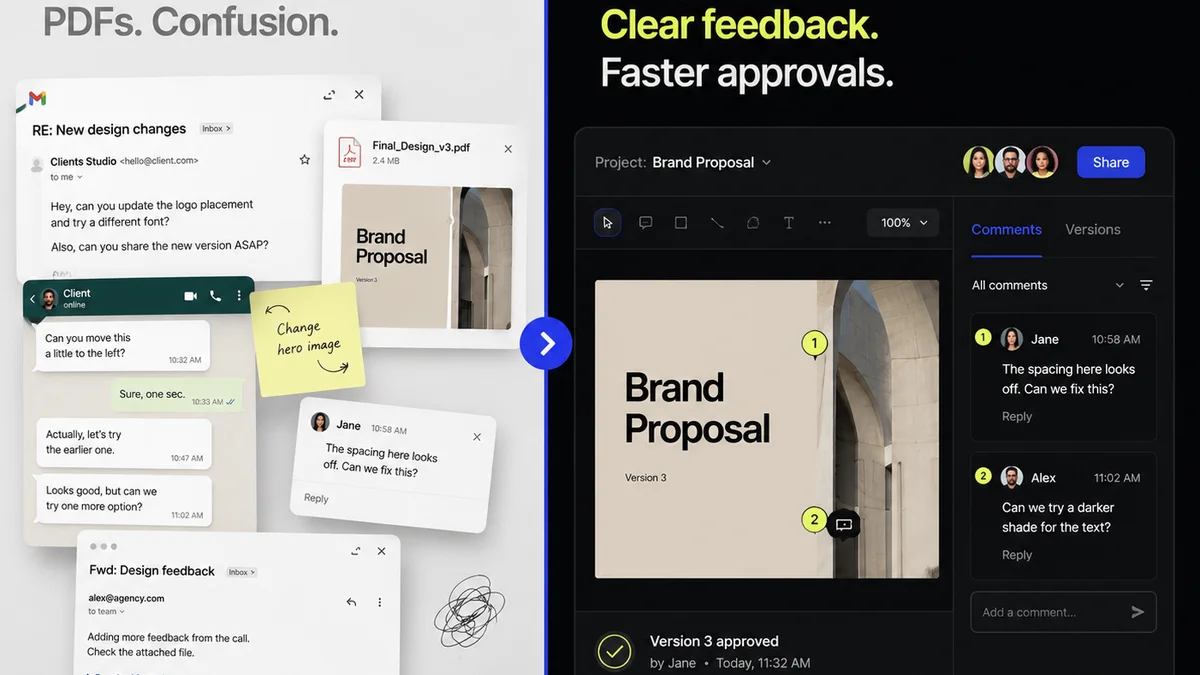
Everyone’s talking about AI revolutionizing creative workflows. It’s going to speed things up, cut costs, and make everyone’s life easier. None of that is wrong. But it’s incomplete.
The real story behind AI in content approval isn’t just about speed. It’s about a deeper shift in how we manage the messy, human-driven process of feedback and sign-off. It’s about moving from reactive chaos to proactive control.
1. The Illusion of 'Faster'
The first wave of AI tools promised speed. Think AI writing assistants churning out copy, or image generators spitting out concepts. And yes, they *can* be faster for certain tasks.
But content approval isn't just about generating raw material. It’s about nuanced feedback, subjective taste, and client-driven changes. Simply generating content faster doesn’t magically make the approval process smoother.
Often, faster generation just means more versions to review. More drafts fly back and forth. The bottleneck doesn’t disappear; it just moves.
The Real Bottleneck: Human Communication
The core problem in content approval has always been communication. Misunderstandings. Vague feedback. Conflicting opinions. Endless revision cycles that drain time and resources.
AI’s true potential isn’t just in generating content, but in untangling this human element.
2. AI as the Ultimate Proofreader (and More)
Let’s be honest. Manual proofreading is tedious. Typos slip through. Grammatical errors are missed. Consistency checks are easily overlooked when you’re juggling multiple projects.
This is where AI shines. Beyond basic spell-check, AI tools can now:
- Identify grammatical errors and suggest stylistic improvements.
- Check for brand voice consistency across long documents.
- Flag potential accessibility issues in text and design elements.
- Analyze sentiment in client feedback to highlight key concerns.
- Detect plagiarism or copyright infringement.
This isn’t just about catching mistakes. It’s about elevating the quality of the work *before* it even reaches the client’s eyes.
Imagine never having to send back a piece because of a stray comma or an inconsistent tone. That’s the promise AI is starting to deliver.
3. Decoding Client Feedback with AI
Client feedback is the lifeblood of agency work, but it’s often the source of immense frustration. Vague comments like “I don’t like it” or “Make it pop more” are legendary.
AI is starting to offer solutions:
Sentiment Analysis
AI can analyze the text of client comments, identifying the underlying sentiment (positive, negative, neutral) and even pinpointing specific keywords or phrases that indicate strong opinions or concerns. This helps prioritize feedback and understand the client’s true emotional response.
Clustering and Summarization
For lengthy feedback documents or multiple comments, AI can group similar points together and provide concise summaries. This cuts through the noise, revealing the core issues that need addressing.
Identifying Ambiguity
Some advanced AI tools can even flag feedback that is unclear or contradictory, prompting the project manager or creative director to seek clarification from the client before work begins.
This moves us beyond simply logging feedback to actively *understanding* and *acting* on it more effectively.
4. Streamlining the Revision Cycle
Revisions are inevitable. But the *process* of managing them can be a nightmare. Tracking changes, ensuring all feedback is addressed, and preventing scope creep requires rigorous organization.
AI can assist here too:
- Automated Version Comparison: AI tools can compare new drafts against previous versions, highlighting not just text changes but potentially visual differences in design mockups.
- Feedback Traceability: By linking specific AI-analyzed feedback points to revisions made, AI can help ensure that every client concern has been addressed.
- Predictive Analytics: While still nascent, AI could eventually predict how certain changes might impact other elements of the project, flagging potential conflicts early.
This isn’t about eliminating human judgment in revisions. It’s about providing better data and tools to make those human decisions more informed and efficient.
5. Enhancing Quality Assurance (QA)
Quality Assurance is the final gate before delivery. It’s where last-minute errors are caught, and the overall polish is applied. But manual QA is prone to human error, especially under tight deadlines.
AI can augment QA by:
- Automated Cross-Browser/Device Testing: AI can simulate user experiences across various platforms and devices to catch rendering or functionality bugs.
- Content Accuracy Checks: AI can verify factual information against trusted sources or internal style guides.
- Design Consistency Audits: AI can check visual elements against design systems or style guides, flagging deviations in color, typography, spacing, etc.
This frees up human QA specialists to focus on more complex, nuanced testing that requires human intuition and understanding of user context.
Where Revue Fits In
While AI tools are powerful for specific tasks within the content lifecycle, they don’t replace the need for a central hub to manage the entire process. This is where a platform like Revue becomes critical.
Revue is designed to bring order to the creative chaos, integrating AI-driven insights and automations with essential human oversight.
- Centralized Feedback: AI can help analyze and categorize feedback, but Revue provides the structured environment to capture, organize, and assign that feedback. No more hunting through emails or chat logs.
- Revision Visibility: AI can compare versions, but Revue offers clear visual timelines and version history, making it easy to see what changed, who approved it, and when. This transparency is crucial for managing client expectations and internal accountability.
- Streamlined Approvals: While AI can assist in QA, Revue provides the formal workflow for tracking approvals, managing deadlines, and ensuring all stakeholders sign off. This structured process prevents costly mistakes and delays.
- Quality Control: By consolidating all project communication and feedback, Revue ensures that AI-driven checks and human reviews are logged and acted upon, creating a robust quality control mechanism.
AI enhances specific points in the workflow. Revue connects them, providing the connective tissue that makes the entire process manageable, auditable, and efficient.
Final Thought
AI is not a magic wand that eliminates the complexities of content approval. Instead, it’s a powerful set of tools that, when integrated thoughtfully, can augment human capabilities. It helps us move beyond simply reacting to feedback and towards a more proactive, data-informed approach.
The agencies and creative teams that thrive won’t be the ones who blindly adopt every new AI gadget. They’ll be the ones who understand how to leverage AI to solve their deepest workflow challenges, enhancing human creativity and collaboration, not replacing it.
Are you using AI to simply automate tasks, or are you using it to fundamentally improve how you manage client relationships and deliver exceptional creative work?
Frequently asked questions
How does AI help with vague client feedback?
AI tools can use sentiment analysis to gauge the emotion behind feedback and identify key phrases. They can also cluster similar comments and summarize lengthy feedback, helping teams pinpoint the core issues that need addressing, even when feedback is unclear.
Can AI replace human proofreaders and QA specialists?
No, AI is best viewed as an augmentation tool. It can automate tedious tasks like spell-checking, grammar correction, and basic consistency checks, freeing up human specialists to focus on more complex, nuanced aspects of proofreading and quality assurance that require human judgment and context.
What is the main benefit of using AI in content approval?
The primary benefit is moving beyond just speeding up content generation. AI helps untangle the complexities of human communication in feedback, enhances quality assurance by catching errors humans might miss, and streamlines the revision cycle by providing better data for decision-making.
How does a platform like Revue integrate with AI for content approval?
Platforms like Revue provide the structured environment to capture, organize, and manage feedback and revisions. AI tools can then analyze this information, and the insights can be logged and acted upon within Revue's workflow. Revue centralizes the process, making AI-driven improvements more manageable and transparent.