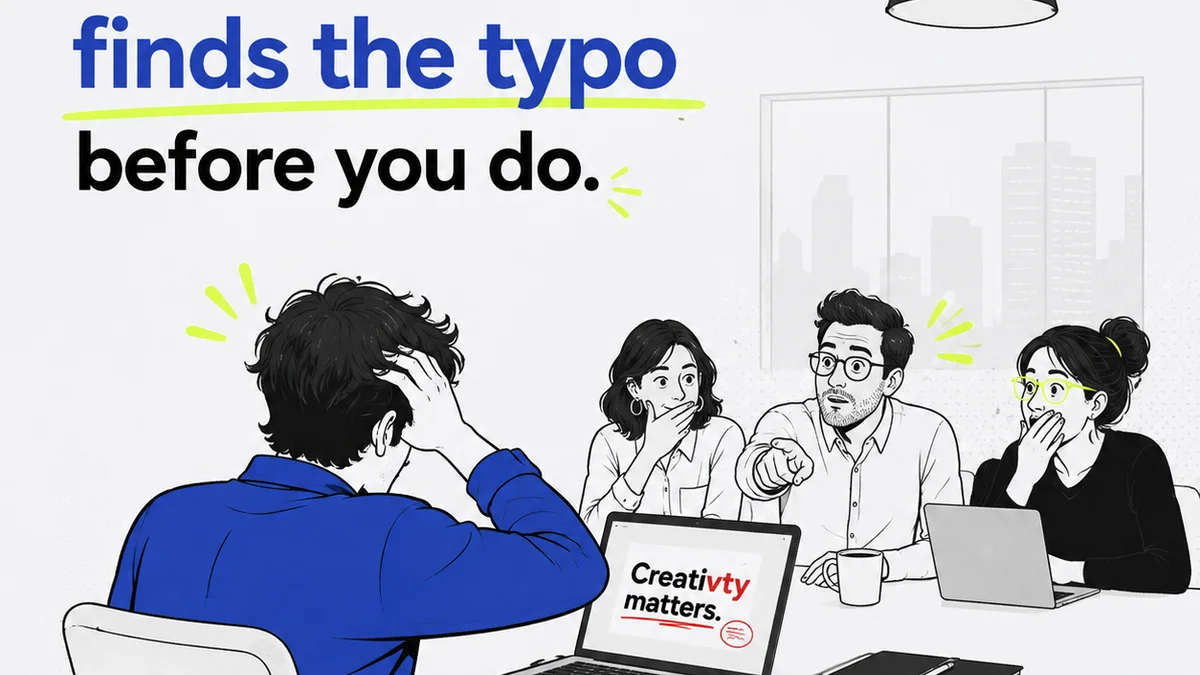
Everyone’s talking about AI transforming content review. It’s the buzzword of the year. And sure, AI can automate tasks, spot typos, and even suggest copy tweaks. None of that is wrong. But it’s incomplete.
The deeper truth? AI isn’t here to replace your creative team’s judgment. It’s here to amplify it. The real transformation is in how AI can augment human oversight, helping agencies and in-house teams navigate the increasing complexity of creative feedback and approvals with unprecedented clarity and efficiency.
1. Beyond Spellcheck: AI as a Creative Partner
The initial wave of AI in content was all about catching errors. Think Grammarly on steroids. But that’s just scratching the surface. Today’s AI tools are moving beyond basic grammar and spelling to understand context, tone, and even brand voice.
This isn't about AI writing your next campaign. It's about AI acting as a first-line reviewer, flagging potential issues before they even reach a human eye. This frees up your creatives and reviewers to focus on the strategic and emotional aspects of the work – the stuff AI can't replicate.
AI for Consistency and Brand Voice
Maintaining a consistent brand voice across all deliverables is a constant battle. AI can be trained on your brand guidelines, marketing collateral, and existing content to identify deviations. It can flag copy that sounds off-brand, uses incorrect terminology, or misses key messaging points.
This proactive flagging saves countless hours of manual review and ensures brand integrity. It’s like having a tireless brand guardian working 24/7.
Identifying Accessibility Issues Early
Web content accessibility is non-negotiable. AI can scan designs and copy for common accessibility pitfalls. This includes checking color contrast ratios, identifying missing alt text for images, and flagging complex sentence structures that might challenge readers with cognitive disabilities. Getting this right from the start prevents costly rework down the line.
Tools can analyze PDFs, websites, and even design mockups to provide actionable insights, aligning with standards like the Web Content Accessibility Guidelines (WCAG).
Personalization at Scale
AI excels at analyzing vast datasets to identify patterns. In content review, this translates to understanding what resonates with different audience segments. AI can analyze performance data of previous content to suggest which messaging, tone, or calls-to-action might be most effective for specific target groups.
This doesn’t mean abandoning human strategy, but it offers data-driven insights to refine creative direction. It’s about making informed decisions, not just gut feelings.
2. Streamlining the Feedback Loop: From Chaos to Clarity
The feedback process is often the biggest bottleneck in creative production. Emails get lost, comments are buried in documents, and contradictory feedback is common. This is where AI can dramatically improve workflow, not by replacing reviewers, but by organizing and clarifying their input.
Imagine a world where every piece of feedback is logged, categorized, and prioritized automatically. That world is here.
Automated Comment Aggregation
Instead of sifting through endless email threads or disparate annotation tools, AI can aggregate feedback from various sources into a single, actionable list. It can identify similar comments from different reviewers, grouping them to highlight recurring themes and reduce redundancy.
This clarity helps teams understand the most critical points without getting bogged down in the noise.
Sentiment Analysis and Prioritization
Not all feedback is created equal. AI can perform sentiment analysis on reviewer comments to gauge the overall tone and urgency. Is a comment a minor stylistic suggestion or a critical blocker? AI can help differentiate.
Furthermore, by analyzing the frequency and source of feedback, AI can help prioritize revisions. This ensures that the most impactful changes are addressed first, saving valuable time and resources.
Identifying Conflicting Feedback
One of the most frustrating aspects of creative review is receiving conflicting instructions from different stakeholders. AI can be trained to detect these contradictions. If one reviewer suggests making a headline shorter and another suggests making it longer, AI can flag this discrepancy for clarification.
This prevents the team from wasting time implementing changes that will only be reverted later. It forces a conversation and ensures alignment before work begins.
3. Enhancing Quality Assurance: The AI Audit
Beyond the creative aspects, AI is becoming an indispensable tool for quality assurance. It can perform audits that are faster, more consistent, and more comprehensive than manual checks alone.
This isn't about replacing QA specialists, but about equipping them with powerful tools to catch more errors and ensure higher standards.
Automated Compliance and Legal Checks
For regulated industries, ensuring compliance with legal and regulatory standards is paramount. AI can be trained to scan content for specific keywords, phrases, or claims that may violate advertising standards, data privacy laws, or industry-specific regulations. This is particularly valuable for marketing teams.
It’s a safety net, ensuring that sensitive content passes muster before publication.
Performance Prediction
While not a direct review function, AI can analyze content against historical performance data to predict how it might perform. It can identify elements that have historically led to higher engagement, conversion rates, or click-throughs. This predictive capability can inform final review decisions.
It adds a layer of data-driven confidence to creative choices.
Detecting Plagiarism and Originality
Ensuring content originality is crucial for SEO and brand reputation. AI-powered tools can quickly scan vast amounts of online content to detect plagiarism or unoriginal phrasing. This provides an extra layer of assurance that the creative output is unique.
It's a digital fingerprint check for every piece of content.
Where Revue Fits In
All these advancements in AI-powered content review highlight a critical need: centralized, organized, and transparent workflow management. This is precisely where Revue shines.
While AI tools can analyze and flag, they don't inherently manage the *process* of review and approval. Revue centralizes all client feedback, regardless of its source. It provides a single source of truth for comments, revisions, and approvals.
Our platform helps teams:
- Aggregate feedback: Bring comments from various channels into one place.
- Track revisions: See the history of changes and who approved them.
- Manage approvals: Streamline the sign-off process, reducing back-and-forth.
- Ensure visibility: Maintain a clear audit trail for every project.
Revue doesn't replace AI's analytical power, nor does it replace human judgment. Instead, it provides the structured environment where AI insights can be integrated, human feedback can be managed efficiently, and the entire review cycle becomes significantly more effective.
Final Thought
AI is not a magic bullet for content review. It's a powerful set of tools that, when integrated thoughtfully into existing workflows, can elevate the quality, efficiency, and strategic impact of creative work. The real transformation isn't about replacing humans, but about empowering them with smarter insights and streamlined processes.
Are you leveraging AI to augment your team's expertise, or are you just chasing the automation hype?
Frequently asked questions
Can AI replace human reviewers in the content process?
No, AI is best viewed as an augmentation tool. It can automate repetitive tasks, flag errors, and provide data-driven insights, but it cannot replicate human creativity, strategic thinking, or nuanced judgment. The most effective approach combines AI capabilities with human oversight.
How can AI help with brand consistency?
AI can be trained on brand guidelines, tone of voice documentation, and existing content. It can then scan new content to identify deviations in language, terminology, or messaging, ensuring consistency across all outputs and flagging potential issues before they reach human reviewers.
What are the benefits of using AI for accessibility checks?
AI can proactively scan designs and copy for common accessibility issues like poor color contrast, missing alt text, or complex sentence structures. This helps ensure content is inclusive from the outset, preventing costly rework and aligning with standards like WCAG.
How does AI improve the feedback loop in creative projects?
AI can aggregate feedback from multiple sources, identify recurring themes, detect conflicting comments, and even perform sentiment analysis to help prioritize revisions. This brings clarity and organization to what is often a chaotic process, saving teams significant time.
Can AI predict content performance?
Yes, some AI tools can analyze content against historical performance data to offer predictions on engagement or conversion rates. This provides data-informed insights that can help refine final creative decisions and optimize content strategy.