Everyone’s talking about AI. Chatbots writing poems, AI generating images from prompts. It’s exciting, maybe a little scary. And none of that is wrong.
But it’s incomplete.
The real story of AI in creative agencies isn’t about the flashy new tools. It’s about operational shifts. It’s about automating the grunt work that’s always bogged down creative teams. It’s about making the entire production pipeline more efficient, more predictable, and ultimately, more profitable.
The hard truth? AI isn’t coming for your creatives’ jobs. It’s coming for the inefficient processes that are costing you time and money. And if you’re not paying attention, you’ll be left behind.
1. Beyond the Hype: AI for Operational Efficiency
The initial wave of AI excitement focused on generative capabilities. Tools that can spit out copy or visuals are impressive. But their impact on day-to-day agency operations has been limited so far.
The real revolution is happening in the background. AI is being integrated into existing workflows to tackle the tedious, repetitive tasks that drain creative energy and slow down project timelines.
Think about it:
- Automated file organization and tagging.
- Smart content moderation and flagging.
- Predictive project scoping based on historical data.
- Automated quality assurance checks for common errors.
- Streamlined asset management and version control.
These aren't glamorous features. They don't write headlines. But they free up valuable human hours. Hours that can be reinvested into strategy, client relationships, and true creative innovation.
The Bottleneck Isn't Talent, It's Process
Most agencies aren't struggling with a lack of creative talent. They're struggling with processes that are manual, disconnected, and inefficient.
Feedback gets lost in email chains. Revisions are tracked in spreadsheets. Approvals are buried in Slack messages. This isn't a creative problem; it's an operational one.
AI-powered automation targets these bottlenecks directly. It brings order to the chaos. It makes sure the right assets are in the right place at the right time. It reduces the friction that kills productivity.
2. AI in Project Management and Workflow Orchestration
Creative projects are complex. They involve multiple stakeholders, moving parts, and tight deadlines. Managing this complexity manually is a recipe for error.
AI is starting to play a significant role in orchestrating these workflows. It’s not about replacing project managers, but about augmenting their capabilities.
Consider these applications:
- Predictive Scheduling: AI can analyze past project data to predict realistic timelines, identify potential delays, and suggest resource allocation adjustments.
- Automated Task Assignment: Based on project scope, team availability, and skill sets, AI can suggest or even automatically assign tasks.
- Risk Identification: AI can monitor project progress and flag potential risks, such as scope creep or resource conflicts, before they become major issues.
- Automated Reporting: Generating status reports can be time-consuming. AI can automate the aggregation of data and the creation of client-ready updates.
The Illusion of Control
Many agencies operate under the illusion that they have tight control over their projects. But how much time is actually spent chasing down status updates, resolving minor conflicts, or redoing work because of miscommunication?
AI-driven project management tools provide a more objective, data-backed view of project health. They move beyond gut feelings and provide actionable insights.
This allows project managers to focus on strategic oversight and problem-solving, rather than getting lost in the weeds of day-to-day task management.
3. AI for Quality Assurance and Compliance
Creative work needs to be perfect. But perfection is hard to achieve when you're manually checking every detail.
AI is proving invaluable in automating quality assurance (QA) and compliance checks. This is particularly true for digital assets.
Think about:
- Brand Guideline Enforcement: AI can automatically check if logos, colors, fonts, and messaging adhere to established brand guidelines.
- Accessibility Checks: Ensuring digital content meets accessibility standards (e.g., alt text for images, sufficient color contrast) can be automated.
- Technical Compliance: Verifying file formats, resolution, aspect ratios, and other technical specifications for different platforms.
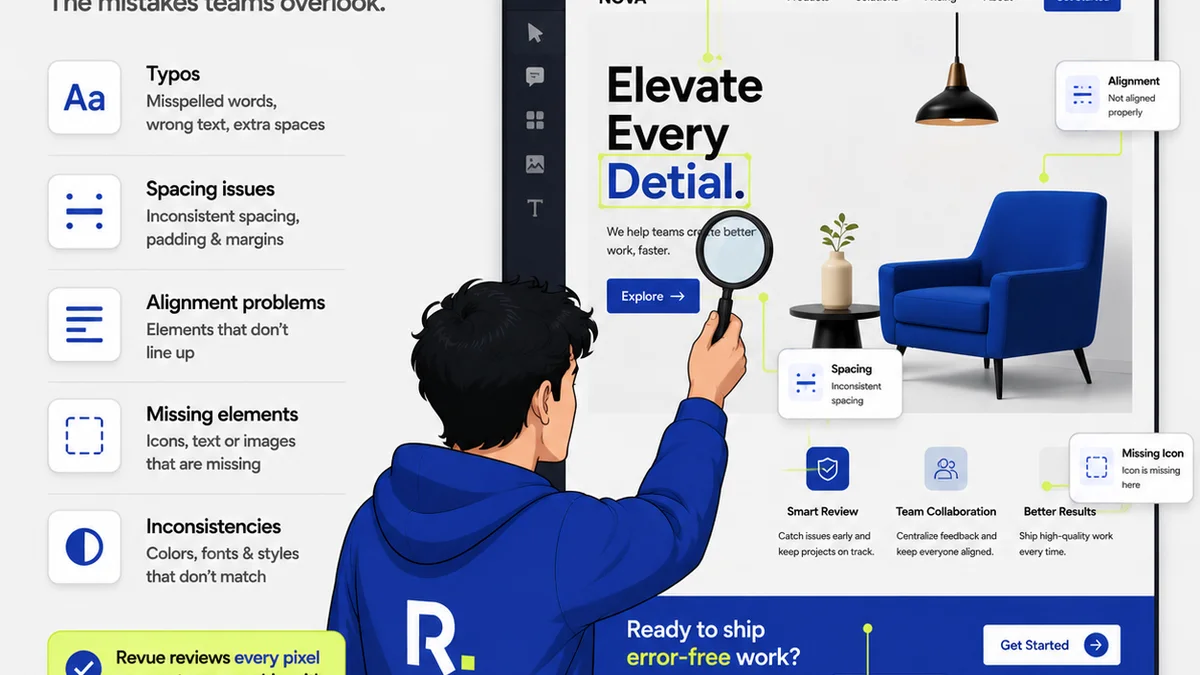
- Content Accuracy: While not foolproof, AI can scan for common typos, grammatical errors, and factual inconsistencies in text-based content.
The Cost of Errors
A small error can have significant consequences. A misplaced logo, incorrect sizing, or inaccessible design can lead to client dissatisfaction, brand damage, or costly rework.
Automated QA powered by AI significantly reduces the likelihood of these errors slipping through.
It acts as a tireless second pair of eyes, catching issues that human reviewers might miss, especially under pressure or fatigue.
4. AI in Client Feedback and Revision Management
This is where many agencies feel the most pain. Client feedback is essential, but managing it effectively is a major operational challenge.
Emails, PDFs with annotations, Slack messages, verbal notes – the channels are numerous, and the feedback can be contradictory or unclear.
AI is beginning to offer solutions that bring structure and clarity to this chaos.
- Feedback Aggregation: Tools that can pull feedback from multiple sources into a single, organized view.
- Sentiment Analysis: AI can analyze the tone of feedback to help gauge client satisfaction or identify potentially problematic comments.
- Actionable Insights: By categorizing and prioritizing feedback, AI can help teams understand what truly needs to be addressed versus minor stylistic preferences.
- Automated Version Tracking: Linking specific feedback to specific versions of a creative asset ensures clarity on what has been addressed and what remains.
The Feedback Black Hole
How many times has a crucial piece of feedback been missed, misinterpreted, or simply lost in the shuffle?
This isn't just frustrating; it leads to wasted revisions, missed deadlines, and strained client relationships.
AI-powered systems aim to create a single source of truth for all feedback, making the revision process transparent and manageable.
Where Revue Fits In
The operational challenges we’ve discussed – scattered feedback, manual revision tracking, inconsistent QA, and inefficient workflows – are precisely what Revue is built to solve.
While AI tools can automate specific tasks, a centralized platform like Revue is essential for orchestrating the entire creative review and approval process.
Revue acts as the hub:
- Centralized Feedback: All client comments, annotations, and approvals live in one place, linked directly to the creative assets. No more digging through emails or Slack.
- Clear Revision History: Every version of a creative is tracked, with clear visibility into what changes were made based on feedback. This eliminates confusion and ensures accountability.
- Streamlined Approvals: A defined approval workflow means stakeholders know exactly when and how to provide their sign-off, reducing bottlenecks.
- Built-in Quality Checks: While AI can augment QA, Revue ensures that the process itself is managed, with checklists and defined steps to catch issues before they reach the client.
Revue brings structure to the creative process, making it easier to manage projects, satisfy clients, and ensure the final output meets the highest standards. It’s the operational backbone that allows creative teams to focus on what they do best.
Final Thought
AI is not a magic wand that will instantly solve all of an agency’s problems. Its true power lies in its ability to automate the mundane, clarify the complex, and bring much-needed efficiency to creative operations.
The agencies that thrive will be those that understand this distinction. They won't just adopt AI tools; they'll integrate AI-driven automation into their core workflows.
The question isn't whether AI will change creative automation. The question is, are you ready for the operational shift?
Frequently asked questions
Will AI replace creative professionals?
AI is more likely to automate tedious tasks and augment creative capabilities rather than replace creative professionals entirely. The focus is on improving efficiency and freeing up time for higher-level strategic and creative work.
How can AI improve client feedback processes?
AI can help by aggregating feedback from multiple sources, analyzing its sentiment, categorizing it for clarity, and linking it directly to specific versions of creative assets. This reduces miscommunication and speeds up revisions.
What are the practical applications of AI in agency operations?
Practical applications include automated file organization, predictive scheduling, automated quality assurance checks for brand guidelines and technical specs, and streamlined reporting. These improve efficiency and reduce errors.
How does a platform like Revue complement AI automation?
Revue provides the centralized structure for managing the entire creative review and approval process. It complements AI by acting as the single source of truth for feedback, version tracking, and approvals, ensuring clarity and accountability.