Everyone’s talking about AI. It’s going to revolutionize everything, they say. Especially creative work for retail brands.
And that’s not entirely wrong. AI tools *are* changing the game. They can generate assets, write copy, and even suggest campaign ideas at breakneck speed.
But that’s the easy part. The part everyone sees. The shiny new object.
The deeper truth? AI’s real power for retail creative isn’t in generating more *stuff*. It’s in automating the messy, time-consuming *process* around that stuff. The feedback loops, the revision rounds, the approvals, the quality checks. That’s where the operational transformation happens.
Let’s peel back the hype and look at the real work AI is doing behind the scenes to automate creative for retail.
1. From Static Assets to Dynamic Campaigns
Retail demands constant content. New products, seasonal sales, flash promotions. The sheer volume of creative assets needed is staggering. Historically, this meant armies of designers churning out variations. Now, AI is stepping in to manage this complexity.
Automated Asset Generation
AI can take a core creative concept and generate hundreds of variations tailored for different platforms, sizes, and even audience segments. Think product lifestyle shots with different backgrounds, banner ads with personalized text overlays, or social media posts adapted for Instagram Stories versus TikTok.
Personalization at Scale
This isn't just about making more ads; it's about making *smarter* ads. AI analyzes customer data to predict what visuals and messaging will resonate with specific demographics or even individuals. This allows retailers to move beyond generic campaigns to hyper-personalized experiences, delivered consistently across all touchpoints.
Predictive Performance
What if you could predict which ad variation would perform best *before* you spend a dollar on media? AI models are increasingly capable of this. By analyzing historical campaign data and current trends, AI can forecast the likely success of different creative approaches, helping teams allocate resources more effectively.
The Operational Shift
This shift means less time spent on manual production and more time on strategy and creative direction. The focus moves from *making* assets to *defining* the rules and parameters for AI to execute. It requires a new skill set, but the payoff is efficiency gains that were previously unimaginable.
2. Streamlining the Feedback and Approval Gauntlet
If asset generation is the engine, then feedback and approvals are the brakes on retail creative. For agencies and in-house teams, managing client feedback, endless revision cycles, and getting that final sign-off is a notorious bottleneck. AI is starting to untangle this knot.
Intelligent Triage of Feedback
Imagine AI reading through pages of client comments, identifying duplicates, flagging conflicting instructions, and summarizing key points. While fully automated decision-making is still nascent, AI can significantly reduce the human effort required to process and organize feedback, ensuring nothing critical gets lost.
Automated Revision Tracking
Keeping track of what changed, who approved it, and why can be a nightmare. AI-powered tools can automatically log revisions, tag comments to specific versions, and even highlight the differences between iterations. This creates a clear, auditable trail, essential for accountability and dispute resolution.
Predictive Approval Bottlenecks
AI can learn the patterns of your clients or stakeholders. By analyzing past approval cycles, it can flag when a project is likely to hit a snag, or when a particular stakeholder’s input is typically delayed. This allows teams to proactively address potential delays before they derail a launch schedule.
Version Control Reinvented
Forget messy file-naming conventions. AI can help manage asset versions automatically, linking them to specific feedback and approval stages. This ensures everyone is working from the most current, approved version, reducing errors and wasted effort.
3. Enhancing Quality Assurance and Brand Consistency
For retail, brand consistency is paramount. A disconnect in messaging or visual style across channels can dilute brand perception and confuse customers. AI is becoming a powerful ally in maintaining that crucial uniformity.
Automated Brand Guideline Enforcement
AI can be trained on a brand’s specific style guide. It can then scan creative assets to ensure compliance with rules around logo usage, color palettes, typography, tone of voice, and imagery. This catches deviations early, before they ever reach a client or the public.
Accessibility Checks Made Easy
Ensuring digital assets are accessible to all users is not just good practice; it’s often a legal requirement. AI tools can automatically check for contrast ratios, alt text compliance, keyboard navigation issues, and other accessibility standards, integrating these checks directly into the creative workflow.
This moves QA from a manual, often last-minute task to an integrated, continuous process.
Content Error Detection
Beyond brand guidelines, AI can identify factual errors, typos, or inconsistencies in product information or promotional details. This is especially valuable in fast-paced retail environments where information can change rapidly.
Performance-Based QA
AI can even evaluate creative not just against static rules, but against desired performance outcomes. By analyzing what creative elements correlate with higher engagement or conversion rates, AI can suggest improvements to ensure the final assets are not just compliant, but effective.
Where Revue Fits In
The operational truths of creative automation for retail aren't about replacing human creativity. They’re about augmenting it. They’re about building systems that allow creative teams to focus on what they do best, while the tedious, repetitive, and error-prone tasks are handled efficiently.
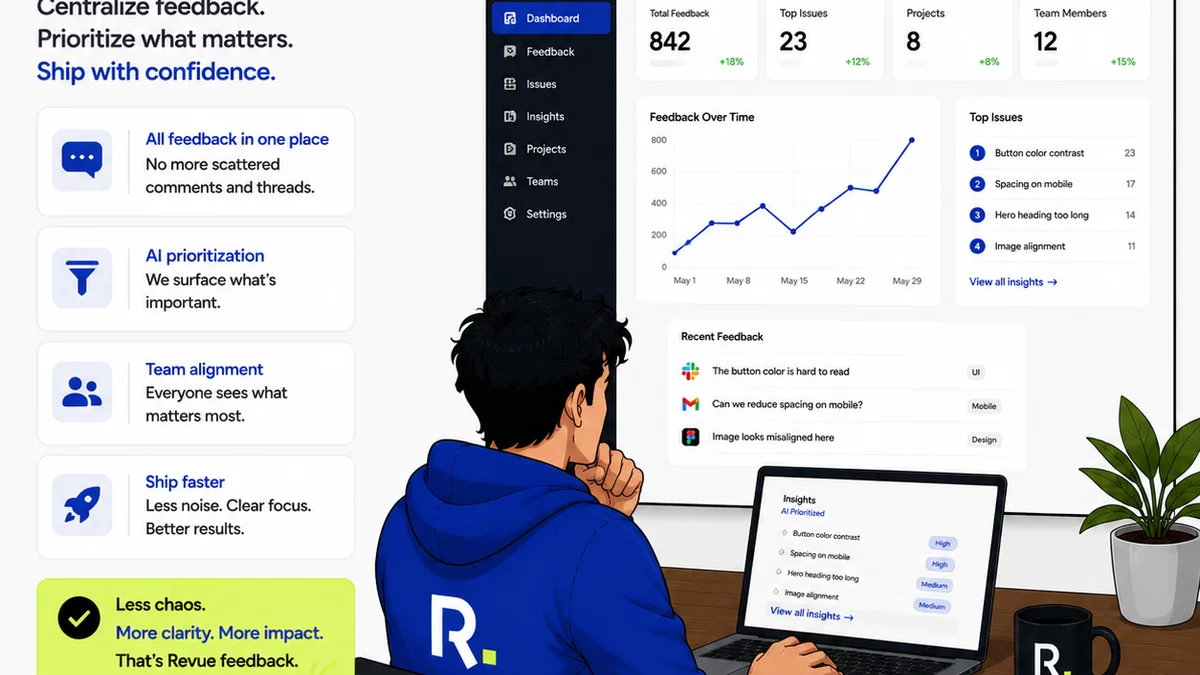
This is where a platform designed for centralized feedback, revision management, and quality checks becomes critical. AI tools can generate and analyze, but they still need a structured environment to operate within.
Revue provides that environment. It’s the central hub where AI-driven insights can be integrated, where feedback (whether AI-assisted or human) is managed systematically, and where the final checks ensure quality and consistency. It connects the dots between AI’s output and the real-world needs of retail creative delivery.
Think of it this way: AI can draft the blueprint, but you still need a project manager and a quality inspector to ensure the building is constructed correctly and to spec. Revue acts as that sophisticated project manager and inspector for your creative workflow, making sure the AI-powered efficiency translates into tangible results.
Final Thought
AI’s impact on creative automation in retail is undeniable. But the true value lies not in the AI itself, but in how it’s integrated into robust workflows. It’s about using AI to solve the operational headaches that have plagued creative teams for years: the endless revisions, the inconsistent feedback, the struggle for brand coherence.
The question isn't whether AI *will* transform retail creative. It already is. The real question is: are you leveraging it to automate the *process*, or just chasing the latest generative feature?
Frequently asked questions
How does AI help with personalization in retail creative?
AI analyzes customer data to predict which visuals and messaging will resonate with specific demographics or individuals. This allows retailers to move beyond generic campaigns to hyper-personalized experiences delivered consistently across all touchpoints.
Can AI truly automate the feedback and approval process?
While AI can't make final decisions, it can significantly streamline the process by triaging feedback, tracking revisions automatically, identifying potential bottlenecks, and ensuring clear version control. This reduces manual effort and speeds up approvals.
What is the role of platforms like Revue in AI-driven creative automation?
Platforms like Revue provide the structured workflow environment needed to effectively integrate AI. They centralize feedback, manage revisions, and facilitate quality checks, ensuring that AI's output is effectively managed and translated into tangible, consistent results for retail creative.
How does AI ensure brand consistency in retail creative?
AI can be trained on brand guidelines to automatically scan creative assets for compliance with logo usage, color palettes, typography, and tone of voice. It can also detect factual errors and accessibility issues, maintaining uniformity across all channels.