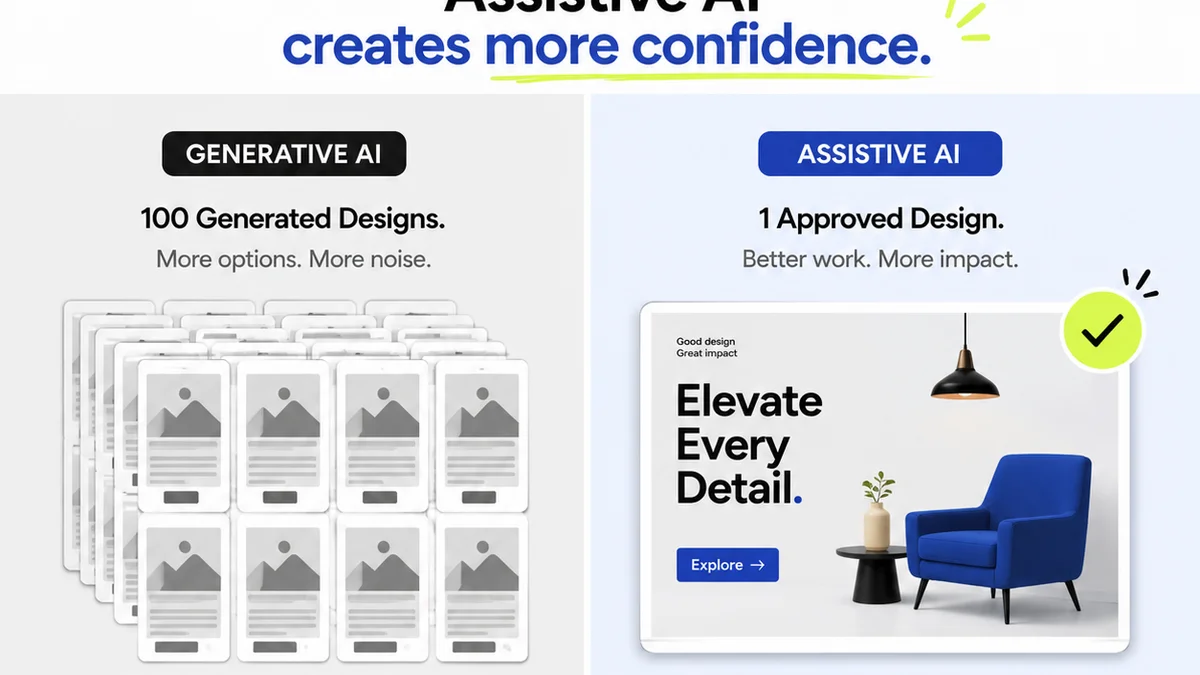
Everyone’s talking about AI. Especially how it will change creative work. You’ve probably read that AI will automate tasks, generate ideas, and maybe even replace designers. None of that is wrong. But it’s incomplete.
The real, immediate impact of AI isn't just on the *output* of creative work. It's on the *input*. It's about how creative requests are defined, structured, and managed. That's where the operational transformation is happening, right now.
1. From Vague Hopes to Granular Detail
The traditional creative brief is a mix of art and guesswork. It’s a document designed to capture a client’s vision, often expressed in broad strokes. We’ve all seen briefs that say things like “make it pop” or “target millennials.”
AI, however, thrives on data and specificity. When you start feeding AI tools information about target audiences, campaign goals, or brand guidelines, it pushes back. It demands more detail.
The AI Prompt as a Clarifying Force
Think of using AI for campaign ideation. To get useful results, you can't just say “write an ad for running shoes.” You need to specify:
- Target demographic (age, interests, location)
- Key selling proposition (comfort, speed, durability)
- Desired tone (energetic, humorous, aspirational)
- Call to action (visit website, buy now, sign up)
- Platform (social media, print, video)
This isn't about AI writing the brief for you. It’s about AI forcing *you* to be more precise in your thinking before you even start the creative process. It’s a mirror reflecting the ambiguities in your own requests.
Shifting the Briefing Conversation
This means the initial client briefing meeting changes. Instead of just listening for keywords and gut feelings, you’re listening for data points. You’re asking questions that might feel more like market research than creative direction.
“What specific pain points does this product solve for your audience?”
“Can you provide three examples of competitor campaigns you admire, and *why*?”
“What are the measurable KPIs for this project’s success?”
This detail-oriented approach, driven by the needs of AI tools, makes for better, more actionable briefs. It reduces assumptions and sets clearer expectations from the start.
2. The Rise of the 'Living Brief'
Creative briefs have historically been static documents. Once approved, they get filed away. Revisions happen, but they’re often tracked in email chains or separate documents, leading to version control nightmares.
AI, and the data-centric thinking it encourages, points towards a more dynamic approach. The brief becomes a living document, constantly informed by new data and feedback.
Integrating Performance Data
Imagine a brief that automatically updates based on campaign performance. If A/B tests show a certain headline resonates better, that insight can be fed back into the brief for future iterations or related projects. AI can analyze these performance metrics and suggest adjustments.
This creates a feedback loop that was previously manual and slow. It means creative direction isn't just based on initial strategy, but on real-time results.
AI as a Compliance Officer
AI tools can also help ensure the brief’s requirements are met throughout the creative process. For example, if a brief specifies brand colors and fonts, AI could flag designs that deviate. If accessibility guidelines are part of the brief, AI can check for compliance.
This moves compliance from a final QA step to an integrated part of the workflow. It’s proactive, not reactive.
3. Streamlining the Request-to-Brief Workflow
The process of taking a client’s initial, often messy, request and turning it into a clear, actionable creative brief is a bottleneck for many agencies. It involves interpretation, clarification, and documentation.
AI offers ways to accelerate and refine this crucial first step. It’s not about replacing the strategist or account manager, but about augmenting their capabilities.
Automating Initial Data Gathering
AI can assist in the preliminary stages of information gathering. For instance, it can:
- Summarize lengthy client documents or existing brand guidelines.
- Analyze competitor websites and marketing materials for key themes and messaging.
- Generate initial lists of relevant keywords or audience segments based on project scope.
- Draft standard sections of a brief (e.g., project overview, background) based on structured input.
This frees up human talent to focus on the higher-level strategic thinking and nuanced client communication that AI can’t replicate.
AI-Powered Brief Templates
Instead of static Word docs, imagine interactive brief templates powered by AI. As you fill in sections, the AI could prompt for missing information, suggest relevant data points, or even check for internal consistency. This makes the briefing process more guided and less prone to oversight.
The goal is to make the creation of a high-quality brief faster and more reliable. This directly impacts project timelines and client satisfaction.
4. The Evolution of Creative Briefing Skills
The rise of AI in creative requests doesn't make human skills obsolete; it elevates them. The emphasis shifts from pure ideation to strategic interpretation and critical evaluation.
From 'Brief Writer' to 'Brief Curator'
The role of the person responsible for the brief evolves. They become less of a scribe and more of a curator and critical thinker. Their job is to:
- Understand the client’s business objectives deeply.
- Translate those objectives into clear, data-informed requirements.
- Critically evaluate AI-generated suggestions and data.
- Facilitate strategic conversations with clients, leveraging AI insights.
- Ensure the brief remains aligned with evolving project goals.
This requires a blend of strategic acumen, analytical skills, and strong communication. It’s about wielding AI as a tool, not being replaced by it.
The Importance of Prompt Engineering
The ability to craft effective prompts for AI tools becomes a core skill. This is often referred to as 'prompt engineering.' It's the art and science of asking the right questions in the right way to get the desired output from an AI.
In the context of creative requests, this means learning how to prompt AI to:
- Analyze market trends relevant to a brief.
- Identify potential audience segments.
- Suggest creative angles based on specific constraints.
- Summarize research findings concisely.
This skill is crucial for extracting maximum value from AI-powered briefing tools.
Where Revue Fits In
The operational shifts driven by AI in creative requests — the demand for detail, the need for dynamic documentation, and the streamlining of workflows — highlight the importance of robust project management. This is where a platform like Revue becomes essential.
Revue is built to manage the lifecycle of creative projects, from initial brief to final approval. It centralizes client feedback, ensuring that all the detailed requirements and evolving insights discussed during the briefing process are captured and accessible.
When AI helps generate more granular briefs, Revue provides the structure to manage that detail. When briefs need to become 'living documents' updated with performance data, Revue offers visibility into revisions and approvals, creating a clear audit trail. It ensures that the entire team, and the client, are always working from the most current, approved brief, preventing the chaos that can arise from siloed information and endless email threads.
4. The Future: AI as a Collaborative Partner
Looking ahead, the integration of AI into the creative request process will only deepen. We're moving beyond AI as a simple automation tool towards AI as a genuine collaborative partner.
Predictive Briefing
Imagine AI analyzing past successful campaigns, market data, and client history to proactively suggest the core elements of a new brief before the client even formally asks. It could identify opportunities you might have missed.
Automated Brief Validation
AI could automatically check a draft brief against brand guidelines, legal requirements, and even past project learnings. It could flag potential conflicts or areas of risk, ensuring a more robust brief from the outset.
This isn't science fiction. These capabilities are emerging as AI models become more sophisticated and integrate with other business systems.
The Human Element Remains Key
However, the core of creative strategy will always require human insight, empathy, and judgment. AI can process data and identify patterns at scale, but it cannot replicate the nuanced understanding of human emotion, cultural context, or the strategic leap of intuition that defines truly groundbreaking creative work.
The most effective agencies will be those that learn to blend the analytical power of AI with the irreplaceable creativity and strategic thinking of their human teams.
Final Thought
AI is not just changing how creative work is *made*. It’s fundamentally altering how creative *projects are defined and managed*. The operational truth is that AI is forcing a level of clarity and data-driven precision into the briefing process that many agencies have long strived for, but struggled to consistently achieve. Are you ready to embrace the 'living brief' and elevate your team's strategic capabilities?
Frequently asked questions
How does AI change the traditional creative brief?
AI pushes for more granular detail and data in creative briefs, transforming them from static documents into dynamic, information-rich tools. This requires a more precise input from clients and creative teams.
Can AI write a creative brief for me?
AI can assist in drafting sections, gathering data, and suggesting content for a brief. However, it cannot replace the strategic thinking, client understanding, and nuanced interpretation that a human strategist provides. AI acts as an assistant, not a replacement.
What new skills do creative teams need with AI in briefing?
Teams need to develop skills in 'prompt engineering' to effectively interact with AI tools, critical evaluation of AI-generated outputs, and a deeper understanding of data analysis to translate insights into actionable creative direction.
How does a platform like Revue help with AI-driven creative requests?
Revue centralizes feedback, manages revisions, and provides visibility into the entire creative process. This is crucial for handling the increased detail and dynamic nature of AI-enhanced briefs, ensuring everyone works from the latest approved information.