Everyone’s talking about AI in creative review. You hear promises of automated feedback, AI-driven quality checks, and even AI generating entire revisions. It sounds like the future is here, and it’s going to make creative directors obsolete.
None of that is wrong. But it’s incomplete.
The real story isn't about AI replacing human judgment. It's about AI augmenting it. It’s about freeing up creative teams from tedious tasks so they can focus on what truly matters: strategic thinking, client relationships, and crafting exceptional work. The tools that will win aren't the ones that claim to do everything, but the ones that do the *right* things, intelligently.
1. The AI Hype Cycle in Creative Operations
The current wave of AI excitement is unprecedented. Tools are emerging daily, promising to revolutionize everything from initial concept generation to final asset delivery. For creative agencies and in-house teams, this can feel overwhelming. Where do you even start?
Many solutions focus on what looks impressive on the surface. Think AI that can flag potential accessibility issues or analyze sentiment in client comments. These are valuable capabilities, but they often miss the core operational bottlenecks that slow down creative workflows.
The Illusion of Automated Brilliance
The assumption is that AI can simply *understand* creative intent and provide perfect feedback. This is a dangerous oversimplification. Creative work is subjective, nuanced, and deeply tied to client strategy and brand voice. AI, in its current form, struggles with this depth.
It can identify patterns, flag inconsistencies, and process large amounts of data. But it can't (yet) replicate the intuition of a seasoned creative director or the strategic insight of a brand manager. The real value lies in AI that supports, not supplants, human decision-making.
The Real Bottlenecks
What actually grinds creative processes to a halt?
- Endless, unproductive revision rounds.
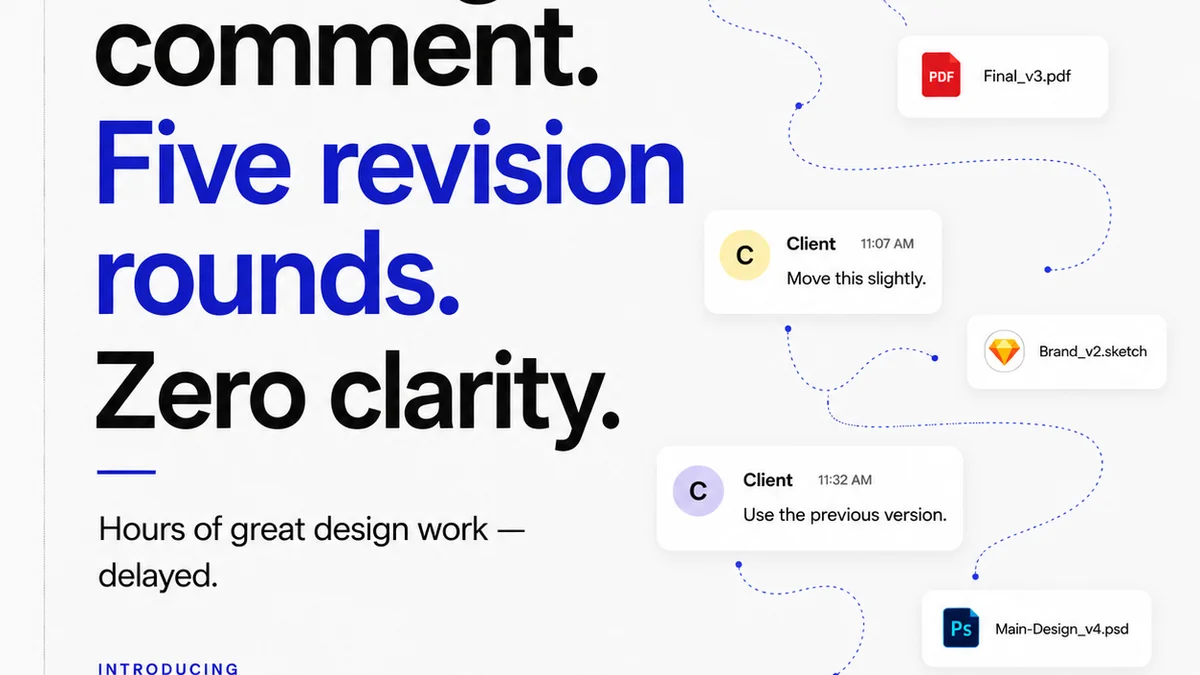
- Unclear or contradictory client feedback.
- Difficulty tracking changes and approvals across multiple versions.
- Time wasted on administrative tasks instead of creative thinking.
- Lack of visibility into project status and potential blockers.
These are operational problems. And while AI can help address some aspects, it's not a magic bullet for poor process. The tools that integrate AI thoughtfully into existing, robust workflows will be the ones that deliver tangible results.
2. AI Features: What to Look For (and What to Ignore)
When evaluating AI-powered creative tools, it's easy to get dazzled by buzzwords. Let's break down what's genuinely useful for streamlining creative review and what's just noise.
Useful AI Applications
- Smart Tagging & Organization: AI can automatically tag assets based on content, style, or project phase, making them easier to search and manage.
- Sentiment Analysis: Understanding the emotional tone of client feedback can help prioritize responses and identify potential friction points early.
- Pattern Recognition for Inconsistencies: AI can spot visual or textual inconsistencies across multiple assets or versions, acting as an early-stage quality control.
- Automated Summarization: Condensing lengthy feedback threads into actionable summaries can save significant review time.
- Predictive Analytics (Emerging): Identifying potential project delays or resource conflicts based on historical data.
The Shiny Objects to Be Wary Of
- AI-Generated Feedback: Unless highly contextualized and tied to specific brand guidelines or project goals, this can be generic and misleading.
- Fully Automated Revisions: This is still largely science fiction for complex creative work. AI can assist, but human oversight is critical.
- AI as the Sole Decision-Maker: Relying on AI to approve creative is a recipe for disaster. It lacks the strategic and subjective judgment required.
The key is to look for AI that enhances your team’s capabilities, not promises to replace them entirely. Think of it as a super-powered assistant, not a replacement colleague.
3. Frame.io and the Evolving Landscape of Video Review
Frame.io has long been a leader in video collaboration, and their integration of AI reflects this focus. Their platform excels at providing granular feedback on video assets.
Frame.io’s AI features often center around enhancing the video review experience. This includes things like:
- Automated Transcription: Converting spoken dialogue into text, making it searchable and easier to reference.
- Basic Image Analysis: Potentially identifying objects or scenes within the video for better organization.
- Integration with other Adobe tools: Leveraging AI capabilities across a broader creative suite.
Frame.io’s strength lies in its deep understanding of video production workflows. Their AI integrations are designed to tackle specific challenges within that domain, such as speeding up the review of lengthy video projects by making the content more accessible and searchable.
However, their focus is primarily video. While powerful for that medium, it might not address the broader needs of agencies handling diverse creative assets like web designs, print collateral, or social media graphics.
4. Where Revue Fits In: Centralizing Feedback Across All Creative
The conversation about AI in creative review often gets bogged down in feature-specific tools. But the fundamental challenge for most agencies isn't a lack of AI features; it's a lack of centralized process and visibility.
This is where platforms designed for comprehensive creative operations shine. Revue isn't just about collecting feedback; it’s about managing the entire lifecycle of creative review and approval.
Consolidating Feedback, Not Just Collecting It
AI can help process feedback, but what if the feedback itself is scattered across email, Slack, Google Docs, and random PDF annotations? The real win is having a single source of truth for all client input.
Revue brings all feedback into one place, regardless of the asset type. This includes:
- Direct annotations on static images, PDFs, and web pages.
- Version tracking that clearly shows each iteration and the feedback associated with it.
- Clear approval workflows that eliminate ambiguity about sign-off.
- Centralized communication logs tied to specific assets and revisions.
Intelligent Augmentation, Not Automation
While Frame.io might use AI for video-specific tasks like transcription, Revue leverages AI and smart design to augment the *entire* review process for *all* creative assets.
Imagine AI assisting with:
- Identifying conflicting feedback from different stakeholders on the same asset.
- Summarizing long comment threads within Revue to highlight key action items.
- Flagging assets that haven't received timely feedback or approval**, preventing bottlenecks.
- Ensuring all required stakeholders have reviewed** an asset before final sign-off.
This isn't about AI writing the brief or approving the final design. It's about using intelligent systems to make the human review process smoother, faster, and more accurate. It’s about providing clarity in complexity.
Visibility and Quality Control
Beyond just feedback, AI can enhance quality control. By analyzing patterns in feedback and revisions, tools can help identify recurring issues or areas where the team might need additional training or process refinement. Revue’s focus on structured workflows means that every step is logged, creating an audit trail that is invaluable for both internal analysis and client accountability.
5. The Human Element: Why AI Won't Replace Creative Directors
Let’s be clear: AI will not replace the strategic thinking, creative intuition, and client empathy that define a great creative director or agency lead.
These roles require a deep understanding of business goals, brand strategy, audience psychology, and cultural context. They involve nuanced negotiation, persuasive communication, and the ability to inspire a team. AI can assist with data analysis and task automation, but it cannot replicate the human judgment necessary for these high-level functions.
The Partnership Model
The most effective use of AI in creative operations is a partnership. AI handles the repetitive, data-intensive tasks, freeing up human talent to focus on the strategic, creative, and interpersonal aspects of the job.
Think of it this way:
- AI can identify that a particular shade of blue is trending.
- A human creative director understands *why* that blue is right for *this specific client's* campaign, considering their audience and competitors.
AI can flag that a website isn't responsive on a small screen. A human designer ensures the user experience is seamless and intuitive across all devices.
Focusing on Value, Not Just Volume
The goal of integrating AI shouldn't be to simply process more creative assets faster. It should be to elevate the quality and strategic impact of the work.
When teams spend less time chasing feedback, chasing approvals, and correcting simple errors, they have more time for:
- Strategic brainstorming and concept development.
- Deep client collaboration and relationship building.
- Experimentation and pushing creative boundaries.
- Mentoring junior team members.
This shift from volume to value is where the true transformation lies.
Final Thought
The AI revolution in creative review isn't about replacing people; it's about empowering them. The tools that will ultimately win are those that seamlessly integrate AI to solve real operational pain points, enhance human judgment, and drive better business outcomes for agencies and their clients. The question isn't *if* AI will change creative review, but *how* we will intelligently shape that change to serve our creative ambitions.
Frequently asked questions
Will AI replace creative directors?
No. AI can automate tasks and provide data insights, but it cannot replicate the strategic thinking, creative intuition, and client relationship skills of a human creative director.
What are the most useful AI applications in creative review?
Useful applications include smart asset tagging, sentiment analysis of feedback, identifying inconsistencies, summarizing feedback threads, and emerging predictive analytics for project management.
How does Frame.io use AI?
Frame.io primarily uses AI for video-specific tasks like automated transcription, basic image analysis within videos, and integration with Adobe's AI features to enhance video review workflows.
How does Revue use AI to improve creative review?
Revue focuses on centralizing feedback across all asset types and uses AI to augment the human review process by identifying conflicting feedback, summarizing threads, flagging bottlenecks, and ensuring stakeholder review.
What is the main difference between AI in Frame.io and Revue?
Frame.io's AI is video-centric, enhancing video-specific review tasks. Revue's approach is broader, applying AI to centralize and streamline the entire creative review and approval process for diverse assets, focusing on operational efficiency and human augmentation.