Everyone’s talking about AI in creative work. ChatGPT can write copy, Midjourney makes images, and AI tools are popping up everywhere. It’s easy to think AI’s main role is just generating content faster.
None of that is wrong. But it’s incomplete.
The real, seismic shift isn't just in creation. It's in the entire process that follows: the review, the feedback, the revisions, and the approvals. This is where AI is quietly, but profoundly, transforming how agencies and in-house teams operate.
1. From Subjective Gut Feel to Data-Driven Insights
Creative review has long been an art form. Gut feelings, personal preferences, and the loudest voice in the room often dictated feedback. This led to endless cycles, wasted hours, and sometimes, client relationships strained by subjective arguments.
AI is injecting a dose of objectivity. While it won't replace human judgment, it can provide data that grounds subjective discussions.
Analyzing Feedback Patterns
AI can sift through mountains of feedback comments across multiple projects. It can identify recurring themes, common points of confusion, or areas where a specific client consistently requests changes. This isn't about telling you what's 'good' or 'bad' creatively, but about understanding communication patterns.
- Identifying frequently flagged elements (e.g., calls-to-action, specific imagery).
- Spotting inconsistencies in feedback across different stakeholders.
- Quantifying the effort spent on certain types of revisions.
This data helps move conversations from “I don't like this color” to “We’ve noticed that revisions on color palettes typically add X hours to the project timeline. Let's establish a clear color strategy upfront.”
Predictive Analytics for Revision Cycles
Imagine knowing, with a degree of accuracy, how many revision rounds a certain type of project typically requires based on historical data. AI can analyze past projects, looking at factors like the clarity of the initial brief, the number of stakeholders involved, and the complexity of the creative. This allows for more realistic scoping and timeline setting.
It’s not about predicting the future perfectly, but about making more informed estimates based on past performance.
2. Supercharging Feedback Clarity and Actionability
Vague feedback is the bane of every creative team. “Make it pop,” “I’m not feeling it,” or “Needs more energy” are phrases that send chills down the spine. AI can help mitigate this by structuring and clarifying feedback.
Automated Feedback Summarization
When feedback comes in from multiple sources, often in different formats, it can be a jumbled mess. AI can process these comments and generate concise summaries. It can group similar feedback points, highlight critical issues, and even suggest areas for clarification.
This means less time spent deciphering notes and more time spent acting on them.
Contextual Feedback Tagging
AI can analyze the content of feedback and automatically tag it. Is the feedback about typography? Color? Layout? A specific piece of copy? This tagging allows teams to filter, sort, and prioritize feedback much more efficiently.
- Filter feedback by asset type (e.g., show all feedback on the hero banner).
- Sort feedback by urgency or by stakeholder.
- Identify which specific elements of a design are receiving the most attention.
This structured approach ensures that no critical feedback gets lost in the noise.
3. Enhancing Quality Assurance (QA) and Compliance
Beyond aesthetic review, creative work needs to meet functional and compliance standards. AI is becoming an invaluable tool for automated QA checks.
Automated Visual QA
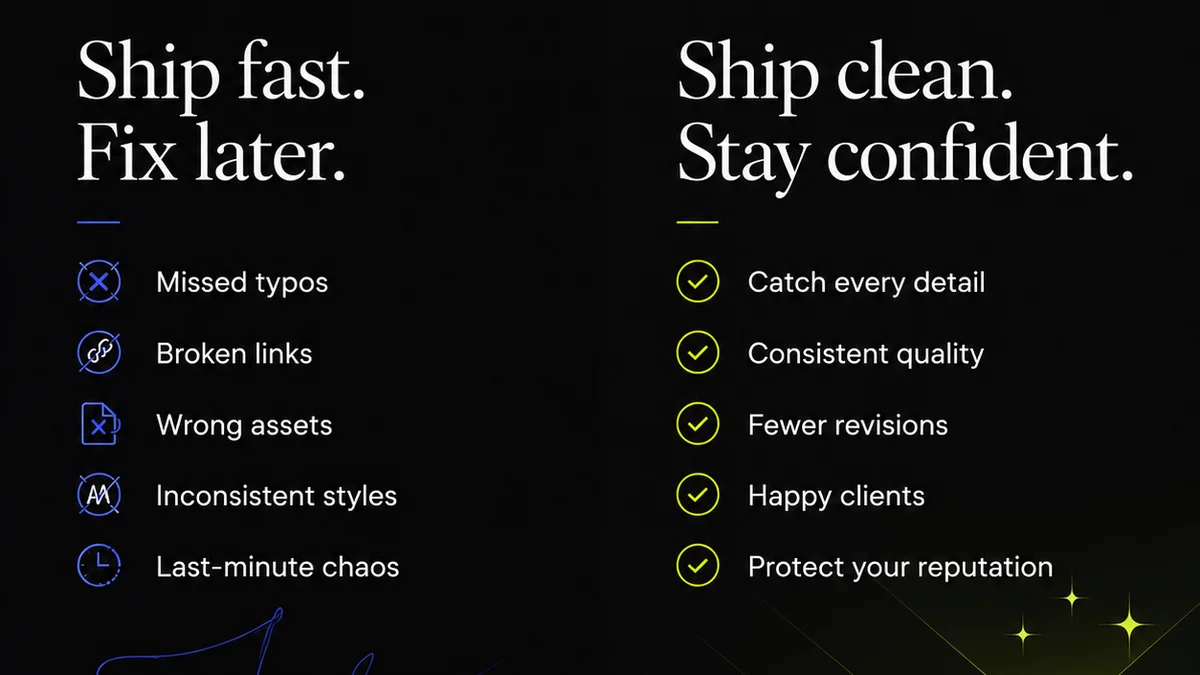
AI can be trained to spot common visual errors that humans might miss, especially across large batches of assets. This includes:
- Checking for image resolution issues.
- Identifying broken links or incorrect image paths.
- Verifying brand guideline adherence (e.g., logo usage, color palette consistency).
- Detecting layout inconsistencies across different screen sizes.
This frees up human QA teams to focus on more nuanced issues that require human oversight.
Accessibility and Compliance Checks
Ensuring digital assets are accessible (e.g., WCAG compliance) and compliant with industry regulations is crucial and often complex. AI can automate parts of this process:
- Analyzing color contrast ratios for text and background.
- Checking for appropriate alt text on images.
- Identifying potential issues with interactive elements.
While human review is still essential for full compliance, AI can perform initial scans, flagging potential problems early in the workflow.
4. Streamlining Revision and Approval Workflows
The core of creative review is managing the back-and-forth of revisions and ensuring clear approvals. AI can bring order to this often chaotic process.
Intelligent Version Control
Keeping track of multiple versions of a creative asset can be a nightmare. AI can assist by automatically identifying significant changes between versions, helping to avoid confusion about which is the latest or most approved iteration.
Automated Status Tracking and Notifications
AI can monitor the progress of feedback and approvals. It can automatically notify stakeholders when their input is needed, when feedback has been addressed, or when an asset is ready for final sign-off. This reduces the manual effort of chasing people for updates.
It ensures that the workflow moves forward smoothly without constant manual intervention.
Identifying Bottlenecks
By analyzing workflow data, AI can pinpoint where projects are getting stuck. Is a particular stakeholder consistently slow to provide feedback? Is one stage of the revision process taking longer than expected? Identifying these bottlenecks allows teams to proactively address them.
Where Revue Fits In
The transformation AI brings to creative review isn't about replacing human creativity or decision-making. It's about augmenting it with efficiency, data, and clarity. This is precisely where a platform like Revue excels.
Revue centralizes client feedback, making it a single source of truth. It brings structure to the creative review process, moving away from scattered emails and chat messages. Our tools are designed to capture feedback directly on the creative assets, ensuring context is never lost.
AI can enhance these capabilities. Imagine AI summarizing feedback within Revue, automatically tagging comments, or even flagging potential compliance issues directly on a proof. Revue provides the organized, contextual foundation upon which AI-powered insights and automations can be most effectively applied.
We’re building tools that integrate seamlessly, allowing teams to manage feedback, track revisions, and gain approvals with unparalleled clarity. This structured environment is what allows for the intelligent application of AI, turning raw data into actionable intelligence.
Final Thought
AI is not a magic wand that will instantly solve all creative review problems. It’s a powerful set of tools that, when applied thoughtfully, can fundamentally improve efficiency, clarity, and quality.
The real challenge lies not in adopting AI, but in understanding how it can best serve the human-centric process of creative collaboration. Are we ready to leverage these tools to elevate, not just automate, the craft of creative review?
Frequently asked questions
How does AI improve feedback clarity?
AI can automatically summarize lengthy feedback, group similar comments, tag feedback by specific creative elements (like typography or color), and even highlight areas needing further clarification, making it easier for teams to understand and act on notes.
Can AI replace human judgment in creative review?
No, AI is designed to augment human judgment, not replace it. It provides data-driven insights, identifies patterns, and automates repetitive tasks, freeing up creative professionals to focus on strategic decisions and nuanced creative direction.
What are the benefits of AI for creative QA?
AI can automate visual quality assurance checks, such as identifying image resolution issues, broken links, or inconsistencies with brand guidelines. It can also assist in initial checks for accessibility and compliance, flagging potential problems early.
How can AI help manage revision cycles?
AI can analyze historical project data to offer more accurate estimates for revision rounds, help identify bottlenecks in the workflow by tracking progress and stakeholder response times, and streamline version control by highlighting changes between iterations.