Everyone’s talking about AI transforming creative workflows. They point to tools that automate tasks, generate assets, and speed up production. None of that is wrong. But it’s incomplete.
The real story of AI in creative operations isn't just about doing things faster. It’s about doing things *smarter*. It’s about shifting from reactive tasks to proactive strategy and deeper creative insights.
1. Beyond Automation: The New Creative Intelligence
Automation is the low-hanging fruit. AI can write first drafts, resize images, or even generate basic ad copy. This frees up creative teams, sure. But what’s the next level?
It’s about AI augmenting human intelligence, not just replacing manual labor. Think predictive analytics for project timelines, identifying potential bottlenecks before they occur. Or AI analyzing past campaign performance to suggest creative directions with a higher probability of success.
The Shift from Doing to Knowing
Many agencies still operate on gut feeling and historical, often anecdotal, experience. AI offers a path to data-driven creative decision-making. This isn't about sacrificing creativity for spreadsheets; it's about informing creativity with objective insights.
- Identifying audience segments most receptive to specific visual styles.
- Predicting which calls-to-action yield the best conversion rates for a given campaign.
- Analyzing competitor creative strategies to uncover unmet opportunities.
This moves the focus from simply executing a brief to truly understanding the strategic landscape and audience needs.
2. The Feedback Loop Reinvented
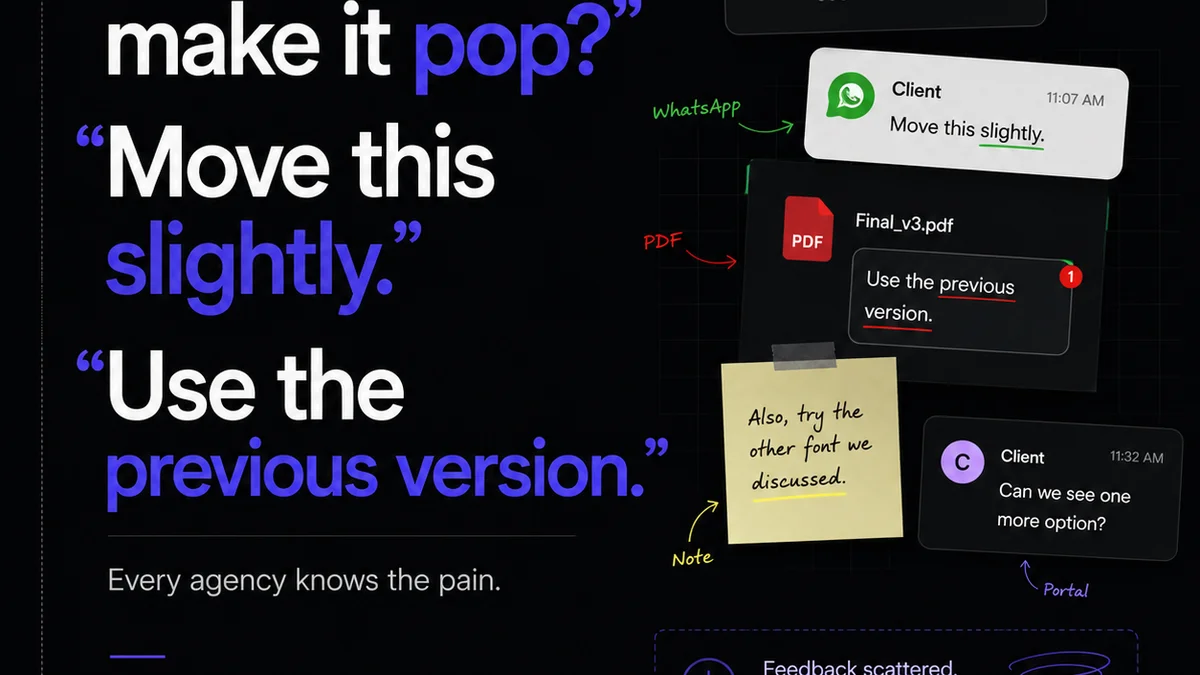
Client feedback is the lifeblood of agency work. It's also a notorious pain point. AI isn't going to magically make feedback perfect, but it can make the process far more efficient and insightful.
Consider AI’s ability to parse vast amounts of unstructured text. It can analyze client comments, identify recurring themes, and even flag conflicting feedback from different stakeholders. This moves beyond simple annotation to structured, actionable insights.
From Ambiguity to Clarity
Vague comments like “make it pop” or “I don’t like it” are the bane of creative directors. AI can help surface the underlying sentiment or identify the specific elements being reacted to, even if the client can't articulate it clearly.
- Categorizing feedback by stakeholder (e.g., Marketing vs. Legal).
- Highlighting comments that deviate significantly from project goals.
- Summarizing lengthy feedback threads into key action items.
This structured approach ensures that feedback is not just received, but understood and acted upon strategically.
3. Quality Assurance at Scale
Ensuring creative output meets brand standards, technical specifications, and accessibility guidelines is critical. AI can elevate Quality Assurance (QA) from a manual, error-prone process to a systematic, data-driven one.
AI-powered tools can scan designs for brand compliance, check image resolutions, verify color profiles, and even assess basic accessibility issues like color contrast. This happens at machine speed, catching errors that human eyes might miss after hours of review.
Proactive Problem Solving
Instead of finding issues late in the game, AI can flag them early. This means fewer costly revisions and faster time-to-market.
- Automated checks for logo usage and brand color adherence.
- Scans for incorrect file formats or dimensions.
- Identification of potential accessibility barriers (e.g., insufficient contrast ratios).
This systematic QA process builds confidence and reduces the risk of client rejection or post-launch issues.
4. Where Revue Fits In
Tools like Revue are built to manage the complex ecosystem of creative feedback and approvals. While AI offers new capabilities, the fundamental need for structured workflow management remains paramount.
Revue centralizes client feedback, making it accessible and auditable. It streamlines revision cycles, ensuring clarity and accountability. Our platform is designed to integrate with your existing tools, bringing order to the creative chaos.
AI can enhance these processes by providing deeper insights *within* the structured environment Revue offers. Imagine AI analyzing feedback trends within Revue to predict client satisfaction scores, or AI flagging potential scope creep based on the volume and nature of revision requests logged in the system.
The goal isn't to replace human oversight, but to empower it with better data and more efficient processes. Revue provides the robust framework for these AI-enhanced insights to be applied effectively.
5. The Human Element Remains Key
Despite the advancements, AI is a tool, not a replacement for human creativity, strategy, or client relationships. The most successful agencies will be those that leverage AI to enhance, not diminish, their human capital.
AI can handle the repetitive, the data-heavy, and the pattern-recognition tasks. This liberates human creatives to focus on what they do best: conceptual thinking, emotional resonance, strategic problem-solving, and building strong client partnerships.
Strategic Augmentation, Not Replacement
The true power lies in the synergy between human intuition and AI-driven insights. An AI can identify a trend, but a human creative director interprets that trend and crafts a compelling narrative. An AI can flag a technical issue, but a human designer finds an elegant solution.
- Focus on high-level strategy and client consultation.
- Invest in conceptual development and unique creative expression.
- Nurture client relationships through empathy and understanding.
The future of creative workflows is one where AI amplifies human talent, leading to more innovative, efficient, and impactful work.
Final Thought
As AI continues to evolve, the agencies that thrive will be those that understand its potential beyond simple automation. They will embrace AI as a partner in strategic decision-making, a catalyst for deeper creative understanding, and an enabler of more efficient, higher-quality creative output. The question isn't *if* AI will change your workflow, but *how* you will strategically integrate it to elevate your agency’s core capabilities.
Frequently asked questions
How does AI specifically help with client feedback?
AI can analyze client comments to identify recurring themes, flag conflicting feedback, and summarize lengthy discussions into actionable items. This moves beyond simple annotation to structured, strategic insights, helping to clarify ambiguous feedback.
Can AI replace human creativity in agencies?
No, AI is a tool to augment human capabilities. It excels at repetitive tasks, data analysis, and pattern recognition, freeing up human creatives to focus on conceptual thinking, emotional resonance, strategic problem-solving, and client relationships.
What is the difference between AI automation and AI intelligence in creative workflows?
AI automation focuses on speeding up or replacing manual tasks (like resizing images). AI intelligence goes further, using data to inform strategic decisions, predict outcomes, and provide deeper insights into creative performance and audience reception.
How can AI improve quality assurance for creative work?
AI can automate checks for brand compliance, technical specifications, and basic accessibility issues at machine speed. This catches errors early, reduces costly revisions, and ensures a higher standard of creative output before client delivery.