Everyone’s talking about AI’s creative potential. Image generators, text assistants – it’s all over the news. And that’s not wrong.
But if you think AI’s main job in creative agencies is just to spit out decent-looking JPEGs or draft placeholder copy, you’re missing the forest for the trees.
The real revolution isn’t in the outputs; it’s in the underlying operational shifts. AI is poised to fix the broken parts of creative workflow you’ve learned to live with.
1. The Myth of Instant Ideation
The assumption: AI will instantly solve creative block and generate infinite ideas.
The truth: AI is a powerful brainstorming partner, not a replacement for human insight. Its real value is in augmenting, not automating, the messy, iterative process of ideation.
From Blank Page to Insight
Creative block is real. Staring at a blank canvas or an empty document can paralyze even the best teams. AI tools can break through that paralysis.
Think of AI as a hyper-efficient research assistant and a tireless concept-generator. It can:
- Surface unexpected connections between disparate ideas.
- Rapidly explore stylistic variations on a theme.
- Generate a wide range of initial concepts based on very specific prompts.
- Analyze market trends or competitor strategies to inform creative direction.
This isn't about getting a finished concept in seconds. It's about getting to *informed* starting points faster.
The output still needs human curation, refinement, and strategic alignment. But the time spent staring into the void is drastically reduced.
2. Streamlining the Mundane: From Drudgery to Data
The assumption: AI’s primary benefit is automating repetitive tasks.
The truth: AI excels at tasks that are *data-intensive* and *pattern-based*, freeing up creative minds for higher-level strategic and aesthetic thinking.
Beyond Simple Automation
Sure, AI can automate things like resizing images or generating basic social media copy. But that’s just scratching the surface.
Consider the sheer volume of data involved in creative projects:
- Analyzing large datasets of user feedback to identify common pain points.
- Sorting and tagging vast libraries of creative assets for easier retrieval.
- Predicting which design elements or messaging might resonate best with specific audience segments.
- Automating the generation of ad variations for A/B testing.
- Flagging potential compliance or brand guideline violations in real-time.
These aren't just
Frequently asked questions
Will AI replace creative professionals?
AI is more likely to augment creative professionals, handling repetitive tasks and providing new avenues for ideation. The human element of strategy, emotional intelligence, and nuanced judgment remains critical.
How can small agencies leverage AI in their workflow?
Start with accessible tools for content generation, research, and basic asset management. Focus on how AI can reduce time spent on mundane tasks, allowing your team to focus on client strategy and high-value creative work.
What are the biggest challenges in integrating AI into creative workflows?
Challenges include data privacy concerns, the need for specialized skills to manage AI tools, potential biases in AI outputs, and integrating AI seamlessly into existing project management systems.
How does AI improve client feedback and revision processes?
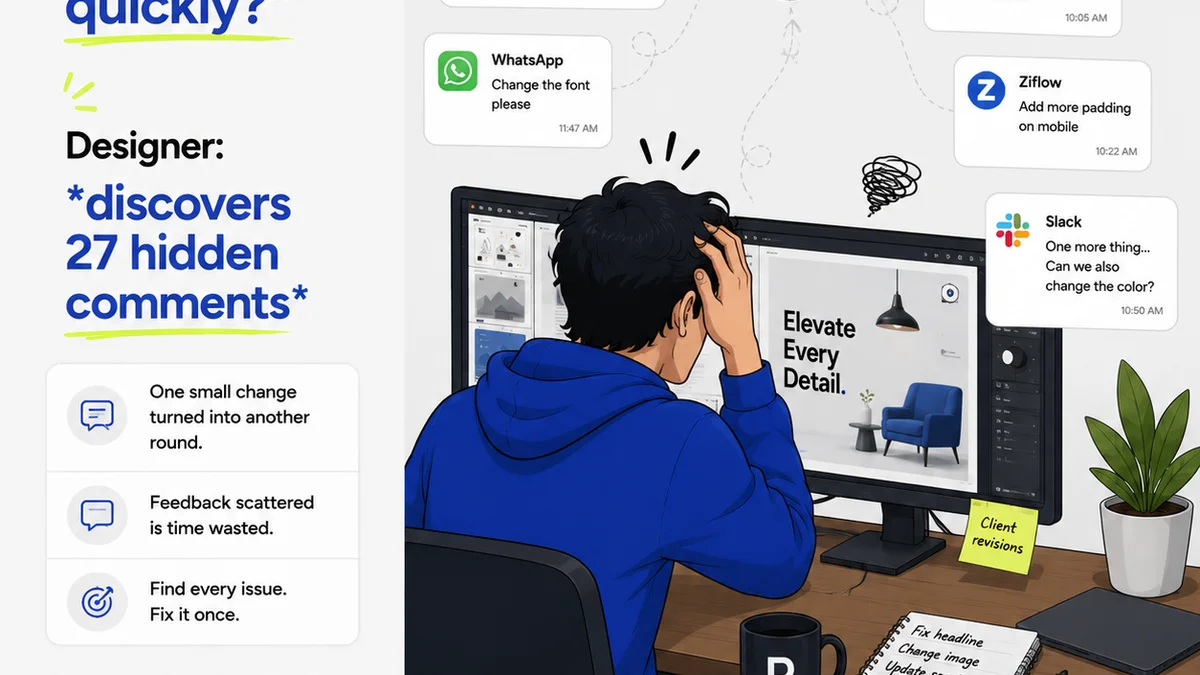
AI can help analyze large volumes of feedback to identify trends, automate the tracking of revisions, and even assist in generating summaries of client comments, making the process more efficient and less prone to misinterpretation.