Everyone’s talking about AI in design. You hear about generative art, automated image editing, and chatbots that can write copy. It sounds flashy, futuristic, maybe even a little threatening.
And none of that is wrong. But it’s incomplete.
The real power of AI for design agencies isn’t about replacing creatives or churning out soulless visuals. It’s about fundamentally re-engineering your operational workflow to handle more volume, improve quality, and free up your best talent for what matters most: strategic thinking and client relationships.
The Hard Truth: AI Isn't About Replacing Creatives, It's About Supercharging Operations
The common assumption is that AI tools are here to automate creative jobs out of existence. That’s a narrow, almost fearful, perspective. The deeper truth is that AI, when integrated thoughtfully, acts as a powerful co-pilot and an efficiency engine. It handles the repetitive, time-consuming tasks that bog down even the most talented teams, allowing them to focus on higher-value work.
Think about the sheer amount of grunt work involved in a typical design project: resizing assets for multiple platforms, generating variations on a theme, organizing feedback from a dozen different stakeholders, creating mood boards, or even just initial concept generation.
These are areas where AI can provide significant leverage. It’s not about the AI *making* the final design; it’s about the AI *accelerating* the process, reducing errors, and providing a richer foundation for human creativity.
1. Supercharging Ideation and Concepting
Creative block is real. And even when it’s not, the process of exploring multiple directions can be incredibly time-consuming. AI is changing this game entirely.
Rapid Visual Exploration
Tools that generate variations on a theme, explore different stylistic approaches based on prompts, or even create entirely novel visual concepts can drastically speed up the early stages of a project. Instead of sketching dozens of rough ideas by hand, designers can use AI to generate hundreds of starting points in minutes.
Mood Board Acceleration
Gathering inspiration is crucial, but it can be a black hole of time. AI can analyze vast datasets of images and trends to suggest relevant visual styles, color palettes, and imagery based on a project brief. This isn’t about stealing ideas; it’s about quickly identifying and synthesizing relevant visual language.
Content Generation Assistance
For agencies that also handle copy or need placeholder text, AI can generate initial drafts, headlines, or descriptive copy. This allows designers to visualize the complete piece much faster, without waiting for copywriters or resorting to Lorem Ipsum.
The Agency Advantage
Agencies that embrace AI for ideation can:
- Present clients with a wider range of initial concepts.
- Shorten the concepting phase, moving faster to client selection.
- Explore more daring or experimental directions with lower upfront time investment.
- Provide clients with data-informed visual suggestions based on AI analysis of trends.
2. Streamlining Production and Asset Management
This is where AI’s impact on operational efficiency becomes undeniable. The sheer volume of assets required for modern campaigns is staggering.
Automated Resizing and Formatting
Creating assets for social media, web banners, print, and various screen sizes is a major production bottleneck. AI tools can automatically resize and adapt designs for different dimensions, saving hours of manual work and reducing the risk of errors.
Intelligent Asset Organization
Imagine an asset library that can automatically tag, categorize, and even suggest relevant assets based on content. AI-powered DAM (Digital Asset Management) systems can make finding and reusing existing creative elements significantly faster.
Batch Editing and Enhancement
Need to adjust the color balance on 100 product photos? Or apply a specific filter to a series of images? AI can perform these batch operations with incredible speed and consistency, far beyond what manual methods allow.
The Agency Advantage
By leveraging AI in production, agencies can:
- Deliver assets for multiple channels much faster.
- Reduce the cost of production for repetitive tasks.
- Ensure brand consistency across a vast number of deliverables.
- Free up junior designers and production artists from tedious manual labor.
3. Revolutionizing Feedback and Revision Cycles
This is often the messiest part of agency work. Client feedback, when unmanaged, can derail projects, inflate costs, and destroy team morale.
AI-Powered Feedback Analysis
Imagine an AI that could ingest client feedback from emails, documents, or even video calls, categorize it, identify conflicting comments, and summarize key action items. This isn't science fiction; early versions of these tools are emerging.
Automated Revision Tracking
AI can help track the history of changes, compare versions, and even flag potential inconsistencies introduced during revisions. This brings much-needed clarity to the often-chaotic revision process.
Predictive Quality Checks
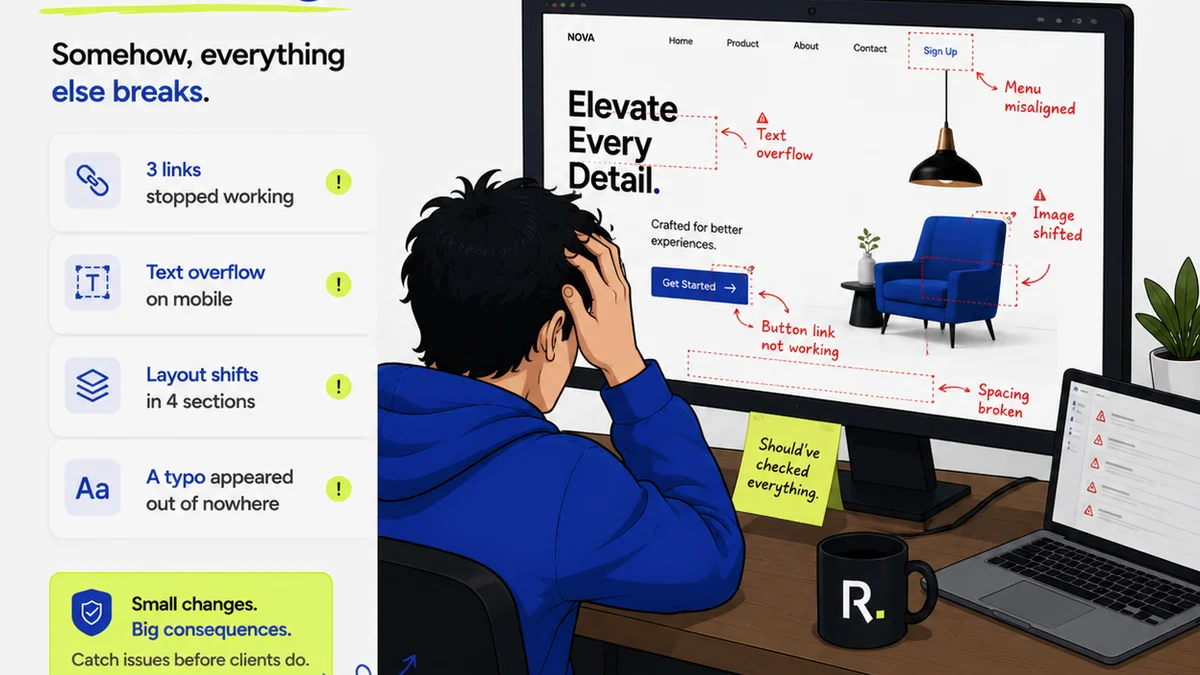
Before a final deliverable goes out, AI can scan for common errors: misaligned elements, incorrect color profiles, typos in generated text, or deviations from brand guidelines. This acts as a final gatekeeper, catching issues that human eyes might miss after hours of work.
The Agency Advantage
Implementing AI in feedback management leads to:
- Clearer, more actionable feedback summaries for the creative team.
- Reduced back-and-forth due to conflicting or unclear comments.
- Faster, more accurate revision cycles.
- Higher quality final deliverables with fewer errors.
4. Enhancing Client Understanding and Personalization
AI isn't just an internal tool; it can also help agencies understand client needs and deliver more impactful, personalized work.
Data-Driven Insights
AI can analyze market trends, competitor activity, and audience behavior to provide deeper insights that inform creative strategy. This moves agencies beyond intuition to data-backed recommendations.
Predictive Performance Analysis
For digital campaigns, AI can help predict which creative approaches or messaging are likely to perform best with specific audience segments. This allows for more targeted and effective campaign development.
Personalized Content at Scale
AI enables the creation of highly personalized marketing assets and experiences for clients’ end customers. This is a significant value-add that agencies can offer.
The Agency Advantage
Using AI for client understanding allows agencies to:
- Become more strategic partners, not just execution shops.
- Offer clients a competitive edge through data-informed creativity.
- Demonstrate ROI more effectively by linking creative to predicted performance.
- Unlock new service offerings focused on data and personalization.
Where Revue Fits In
While AI tools can supercharge creation and analysis, managing the *process* of creative work remains paramount. This is where a platform like Revue becomes indispensable.
AI can generate variations, but it can’t effectively manage client feedback scattered across emails, Slack messages, and random documents. It can’t provide a single source of truth for approvals or track the full revision history in a transparent way.
Revue centralizes all client feedback, making it visible and actionable. It streamlines the revision and approval process, ensuring everyone is working from the latest version and that sign-offs are clear and documented. It provides the structure that allows the efficiencies gained from AI to translate into real, tangible improvements in project delivery and client satisfaction.
Think of it this way: AI helps you build the car faster and more efficiently. Revue ensures you’re building the *right* car, that all the parts fit, and that it gets to the client on time, without getting lost on the highway of endless revisions.
5. The Strategic Imperative: Why Now?
You might be thinking, “This all sounds great, but we’re busy. We’ll look at AI later.” That’s the most dangerous assumption of all.
The agencies that start integrating AI tools now – even in small ways – are building a foundational advantage.
- They’re training their teams on new workflows.
- They’re identifying the tools that best fit their specific needs.
- They’re starting to see operational efficiencies that competitors aren't.
- They’re positioning themselves as forward-thinking partners to their clients.
Waiting means playing catch-up. It means watching competitors deliver faster, more cost-effectively, and with potentially higher quality, while you’re still wrestling with manual processes.
The AI revolution in design isn't coming; it's here. It’s not about replacing human creativity; it’s about amplifying it and making the business of design more robust, scalable, and profitable.
Final Thought
Are you viewing AI as a threat to your creative process, or as the ultimate tool to unlock your agency’s next level of growth and client impact? The answer will define your future.
Frequently asked questions
Will AI replace designers in agencies?
It's highly unlikely. AI tools are best suited for automating repetitive tasks, accelerating ideation, and providing data insights. They augment, rather than replace, the strategic thinking, emotional intelligence, and unique creative vision that human designers bring.
What are the first steps an agency should take to adopt AI?
Start small. Identify a specific bottleneck in your workflow, like asset resizing or initial concept generation, and research AI tools that address it. Pilot a tool with a small team or project to understand its capabilities and limitations before a wider rollout.
How can AI improve client feedback and revisions?
AI can help analyze and summarize lengthy feedback, identify conflicting comments, and automate parts of the revision tracking process. This leads to clearer communication, fewer errors, and faster turnaround times for revisions.
Isn't AI technology too expensive for small agencies?
The cost of AI tools varies greatly. Many powerful AI applications are now accessible through affordable subscription models, and some offer free tiers for basic usage. The ROI from increased efficiency often outweighs the initial investment.
How does AI help in understanding client needs better?
AI can analyze market trends, audience behavior, and competitor data to provide deeper strategic insights. This allows agencies to make more informed creative recommendations and develop campaigns that are more likely to resonate with target audiences.