The headlines are screaming: AI is coming for your creative jobs. Generative AI will automate design, write copy, and make art. Your team is obsolete.
None of that is wrong. But it’s incomplete.
The real truth isn't about AI replacing humans. It's about how AI fundamentally changes the *nature* of creative work and the *structure* of creative teams.
The deepest operational truth? AI isn't a threat to your team's future. It's the most powerful tool you'll ever have to build it. If you know how to use it.
1. The Myth of the 'AI-Powered Creative'
We see a lot of talk about the 'AI-powered creative director' or the 'AI-assisted designer.' It sounds like a single person wielding a magic wand.
That’s not how it works in the real world of agencies and in-house teams.
AI doesn't become a person. It becomes a layer in your workflow.
The Operational Reality: Augmentation, Not Automation
Think about it: Does Photoshop automate design? No. It augments a designer’s ability to create. Does a CRM automate sales? No. It streamlines the process.
AI is the same. It’s a force multiplier for specific tasks within a larger creative process.
- Generating initial concepts
- Drafting copy variations
- Upscaling low-res assets
- Analyzing campaign performance
- Automating repetitive QA checks
Your team won't be replaced by AI. They’ll be replaced by creatives who *use* AI.
2. Redefining Roles: From Makers to Curators and Strategists
The most significant shift AI brings isn't about *what* your team creates, but *how* they work and *what skills* are most valuable.
Many roles will evolve dramatically. Some entirely new ones will emerge.
The Rise of the Curator and Prompt Engineer
The ability to generate content with AI is becoming commoditized. The real skill will be in refining and selecting the best outputs.
This requires a sharp eye, a deep understanding of brand, and the ability to communicate precisely with AI. That’s prompt engineering, but it’s also critical curation.
The Emphasis on Strategy and Oversight
As AI handles more of the grunt work, the strategic elements become paramount. Where does the AI fit? What's the human-led creative direction?
Who is responsible for the final output? Who ensures brand consistency and ethical considerations?
- Brand Guardians: Ensuring AI outputs align with brand voice and visual identity.
- Ethical Overseers: Monitoring for bias, copyright issues, and responsible AI use.
- Strategic Integrators: Determining *when* and *how* to deploy AI tools for maximum impact.
- Human-Centric Designers: Focusing on empathy, emotional connection, and experiences AI can't replicate.
Your team needs to become less about executing every pixel and more about directing the overall vision and quality.
3. Workflow Overhaul: Integrating AI Seamlessly
The biggest mistake you can make is treating AI as a separate tool, bolted onto your existing process.
It needs to be woven into the fabric of your daily operations.
Beyond the 'AI Button'
Simply having access to ChatGPT or Midjourney isn't enough. You need to think about how these tools interact with your existing project management, feedback, and delivery systems.
Consider the entire lifecycle of a creative asset:
- Briefing: How do you brief AI effectively? What AI-generated inputs inform the brief?
- Ideation: Using AI for mood boards, concept variations, headline options.
- Production: AI-assisted image generation, copy drafting, video editing elements.
- Review: Centralizing AI-generated content for team and client feedback.
- Revision: Iterating on AI outputs based on feedback.
- Approval: Ensuring AI-assisted work meets client sign-off criteria.
- Delivery: Packaging and archiving AI-enhanced assets.
Each step presents an opportunity for AI integration.
The Bottleneck of Feedback and Approvals
This is where many creative workflows break down. With AI accelerating content generation, the feedback and approval loop becomes the new bottleneck.
If you can generate 100 ad variations in an hour, but it takes you a week to get client feedback and approval on *any* of them, you’ve gained nothing.
You need systems that can handle this increased velocity.
Where Revue Fits In
This is precisely why tools like Revue are more critical than ever in an AI-augmented future.
As AI accelerates content generation and iteration, the ability to manage feedback, track revisions, and ensure quality becomes the differentiator.
Centralized Feedback and Version Control
Revue provides a single source of truth for all creative assets. Instead of chasing down emails or Slack messages, all feedback lives attached to the specific version of the asset.
This is crucial when dealing with AI outputs, where multiple iterations and variations might be generated rapidly. You need to know exactly what was reviewed, what was changed, and why.
Streamlined Revision and Approval Workflows
AI might generate the initial draft, but human judgment is needed for refinement and sign-off. Revue’s structured workflows ensure that feedback is actionable and approvals are clear.
This prevents AI-generated work from falling into a black hole of endless revisions or unclear sign-offs.
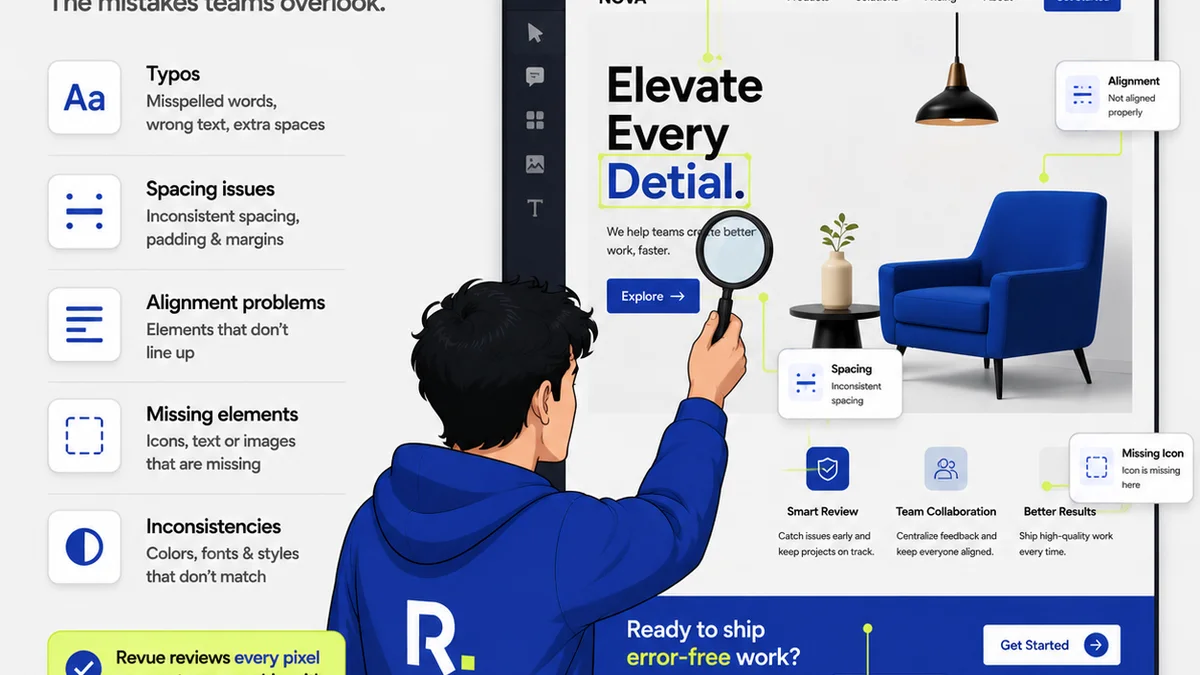
Quality Assurance at Scale
Ensuring the quality of AI-generated content requires robust QA processes. Revue helps by providing a clear audit trail of revisions and approvals, making it easier to track down issues and ensure final assets meet all requirements.
It's about maintaining control and accountability, even when AI is doing a significant portion of the heavy lifting.
4. Training and Upskilling: The Human Element
Your team’s ability to adapt is your greatest asset. Investing in their skills is non-negotiable.
This isn't just about learning new software; it's about fostering a mindset of continuous learning and adaptation.
Beyond Technical Proficiency
While learning to use AI tools is essential, the focus should also be on developing uniquely human skills.
- Critical Thinking: Evaluating AI outputs for accuracy, bias, and strategic alignment.
- Creativity & Innovation: Using AI as a springboard for novel ideas, not just a generator of predictable ones.
- Communication: Clearly articulating vision, feedback, and strategic direction to both humans and AI.
- Emotional Intelligence: Understanding audience needs and crafting resonant experiences.
- Adaptability: Embracing new tools and workflows as they emerge.
Building a Culture of Experimentation
Encourage your team to experiment. Set aside time for them to play with AI tools, explore their capabilities, and identify potential applications within your specific projects.
This isn't about random tinkering; it’s about structured exploration to uncover new efficiencies and creative possibilities.
Leadership's Role in Upskilling
As leaders, you need to champion this learning. Provide resources, training opportunities, and psychological safety for your team to explore and sometimes fail.
Your role shifts from being the sole font of creative genius to being the architect of an environment where human and artificial intelligence can thrive together.
Final Thought
The future of creative teams isn't about fearing AI. It's about strategically integrating it to elevate human talent.
The agencies and in-house teams that thrive will be those that see AI not as a replacement, but as a powerful collaborator.
Are you building a team that can direct the machine, or one that will be directed by it?
Frequently asked questions
Will AI replace creative professionals?
AI is more likely to augment creative professionals than replace them entirely. Skills in strategic thinking, curation, prompt engineering, and ethical oversight will become increasingly valuable. Teams that embrace AI as a tool will be better positioned than those that don't.
How can I start integrating AI into my creative workflow?
Begin by identifying repetitive tasks that AI can assist with, such as initial concept generation, copy variation, or asset upscaling. Experiment with AI tools relevant to your needs, and focus on how they fit into your existing project management and feedback loops. Don't treat AI as a standalone solution; weave it into your process.
What are the key skills my creative team will need in an AI-driven future?
Beyond technical proficiency with AI tools, your team will need strong critical thinking to evaluate AI outputs, creativity to push beyond AI's limitations, excellent communication skills to direct AI and stakeholders, and emotional intelligence to create resonant work. Adaptability and a continuous learning mindset are also crucial.
How does a platform like Revue help with AI integration?
As AI accelerates content creation, feedback and approvals can become bottlenecks. Revue centralizes feedback, streamlines revision workflows, and provides version control, ensuring clarity and accountability. This helps manage the increased velocity of AI-assisted creative production and maintain quality.